 Pin it
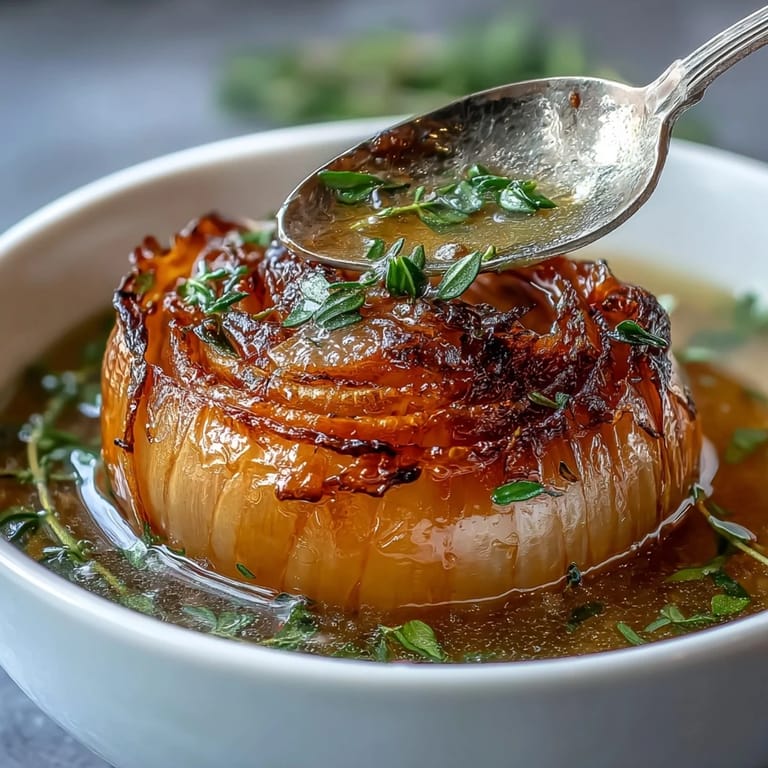
 There's something deeply satisfying about watching whole onions soften in a pot, their papery skin giving way to tender sweetness. I stumbled onto this dish by accident one evening when I had a handful of beautiful small onions and no real plan, just curiosity about what would happen if I treated them gently in butter and broth. The kitchen filled with this mellow, caramelized aroma that made everyone pause and ask what I was cooking. It became one of those quiet meals that somehow felt like comfort despite its simplicity.
I made this for a friend who was having a rough week, and watching her eat it straight from the bowl, spooning broth, tearing into the soft onion layers—something shifted in her shoulders. Food doesn't always need to be complicated to mean something. She came back a week later asking for the recipe, which told me everything about how it landed.
Ingredients
- Small yellow onions (8, peeled): The size matters here—they cook evenly and stay whole, creating that satisfying textural moment when your fork breaks through the skin and into the soft interior.
- Garlic cloves (4, smashed): Don't mince these; smashing releases their oils and lets them soften into the broth rather than shout over it.
- Vegetable broth (4 cups): This is your flavor foundation, so use one you actually like tasting—it should taste like something, not like hot water with salt.
- Unsalted butter (2 tbsp): This creates a silky base and helps the garlic bloom without burning; the butter is doing real work here.
- Bay leaf and fresh thyme (1 of each): These anchor the broth with subtle earthiness and keep things from feeling one-dimensional.
- Black peppercorns (1/2 tsp): Whole peppercorns release flavor slowly and won't make the broth gritty like ground pepper would.
- Smoked paprika (1/2 tsp): A touch of smoke underneath everything; it's barely noticeable until you realize something is making this taste richer than it should.
- Fresh parsley and chives: These arrive at the end like a refresh button, bringing brightness that cuts through the richness.
Tired of Takeout? 🥡
Get 10 meals you can make faster than delivery arrives. Seriously.
One email. No spam. Unsubscribe anytime.
Instructions
- Start with butter and garlic:
- Melt the butter over medium heat and watch it foam slightly before adding the smashed garlic. You'll know it's ready when your kitchen suddenly smells like you're cooking something intentional, around one minute of gentle sizzling.
- Coat the onions:
- Add your peeled onions and turn them gently in the buttery pan for two to three minutes, just enough for them to catch color and get coated. This step builds flavor; don't skip it even though it feels small.
- Pour in the broth:
- Add your vegetable broth along with the bay leaf, thyme, peppercorns, smoked paprika, and salt. Stir once and let everything settle together.
- Bring to a boil, then simmer:
- Let it bubble up for a moment, then lower the heat to a gentle simmer—you want barely-there movement, not an aggressive roll. Cover the pot and let time do the work for 25 to 30 minutes.
- Check for tenderness:
- Pierce an onion near the root with a knife; it should offer no resistance. If there's still firmness, give it another few minutes.
- Remove solids and taste:
- Fish out the bay leaf and thyme sprig, then taste the broth. Salt it to where you want it—this is your moment to adjust.
- Serve and garnish:
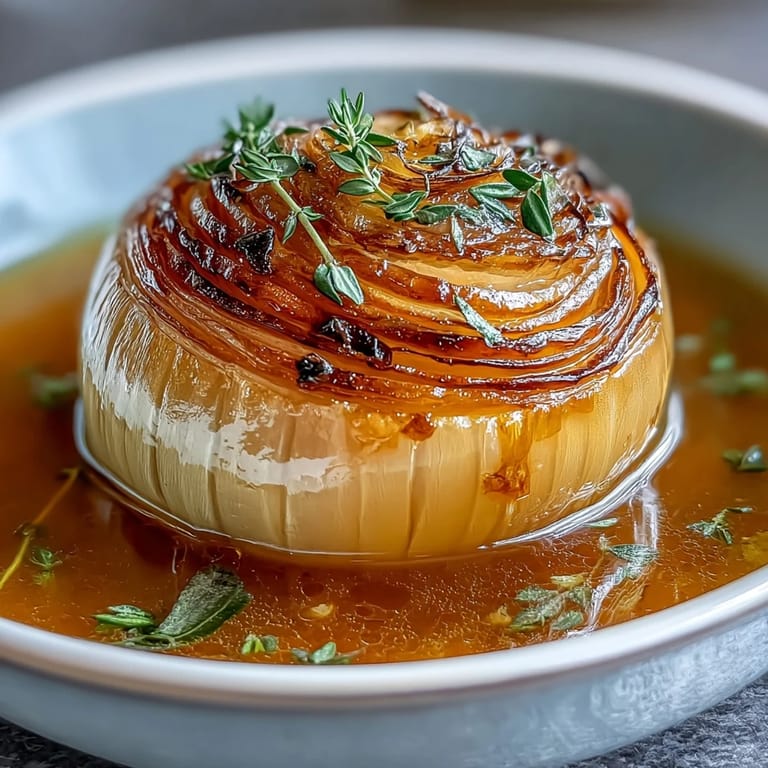
- Ladle onions and broth into bowls, then scatter fresh parsley and chives over the top. The herbs bloom when they hit the warm liquid, releasing their green brightness right at the end.
 Pin it
 There's a moment, usually around the twentieth minute of cooking, when you lift the lid and the steam rises and everything suddenly smells finished, even though the timer says five minutes remain. That's when you know you're close, and you can start pulling out bowls and getting ready. This is the kind of dish that teaches you to trust your senses over the clock.
Why This Works as a Whole Onion Experience
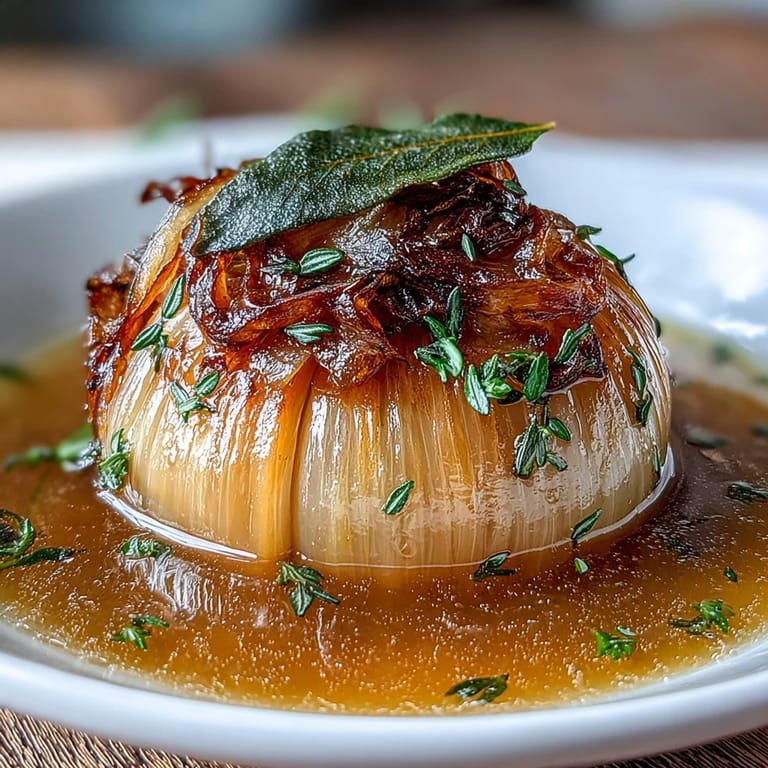
Most of us chop onions into pieces before cooking them, which is practical but means you lose the pleasure of actually encountering them as a thing. Cooking them whole keeps them intact—they become a vessel, something to interact with spoon by spoon. The broth becomes part of the eating experience rather than just sauce. You taste the onion's subtle sweetness separate from the broth's savory depth, and somehow that matters.
Making It Your Own
This recipe is a gentle frame, not a prison. I've added a splash of dry white wine before simmering on nights when I wanted something richer, and the broth becomes slightly deeper and more wine-forward. Some versions benefit from other vegetables—thin carrot rounds, small potato cubes, or parsnip—added during the last fifteen minutes so they cook through without dissolving. One winter I added a pinch of cinnamon and it shifted the whole vibe into something almost dessert-like, which shouldn't have worked but did.
Serving and Pairing Thoughts
This works as a main course or a luxurious snack depending on your mood and hunger. Crusty bread is non-negotiable—something to soak the broth, to tear apart while you eat. The onions are soft enough that a spoon does most of the work, which is why this has become such a satisfying ASMR-friendly dish.
- Pour the broth into the bowl at serving time so the onions stay upright and look intentional rather than collapsed.
- A small drizzle of good olive oil over the finished dish adds richness and a slight peppery note that complements the herbs beautifully.
- Make this when you have time to eat slowly—it's designed to be eaten with attention, not rushed.
 Pin it
 This is the kind of recipe that stays quiet until you make it, then becomes a small staple. The onions don't need fanfare to be worth your time.
Recipe FAQs
- → How do I know when the onions are perfectly cooked?
Onions are done when they become tender enough to pierce easily with a knife but still hold their shape.
- → Can I add other vegetables to the broth?
Yes, root vegetables like carrots or potatoes can be added for more texture and flavor variety.
- → What’s the best way to serve this dish?
Serve the onions with plenty of the warm broth in bowls, garnished with fresh parsley and chives for brightness.
- → How can I make the broth richer?
Add a splash of dry white wine before simmering to deepen the flavor complexity.
- → Is there a vegan alternative for the butter?
Use plant-based butter instead of unsalted dairy butter to keep the dish vegan-friendly.