 Pin it
 The first time I hosted a hot pot dinner, my apartment filled with this incredible steam that made everyone's cheeks flush as they laughed around the table. Someone had brought a portable burner as a housewarming gift weeks earlier, and suddenly it had found its purpose. Watching my friends lean over the simmering broth with chopsticks poised, chatting between bites, felt like discovering a secret language of togetherness. Hot pot isn't really about the food alone—it's about the ritual, the choices, the pace you set together.
I remember one Sunday when my neighbor came over unexpectedly, and I realized I had exactly enough vegetables in the crisper drawer to pull off a hot pot. We ended up inviting another friend, then another, and by the time we started cooking, five of us were crowded around the table with bowls of homemade dipping sauce. That afternoon taught me that hot pot thrives on spontaneity—it transforms whatever you have on hand into something that feels intentional and generous.
Ingredients
- Chicken or vegetable broth (2.5 liters): This is your foundation, so don't cheap out here; a good quality broth makes everything that follows taste better, and you'll taste it in every spoonful.
- Fresh ginger and garlic: These two create the aromatic backbone that keeps people coming back for more broth; slicing them exposes maximum surface area for flavor release.
- Soy sauce, rice vinegar, and sesame oil: Together they balance the broth with salty, tangy, and nutty notes that feel sophisticated without being fussy.
- Dried shiitake mushrooms: They add umami depth that simmers into the liquid, making the whole pot taste like it's been cooking for hours.
- Thinly sliced proteins (beef, chicken, pork, or tofu): The thinner you slice them, the faster they cook—sometimes just 30 seconds in the bubbling broth is enough.
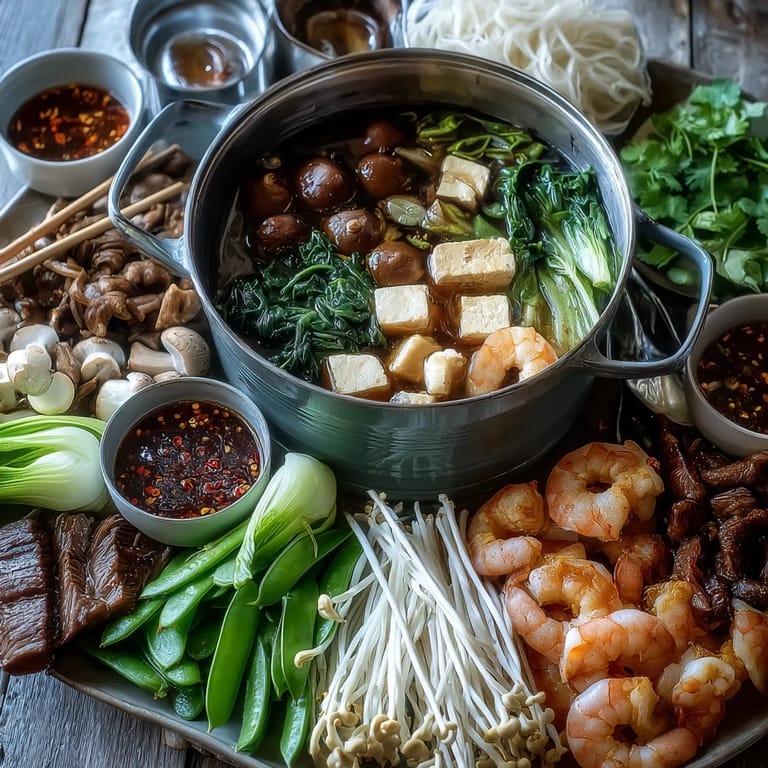
- Shrimp and firm tofu: These offer textural contrast and appeal to different dietary preferences without requiring a separate pot.
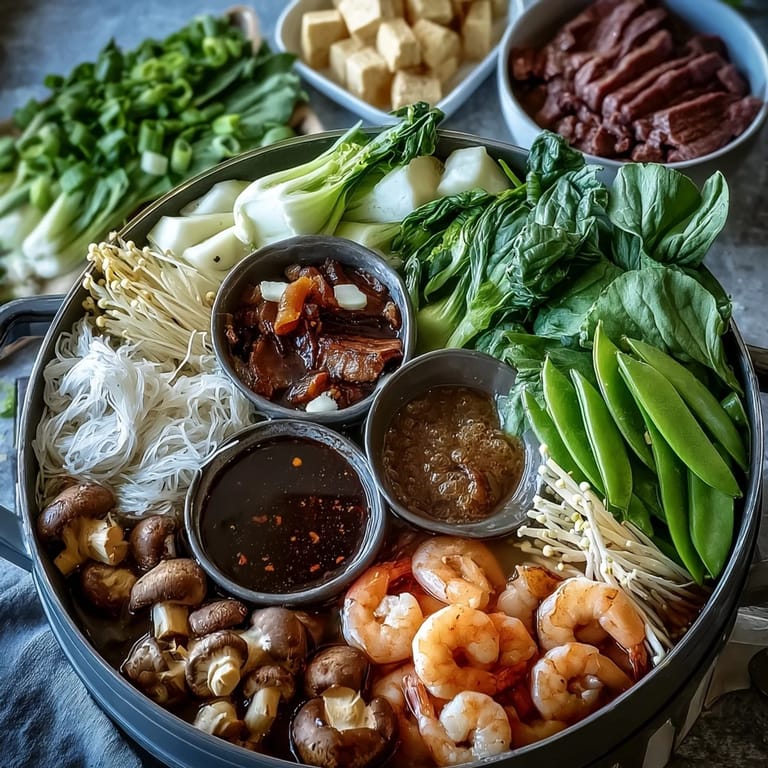
- Mixed vegetables (cabbage, bok choy, mushrooms, carrot, snow peas, corn, scallions): The variety ensures different cooking times and flavors, so there's always something new happening in your bowl.
- Rice noodles or glass noodles: They soften in minutes and soak up all that flavorful broth like little flavor sponges.
- Dipping sauces (soy sauce, chili oil, hoisin) and garnishes: These are where people personalize their experience, so set them out like an artist's palette.
Tired of Takeout? 🥡
Get 10 meals you can make faster than delivery arrives. Seriously.
One email. No spam. Unsubscribe anytime.
Instructions
- Build your broth foundation:
- In a large pot, combine the broth with sliced garlic, ginger, soy sauce, rice vinegar, sesame oil, shiitake mushrooms, and chili. Let it come to a boil, then lower the heat and let it simmer gently for at least 30 minutes—this is when the magic happens, as all those aromatics meld into something deeper and more complex than their individual parts.
- Strain and taste:
- Before moving to the table, fish out the softened ginger slices and mushroom solids, then taste your broth and adjust the seasonings; this is your chance to dial in the salt and heat before guests arrive.
- Prepare the platters:
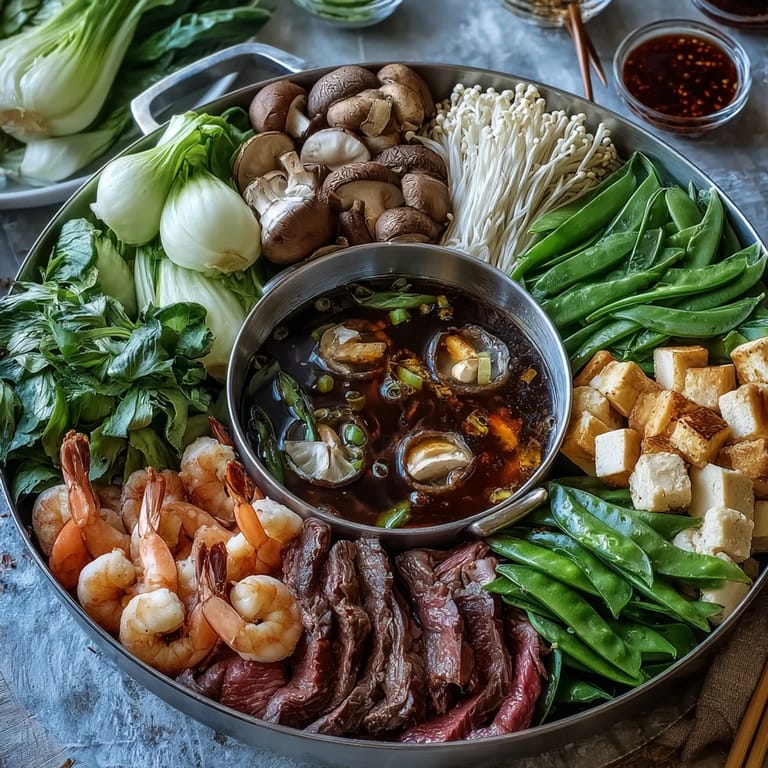
- Arrange all your proteins and vegetables on separate platters or a large board, keeping raw and cooked items in different areas so nobody accidentally grabs raw meat thinking it's been cooked. Make it visually appealing because people eat with their eyes first.
- Soak and drain noodles:
- Follow your package instructions and give the noodles a warm water bath, then drain them completely and pile them on a platter; they're ready to drop into the broth whenever someone's hungry for them.
- Set up your table station:
- Position the portable burner or induction cooktop in the center of the table where everyone can reach it comfortably. Pour in your strained, hot broth and bring it back to a gentle simmer—this is the heart of the experience, so make sure everyone can see and access it safely.
- Cook and dip:
- Let each person become their own chef; proteins like beef and shrimp cook in just 1 to 3 minutes and will curl or change color when they're done, while vegetables and noodles take 2 to 5 minutes depending on thickness. Encourage people to use chopsticks or slotted spoons and to dunk their cooked items into whatever dipping sauce calls to them.
 Pin it
 There's a moment near the end of every hot pot dinner when conversation gets quieter and everyone's just savoring the last few bites, fishing for those perfectly soft noodles and sipping broth straight from their bowls. That's when I know the meal did what it was supposed to do—it brought people together without any fuss or formality.
The Art of Timing
Learning to cook hot pot is really about developing a feel for timing, which sounds fancy but just means paying attention to how things look and sound in the broth. Beef will go from translucent to cooked in a heartbeat, so hover nearby with your chopsticks ready. Vegetables are more forgiving—you have a wider window before they get mushy, which is actually a relief because it means you can chat with someone at the table without ruining your dinner.
Customization Without Guilt
One of the best parts about hot pot is that it naturally accommodates almost any dietary preference without anyone feeling like they're eating something different or worse. Your vegetarian friend grabs only vegetables and tofu while your meat-loving cousin loads up on beef—everyone's happy, and nobody had to make two separate meals. I've learned to always have extra tofu on hand because it tends to disappear first, and people who don't usually eat it discover they actually love it when it's cooked this way.
Creating the Perfect Dipping Sauce Experience
The dipping sauces are honestly where hot pot becomes interactive in a way that feels almost playful, because people start experimenting and mixing things together like they're in a chemistry lab. I always set out soy sauce, chili oil, and hoisin as the main players, but the magic happens when someone combines them or adds a squeeze of lime and a pinch of cilantro to create their own signature blend. Let me share the secret that changed how I approach this part of the meal.
- Mix soy sauce with a tiny bit of chili oil and sesame seeds for a sauce that's sophisticated but not intimidating.
- Try combining hoisin with lime juice and fresh cilantro if you want something herbaceous and slightly sweet.
- Always put out extra lime wedges because people will realize halfway through the meal that they want more acid in their dipping sauce.
 Pin it
 Hot pot is the kind of meal that sticks with you long after the table's been cleared, not because the food was complicated but because of how it made everyone feel. It's easy to make and even easier to love.
Recipe FAQs
- → What types of proteins can be used in this hot pot?
Options include thinly sliced beef, chicken, pork, shrimp, or firm tofu, allowing flexible choices based on preference.
- → How long should broth simmer to develop its flavor?
Simmer the broth gently for at least 30 minutes to allow the garlic, ginger, mushrooms, and spices to infuse fully.
- → Can this dish be customized for vegetarian diets?
Yes, using vegetable broth and omitting animal proteins creates a flavorful vegetarian or vegan-friendly version.
- → What kind of noodles work best with this preparation?
Rice noodles or glass noodles are ideal as they cook quickly and absorb the broth's delicate flavors effectively.
- → How is the cooking process managed at the table?
A portable burner heats the broth in a shallow pot, allowing diners to cook chosen ingredients quickly, creating an interactive meal.
- → Are there recommended garnishes or sauces to complement the dish?
Dipping sauces like soy, chili oil, and hoisin, along with garnishes such as fresh cilantro, lime wedges, and sesame seeds, enhance the flavors.