 Pin it
 My neighbor Maria showed up at my door one afternoon with a bag of guavas from her tree, their skin blushed deep pink and splitting with ripeness. She mentioned offhandedly that her abuela made paste with them, the kind you eat with cheese at the end of a meal, sweet and dense and completely addictive. I'd never tried it before, but watching her describe it—how the fruit transforms into this glossy, jammy paste after patient stirring—I knew I had to learn. That first batch taught me that good things take time and that sometimes the best discoveries come from a neighbor's casual generosity.
I made this for a small dinner party last spring, serving it with a wedge of Manchego and some thin toast, and watched my guests reach for it again and again. One friend asked if I'd bought it somewhere fancy, and I loved admitting it was made in my own kitchen from fruit and patience. That moment—seeing something so simple become the thing people remembered about the meal—is when I understood why my neighbor's abuela guarded her recipe like treasure.
Ingredients
- Ripe guavas (1 kg or 2.2 lbs): Choose fruit that yields slightly to pressure and smells intensely fragrant—underripe guavas will taste sharp and woody, while overripe ones lose their structure.
- Granulated sugar (450 g or 2 1/4 cups): This is your canvas for adjusting sweetness later, so don't feel locked into this amount if your guavas are particularly tart or honeyed.
- Fresh lemon juice (2 tbsp): This cuts through the sweetness and brightens the guava's flavor, preventing the paste from becoming cloying.
- Water (120 ml or 1/2 cup): Just enough to help the guavas break down without making the paste watery; you're building texture, not soup.
Tired of Takeout? 🥡
Get 10 meals you can make faster than delivery arrives. Seriously.
One email. No spam. Unsubscribe anytime.
Instructions
- Prepare and soften your guavas:
- Wash each guava under cool water, trim the hard knobby ends, then quarter them. The seeds are optional to remove now, but leaving them in actually adds a subtle earthiness to the final paste. Place everything into a large saucepan with the water, bring to a boil, then lower the heat and simmer covered for 15 to 20 minutes until the fruit collapses easily under a wooden spoon.
- Transform the fruit into silky puree:
- Remove the pan from heat and let it cool just enough to handle. Press the soft guavas through a food mill or very fine mesh strainer, working patiently to extract all the pulp while leaving seeds and skins behind. This step determines your texture—rush it and you'll have grittiness, take your time and you'll get velvet.
- Balance sweetness with measurement:
- Measure out your guava puree and use a ratio of roughly 1 cup puree to 1 cup sugar, though you can adjust based on how sweet or tart your fruit tastes and how thick you want the final paste. Return the puree to a clean pot and add sugar and lemon juice, stirring until the sugar dissolves.
- Cook low and slow until glossy:
- This is the meditative part where you stir constantly over low heat for 40 to 50 minutes, watching the mixture transform from bright and loose to deep mahogany and thick. You'll know it's ready when it pulls away from the sides of the pan and holds its shape on a spoon without running.
- Set and cool your finished paste:
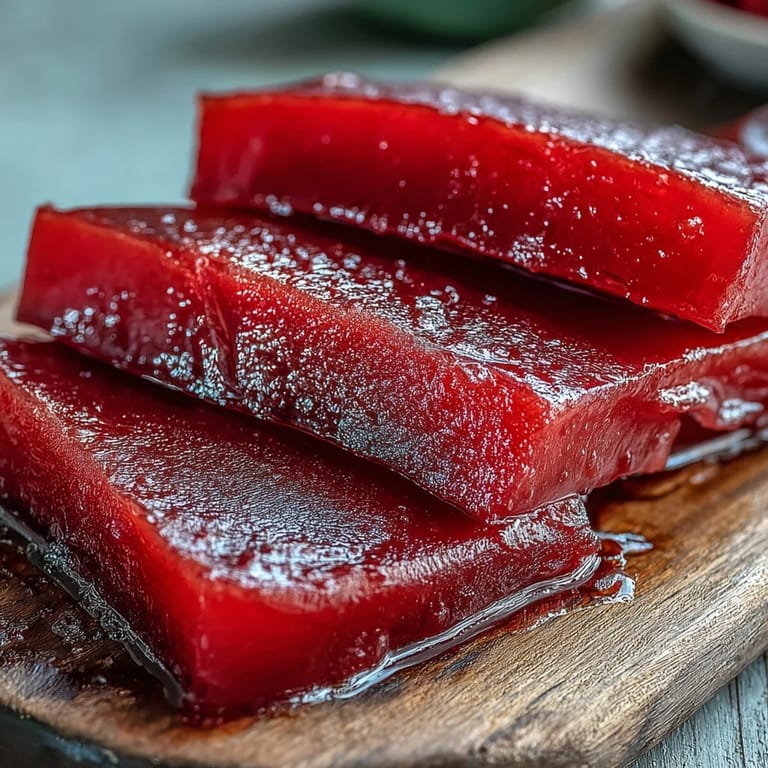
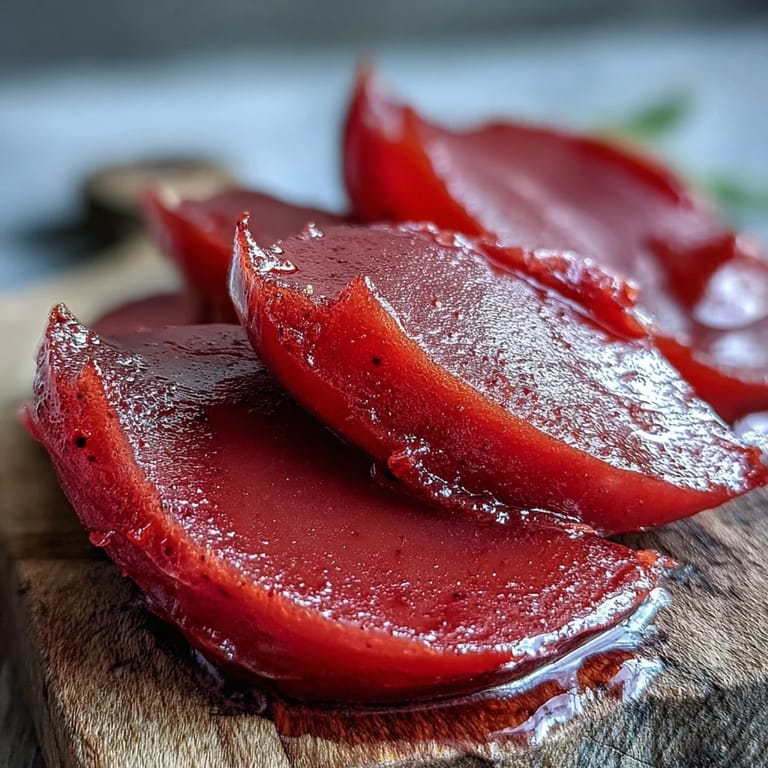
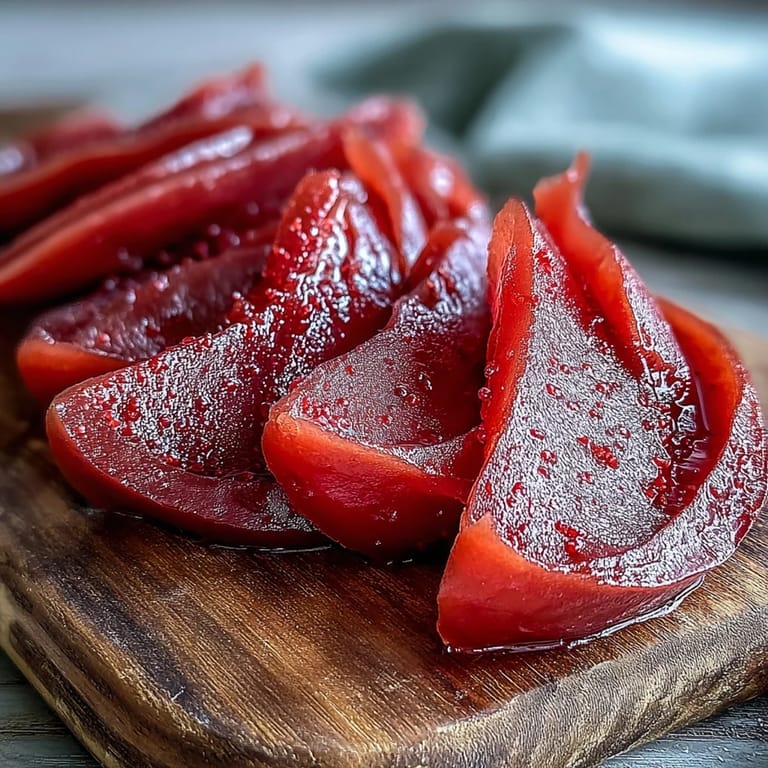
- Pour the hot paste into a parchment-lined loaf pan or shallow baking dish, smooth the top with a spatula, and let it cool completely at room temperature—this usually takes 2 to 3 hours. Once firm, unmold it and slice into squares or rectangles as thick as you prefer.
 Pin it
 A few weeks after that dinner party, the same friend texted asking if I'd make her a batch for her parents, who apparently couldn't stop talking about it. I found myself making this again and again, tweaking the sugar slightly depending on the guavas' mood that day, and I realized it had become the recipe I make when I want to give someone something that feels both simple and special.
Choosing Your Guavas
The quality of your guavas matters more than anything else in this recipe, so choose fruit that's fragrant enough to smell from across the room. Pink or white varieties both work beautifully, and the pink ones tend toward slightly sweeter, though either will create that addictive paste. Avoid anything hard or pale, as underripe guavas will fight you during cooking and taste slightly bitter no matter how much sugar you add.
Storage and Keeping
Once cooled and sliced, your paste keeps for months in an airtight container in the refrigerator, becoming even more concentrated and intense as the days pass. You can also portion it into small jars and give it away as gifts—there's something generous about homemade paste that store-bought versions will never match. If you want to extend its life even further, freeze it in ice cube trays and thaw what you need.
Serving and Pairing
This paste shines brightest when paired with something salty or creamy that balances its sweetness, which is why it became such a beloved ending to Latin American meals. Manchego cheese and thin crackers are the classic combination, but sharp cheddar, creamy goat cheese, or even a smear on buttered toast all work wonderfully. You can also layer it into pastries, swirl it into yogurt, or fill croissants with it for a treat that tastes like you spent hours in a French bakery.
- Let the paste warm slightly at room temperature before serving with cheese, as the cold can dull its complex guava flavor.
- A sharp cheese like aged Gouda or Manchego prevents the paste from tasting one-note and creates that perfect sweet-savory conversation.
- Keep a spoon nearby because people will inevitably want to taste it straight, and that's exactly how it should be experienced at least once.
 Pin it
 This is the kind of recipe that becomes part of your kitchen story, the one you make when you want to turn simple fruit into something that tastes like memory and generosity. Once you master it, you'll find yourself making it for everyone.
Recipe FAQs
- → What is guava paste used for?
Guava paste serves as a versatile condiment in both sweet and savory applications. It pairs beautifully with soft cheeses like Manchego or cream cheese on crackers, fills pastries and turnovers, or adds fruity sweetness to desserts. In Latin American cuisine, it's commonly served as part of a cheese board or used as a filling for cookies and pastries.
- → How do I know when the paste is ready?
The paste is ready when it becomes thick, glossy, and holds its shape on a spoon. It should pull away from the sides of the pan as you stir. Another test is to run a spoon through the mixture—if the trail stays visible rather than immediately filling back in, it has reached the proper consistency. This usually takes 40-50 minutes of slow cooking.
- → Can I use frozen guavas?
Yes, frozen guavas work well for making paste. Thaw them completely before starting, and drain any excess liquid that accumulates during thawing. You may need to adjust the cooking time slightly as frozen fruit can release more water. The flavor will remain excellent, though fresh guavas at peak ripeness yield the most fragrant results.
- → How should I store guava paste?
Store the cooled paste in an airtight container in the refrigerator, where it will keep for up to three months. For longer storage, wrap individual portions tightly in plastic wrap and freeze for up to six months. The paste becomes firmer when chilled but softens at room temperature. Always use clean utensils to remove portions to prevent contamination.
- → Why add lemon juice?
Lemon juice serves multiple purposes in this preparation. The acidity balances the intense sweetness of the sugar and guava, creating a more complex flavor profile. It also helps preserve the vibrant reddish-pink color of the fruit during cooking. Additionally, the acid aids in the setting process, helping the paste reach the proper consistency more reliably.
- → What if my paste is too thick?
If the paste becomes too thick or stiff during cooking, stir in a tablespoon of warm water until it reaches the desired consistency. Do this gradually, as a little liquid goes a long way. Conversely, if the mixture seems too thin after the recommended cooking time, continue cooking over low heat, stirring constantly, until it thickens properly.