 Pin it
 I stumbled onto bulgogi by accident one rainy evening when my neighbor brought over a container of her family's marinated beef, still warm and fragrant with sesame and ginger. She tossed it over rice in my kitchen while telling me about how her grandmother made it for celebrations, and suddenly a Tuesday night felt like a small feast. Now it's become my go-to when I want something that feels restaurant-quality but comes together faster than delivery would arrive.
The first time I made this for friends, I was nervous about the ginger-pear combination until I tasted how it rounded out the soy sauce, almost like the fruit was whispering sweetness underneath everything else. My friend Mike kept asking what was in it, convinced I'd added something fancy, and I loved being able to say it was just good technique and a couple of pantry staples.
Ingredients
- Beef sirloin or ribeye, thinly sliced: The thinness is everything here—it means the marinade actually penetrates and the beef cooks in just a couple of minutes without getting tough. Ask your butcher to slice it, or pop the meat in the freezer for 30 minutes first so it's firm enough to slice cleanly yourself.
- Soy sauce: This is your umami backbone, the thing that makes people ask what restaurant this came from.
- Brown sugar and grated pear: Together they create a caramel sweetness that balances the salt without ever tasting candied, and the pear adds a subtle depth that regular sugar just can't match.
- Sesame oil: Use real toasted sesame oil, not the clear kind—it's the difference between a good bowl and one that tastes alive.
- Rice vinegar: This keeps everything bright and prevents the marinade from becoming too heavy.
- Garlic and ginger: Minced and grated rather than chopped means they distribute evenly through the meat and dissolve slightly into the sauce.
- Gochujang: The optional spice element that transforms this from sweet to sweet-and-spicy—add as much or as little as your tolerance allows.
- Jasmine rice: The slight floral notes complement the marinade better than plain white rice, though any short-grain rice works beautifully.
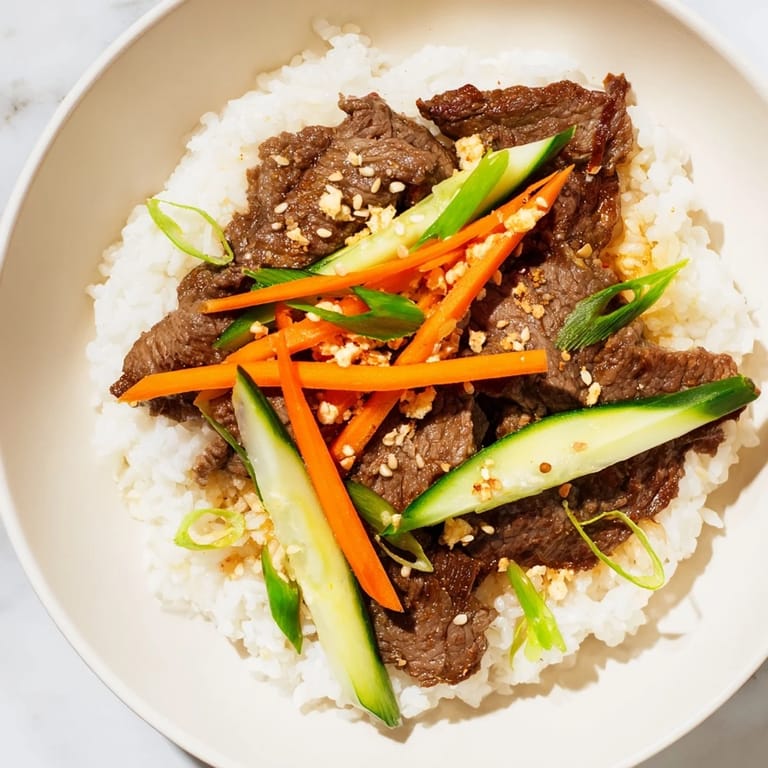
- Vegetables: Keep them crisp and fresh—the contrast with the warm beef is half the appeal.
Tired of Takeout? 🥡
Get 10 meals you can make faster than delivery arrives. Seriously.
One email. No spam. Unsubscribe anytime.
Instructions
- Build the marinade first:
- Whisk together soy sauce, brown sugar, sesame oil, rice vinegar, minced garlic, grated ginger, grated pear, gochujang if using, and black pepper in a large bowl. Taste it—it should be balanced between salty, sweet, and fragrant, with the pear adding a subtle sweetness underneath.
- Coat the beef and let it sit:
- Add your sliced beef to the marinade and toss to coat every piece. Fifteen minutes is the minimum, but if you have time, an hour lets the flavors really settle into the meat.
- Get the pan smoking hot:
- Heat your skillet or wok over high heat until it's so hot a drop of water sizzles immediately. This is how you get that slight caramelization on the edges of the beef.
- Cook the beef in batches:
- Add the beef and marinade to the hot pan—it should sizzle loudly the moment it hits the heat. Cook for 2 to 3 minutes, stirring constantly, until the beef is just cooked through with a hint of char and the sauce clings to each slice.
- Assemble your bowls:
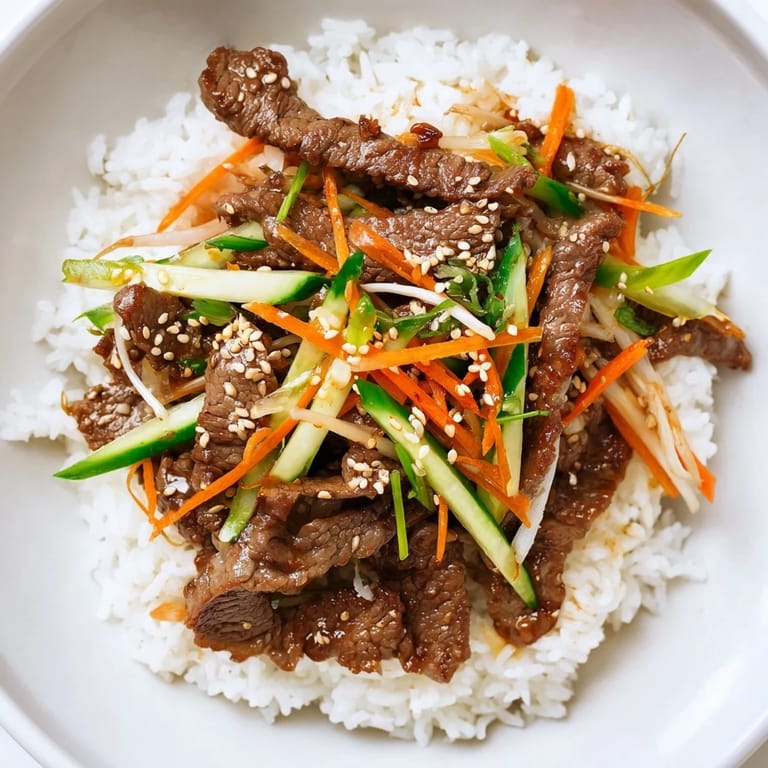
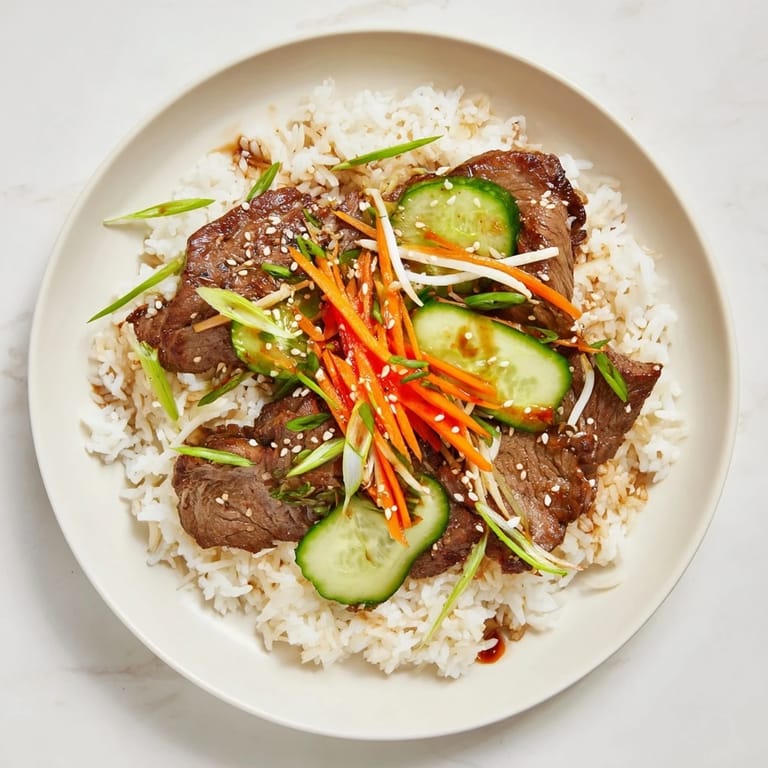
- Start with warm rice, arrange the beef and vegetables on top, then garnish with scallions and sesame seeds. Serve immediately while the beef is still warm and the vegetables are still cool and crisp.
 Pin it
 What surprised me most is how this dish started showing up at my lunch table every week after that first success. My coworkers began asking what smelled so good, and suddenly bulgogi became our little ritual, the thing we'd make on Mondays when we wanted something that felt special but didn't demand much effort.
Why Marinating Matters
The marinade isn't just seasoning here—it's actually tenderizing and transforming the beef at the same time. The pear and ginger break down the muscle fibers, the soy and sugar create a glaze that clings beautifully, and the sesame oil adds richness that reads as luxurious even though you're working with humble ingredients. I learned this the hard way when I once skipped the pear and tried to rush it with just 5 minutes of marinating time, and the beef came out tasting flat and a bit chewy. Now I always respect the full 15 minutes minimum, knowing that's when the magic really starts to happen.
Building Texture and Temperature Play
The entire appeal of a bulgogi bowl hinges on the contrast between warm and cold, tender and crisp. The beef should be still steaming when you pile the cool vegetables on top, and that temperature difference is what makes each bite interesting. I used to cook everything together once and wondered why it felt one-note until my neighbor reminded me that Korean food is all about balance—hot-cold, sweet-savory, soft-crunchy all at once.
Making It Your Own
What I love about this bowl is how forgiving it is to personal preference. Some mornings I add a fried egg on top for richness, other times I swap in kimchi for extra funk and heat, and occasionally I'll use cauliflower rice when I'm trying to be lighter. The core—that beautiful marinated beef—stays the same, but everything else can shift depending on what you have or what you're craving.
- If you want more spice, add gochujang to the marinade or stir a little into the rice before assembling.
- Fresh herbs like cilantro or mint scattered on top add brightness and can push the whole dish in a different direction.
- Leftovers actually taste better the next day when you eat the cold beef and rice together, the flavors having had time to deepen.
 Pin it
 This is the kind of dish that reminds me why I love cooking—something so simple can taste so complete, and it brings people together without any fuss. Make it once and it becomes a weeknight staple, the thing you return to when you want delicious without the drama.
Recipe FAQs
- → What cut of beef works best for this dish?
Thinly sliced ribeye or sirloin are ideal for quick cooking and tender texture in this preparation.
- → Can I make this dish spicier?
Yes, adding gochujang, a Korean chili paste, during marination will introduce a pleasant heat and depth of flavor.
- → What rice is recommended as the base?
Jasmine or short-grain white rice provide the perfect soft, sticky base to complement the savory beef and fresh vegetables.
- → Are there suitable vegetable toppings to add?
Julienned carrots, cucumber matchsticks, blanched bean sprouts, and scallions offer a refreshing crunch and balance the rich beef.
- → How long should the beef marinate for best flavor?
Marinate for at least 15 minutes; allowing up to an hour intensifies the taste and tenderness.