 Pin it
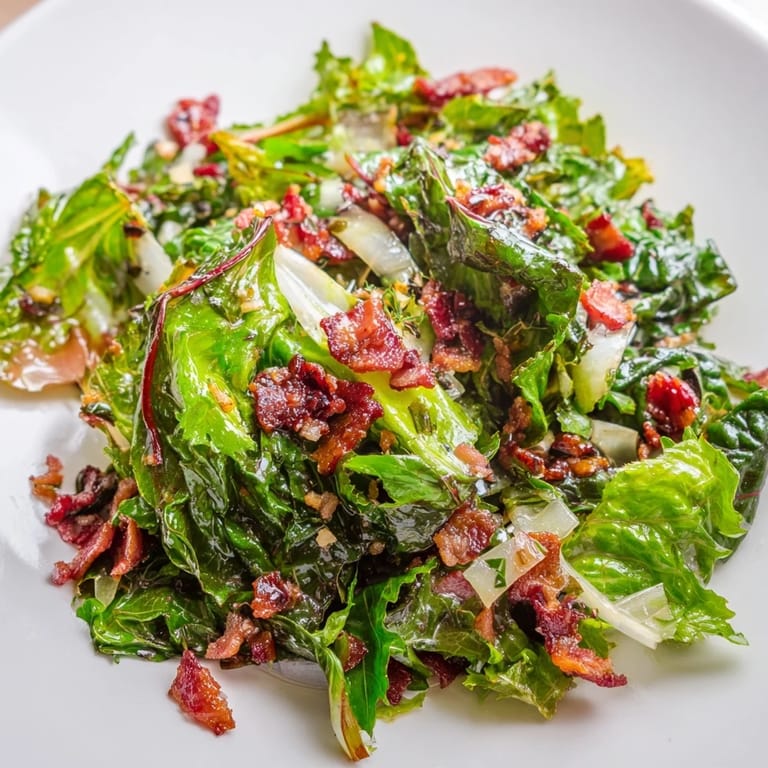
 There's something about the way a warm dressing hits cold bitter greens that feels like a small kitchen revelation. I'd been making the same sad salads for years until a friend mentioned her grandmother's trick: pour the hot bacon fat right over the greens and watch them soften just enough to actually taste like something. The first time I tried it, I understood why this salad shows up on tables from farmhouse kitchens to French bistros. It's humble, it's quick, and it transforms ingredients you might otherwise overlook into something genuinely craveable.
I made this for a winter potluck once, nervous it was too simple. Someone went back for thirds and asked for the recipe, and I realized the power of something done right rather than fussily complicated. That's when bitter greens salad became my go-to move for feeding people without fuss.
Ingredients
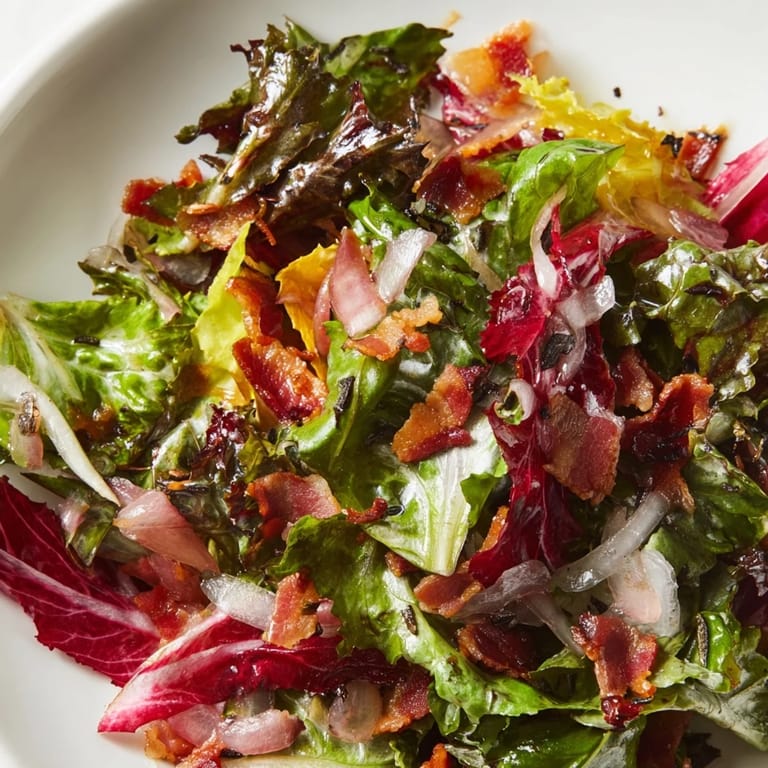
- Mixed bitter greens: Escarole, frisée, dandelion, radicchio, or chicory all work beautifully here. The bitterness is exactly the point, and it balances perfectly against the warm, salty dressing. Tear them by hand if you can, not with a knife, so they stay tender and don't bruise.
- Red onion: Slice it thin and let it sit in the bowl for a few minutes before dressing. It softens slightly and loses some of its raw sharpness.
- Thick-cut bacon: Don't use the thin stuff. Thick-cut bacon renders more slowly and gives you rendered fat that actually tastes like something, not just grease.
- Red wine vinegar: This is your backbone. It's tangy enough to cut through the fat and bright enough to make the greens sing.
- Dijon mustard: A tablespoon sounds small, but it emulsifies the dressing and adds a subtle sharpness that ties everything together.
- Honey: Just a teaspoon. It softens the vinegar's bite and adds a whisper of sweetness that makes you taste every other flavor more clearly.
- Extra-virgin olive oil: Use something you actually like the taste of. This isn't the oil for deep frying, so this is where quality shows.
Tired of Takeout? 🥡
Get 10 meals you can make faster than delivery arrives. Seriously.
One email. No spam. Unsubscribe anytime.
Instructions
- Prep your greens:
- Rinse and dry the bitter greens thoroughly. Wet greens will make your dressing pool and slide off instead of clinging. Place them in a large salad bowl with the sliced red onion and let them wait patiently while you make the magic happen.
- Cook the bacon until it shatters:
- Dice your bacon and cook it in a large skillet over medium heat for about 7 to 9 minutes, until it's deeply crisp and the fat is rendered and golden. Transfer the bacon to a paper towel-lined plate, but keep every bit of that fat in the pan.
- Build the dressing:
- Drop the heat to low and add the red wine vinegar, Dijon mustard, honey, black pepper, and salt right into that bacon fat. Whisk it together, scraping up the browned bits stuck to the bottom of the skillet because those are pure flavor.
- Emulsify with oil:
- Slowly pour in the olive oil while whisking constantly. The dressing should come together into something creamy and cohesive, not separated and greasy. Keep whisking until it's warmed through and feels silky.
- Dress and toss immediately:
- Pour the hot dressing straight over your waiting greens and add the crisp bacon back in. Toss everything together gently but thoroughly so the greens are coated and slightly wilted but still have some structure. This is where the magic happens.
- Plate and finish:
- Arrange the salad on individual plates and top with hard-boiled eggs and toasted nuts if you're using them. Serve while the greens are still warm and the dressing is still working.
 Pin it
 There was a moment when my dad tasted this salad and said, "This tastes like how I remember bistro food tasting," and I realized he wasn't being sentimental. It tasted good because it was simple and honest, not because it was fancy.
Why Bitter Greens Actually Work Here
Most people avoid bitter greens because they think they're unpleasant, but they're actually perfect when they meet something warm and savory. The bitterness isn't a flaw you're covering up; it's a flavor that deserves a warm, salty, rich partner. Once you taste how escarole or radicchio behaves against bacon fat and vinegar, you stop thinking of bitterness as something to avoid and start thinking of it as sophisticated. The greens soften from the heat but keep their character. That's the whole conversation.
Building Layers of Flavor
This recipe works because it's built on contrast. You've got sharp bitterness, warm richness, bright acidity, subtle sweetness, and a tiny pinch of heat all living together. None of those flavors shouts over the others. The Dijon mustard is doing something you can't quite identify but would miss if it was gone. The honey isn't sweet, it's just there to make the vinegar friendlier. That's how you make a salad that feels complete rather than just a pile of leaves.
The Bacon Fat Question and Other Variations
Bacon fat is the soul of this salad, but if you're not eating bacon, the salad doesn't disappear. Sautéed mushrooms provide an earthy, umami-rich alternative. Use extra olive oil instead of bacon fat and you get something lighter but still warm and alive. Some people add sliced apples or pears to cut through the richness with fruit. Others finish it with a crumble of blue cheese or a poached egg. The dressing can handle maple syrup instead of honey if you want something deeper and less delicate. The architecture stays the same; the details change based on what you're hungry for.
- Maple syrup gives you a different kind of sweetness, more woody and complex than honey.
- Mushrooms or soft tofu are genuine bacon fat replacements if you're going vegetarian.
- A poached egg on top turns this into something more substantial and luxurious.
 Pin it
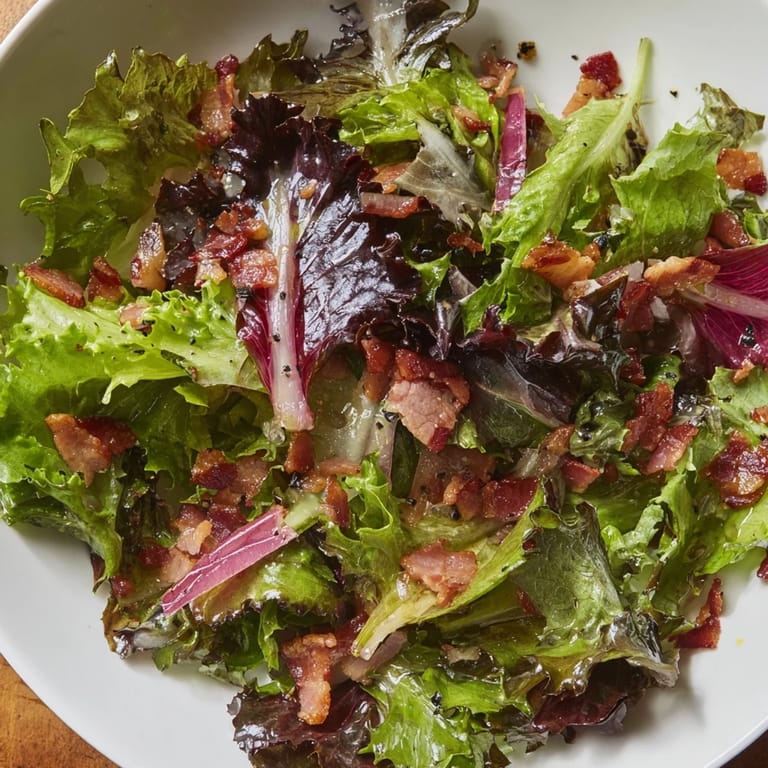
 This salad taught me that simple is only simple if you don't cut corners. A great warm dressing, bitter greens that taste like something, and bacon cooked until it's actually crisp—that's not lazy cooking, that's the opposite. Some of the best meals are the ones with the fewest moving parts.
Recipe FAQs
- → What greens work best in this salad?
A mix of bitter greens like escarole, frisée, dandelion, radicchio, and chicory provides the ideal robust flavor and texture.
- → How do you make the warm bacon dressing?
Cook diced bacon until crisp and remove it, then whisk vinegar, mustard, honey, pepper, and salt into the bacon fat. Slowly add olive oil until emulsified and warm.
- → Can this dish be made vegetarian?
Yes, replace bacon with sautéed mushrooms and use extra olive oil instead of bacon fat for the dressing.
- → What garnishes complement the salad?
Hard-boiled eggs add creaminess, while toasted walnuts or pecans add crunch and nutty flavor.
- → Can I substitute ingredients in the dressing?
Honey can be swapped with maple syrup for a different sweetness, and adjustments can be made to suit taste preferences.