 Pin it
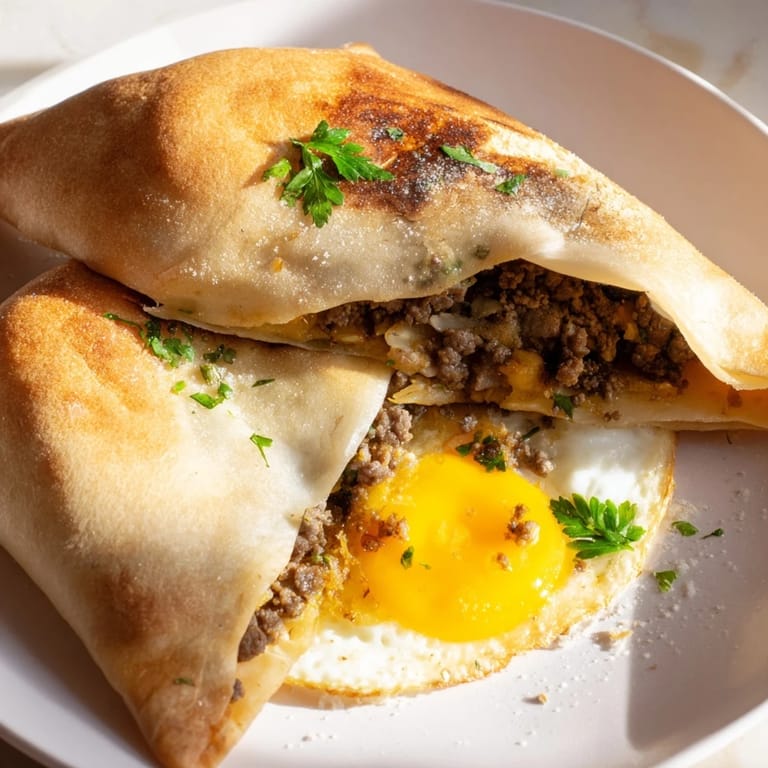
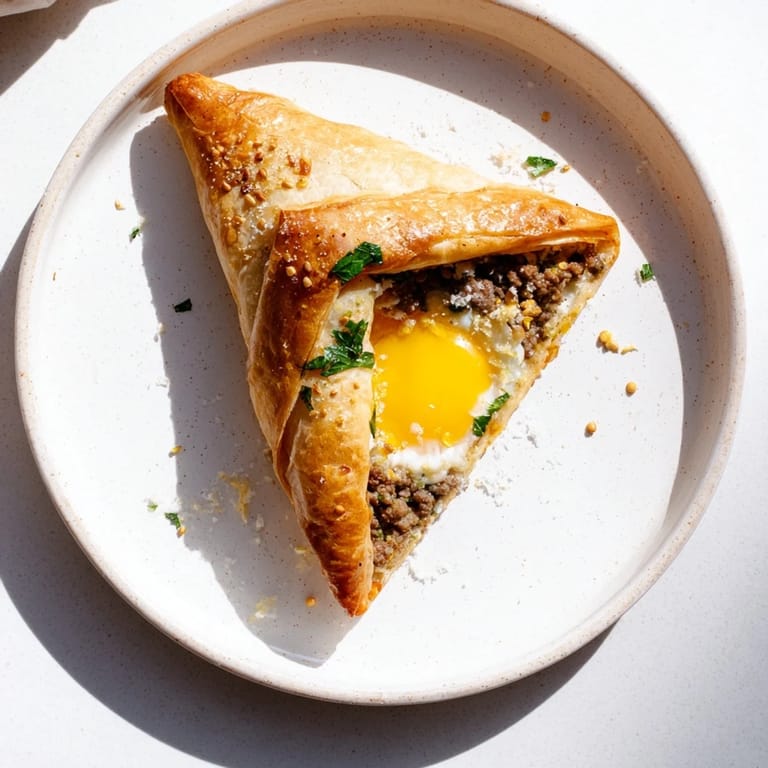
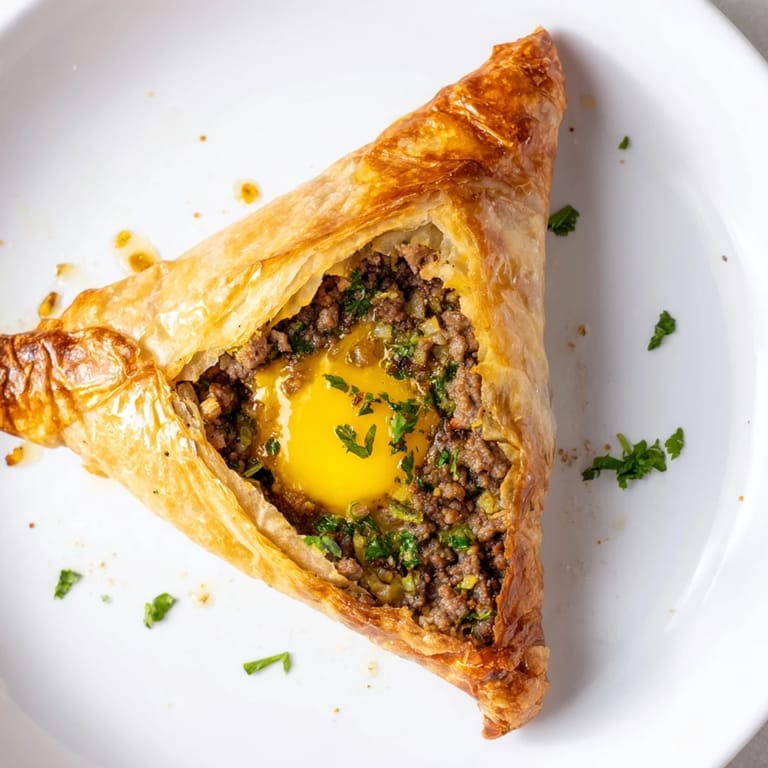
 My first bite of brik happened on a dusty Tunis street corner, where a vendor pulled a golden triangle from sizzling oil and handed it to me wrapped in paper. The crispy phyllo shattered between my teeth, and suddenly I understood why this simple pastry had survived centuries—that contrast of brittle exterior and the soft, warm egg yolk running into seasoned meat was pure magic. It took three attempts in my own kitchen before I stopped tearing the phyllo and learned to respect its delicate nature, but now I make these whenever I want to feel like I'm back on that street, hot oil popping and the smell of cumin filling the air.
I made these for my sister's surprise dinner party last spring, and watching everyone's faces when that golden pastry broke open and the egg started to run—that's when I knew this recipe was keeper material. She still texts me asking me to bring them to gatherings, which is funny because she used to avoid eggs in her food. Now she requests them specifically.
Ingredients
- Ground beef or lamb, 120 g: This is your savory anchor; lamb gives you more authentic Tunisian flavor, but beef works beautifully and is easier to find.
- Small onion, finely chopped: Don't skip this—it softens into sweetness and carries the spices deeper into the filling.
- Fresh parsley, 1 tbsp chopped: Add it after cooking to keep the brightness alive; cooked parsley tastes like dried grass.
- Ground cumin and coriander, 1 tsp and 1/2 tsp: Toast them in the warm oil first if you want them to sing—the heat wakes up their flavor.
- Phyllo pastry sheets: Handle like they're expensive; they're not delicate because they're weak, they're delicate because they're so thin they tear from static electricity and moisture.
- Large eggs: Room temperature eggs slip into the filling well without cooking instantly from contact with hot meat.
- Gruyère or mozzarella cheese, 4 tbsp grated: Optional but traditional in some versions—adds richness and a slight salty edge.
- Oil for frying: 3–4 cm deep, medium-high heat; this isn't deep frying, it's shallow frying, and the distinction matters for even browning.
Tired of Takeout? 🥡
Get 10 meals you can make faster than delivery arrives. Seriously.
One email. No spam. Unsubscribe anytime.
Instructions
- Sauté and season the filling:
- Warm a little oil in your skillet and let the onion turn translucent and soft—this takes about 3 minutes and smells like the beginning of something good. Add the meat with your spices and cook until it's browned through, then fold in the parsley and let everything cool enough that you won't cook the egg on contact.
- Layer and fill the pastry:
- Lay one sheet of phyllo down and if it's gossamer thin, add a second sheet underneath for strength. Spoon your meat mixture into the center, making a little nest, and crack an egg right into it.
- Add the finishing touch:
- If you're using cheese, scatter it over the egg now—it'll melt slightly and bind everything together.
- Fold and seal:
- Bring the phyllo up and over to form a triangle or rectangle, and use a wet finger or brush to seal those edges with just a touch of water. Too much water turns it soggy; too little and it unravels in the oil.
- Heat your oil:
- Get your frying pan with 3–4 cm of oil shimmering but not smoking—too hot and the outside burns before the inside cooks, too cool and it gets greasy.
- Fry until golden:
- Slide the filled pastry into the oil and listen to it sizzle confidently—fry about 2–3 minutes per side until it's deep golden and you can see through the phyllo to the filling inside. Remove with a slotted spoon and drain on paper towels.
 Pin it
 I learned the true meaning of brik when my grandmother told me it was street food made for people who were hungry and didn't have time to sit down—there's something beautiful about that, something honest. Now whenever I make it, I think about who I'm feeding and whether they're going to remember the taste when they're stuck in traffic or thinking about home.
The Oil Temperature Secret
Temperature is everything with brik, and I learned this by burning at least a dozen of them. If your oil is too hot, the phyllo blackens before the egg finishes cooking—you'll end up with a crispy shell and a raw yolk. If it's too cool, the pastry absorbs oil and becomes heavy and sad instead of shatteringly crisp. The sweet spot is medium-high, where the pastry makes a confident sizzle the moment it hits the pan, and you can fry 2–3 minutes per side without worry. Use a wooden skewer or toothpick to test the filling—if it meets slight resistance and the yolk is soft, you're done.
Variations Worth Trying
The beauty of brik is that it's a framework, not a rule, and once you understand how it works, you can play. Tuna is traditional in coastal Tunisia, and it's wonderful if you drain your canned tuna well and warm it with the spices first. Potato and caramelized onion become vegetarian brik and somehow feel even more luxurious. Some cooks add a tiny bit of harissa to the meat for heat, or mash in some roasted red pepper for sweetness. I've seen versions with spinach and feta, and while that's more Greek than Tunisian, it's delicious in its own right.
Serving and Storage
Brik is at its absolute best eaten within minutes of frying—the phyllo stays crispy and the yolk stays warm, and honestly, that's the whole point. If you need to make them ahead, assemble and refrigerate them uncooked for up to 4 hours before frying; the filling will be cold and less likely to cook the egg too fast. Serve them with lemon wedges to cut the richness and a simple green salad to balance all that golden, savory goodness.
- Lemon juice brightens everything and makes you want to eat another one.
- A crisp white wine or sparkling drink is perfect alongside—the acidity clears your palate between bites.
- These are best eaten warm, so don't let them sit; serve immediately after frying.
 Pin it
 There's something about brik that feels like a small ceremony—the hiss of oil, the golden color, the way it demands to be eaten right now. Once you master it, you'll find yourself making it for friends, for unexpected guests, for yourself on nights when you want something that tastes like more than the sum of its parts.
Recipe FAQs
- → What type of meat is traditionally used in Tunisian brik?
Ground beef or lamb is commonly used to create the flavorful filling in Tunisian brik.
- → How do you achieve a crispy phyllo pastry in brik?
Frying the folded phyllo pastry in hot oil until golden ensures a crisp, flaky texture.
- → Can cheese be added to the filling?
Yes, adding grated Gruyère or mozzarella cheese is a popular variation that adds richness.
- → How do you prevent the phyllo from tearing when folding?
Handle the phyllo sheets gently and use a little water to seal the edges securely to avoid tearing.
- → Are there common variations of the filling used in Tunisian brik?
Some variations include using tuna or potato instead of meat, often accompanied by fresh herbs and spices.