 Pin it
 The first time I made spinach pasta, I stood in my tiny apartment kitchen squeezing water out of wilted leaves with my bare hands, wondering if this was actually going to work. My grandmother had called me that morning to explain that the secret was getting the spinach as dry as possible, no matter how tedious it felt. When that emerald green dough finally came together under my palms, something clicked. Now whenever I see fresh spinach at the farmers market, I remember that moment of pure kitchen magic.
Last spring, my neighbor came over with a bag of spinach from her garden that needed using immediately. We spent the afternoon rolling out sheets of green dough, flour covering everything from our aprons to the cat, while her kids tried to cut ravioli squares that looked more like abstract art. The meal that followed was chaotic and imperfect, but nobody cared because fresh pasta has a way of making everything feel special.
Ingredients
- Fresh baby spinach: Baby spinach leaves work best because they are tender and naturally sweet after blanching
- Italian 00 flour: This finely ground flour creates the silkiest pasta dough, though all purpose flour works in a pinch
- Semolina flour: Adds a lovely texture and helps the pasta hold its shape better during cooking
- Large eggs: Room temperature eggs incorporate more evenly into the dough for consistent results
- Fine sea salt: Enhances the natural spinach flavor without overpowering it
Tired of Takeout? 🥡
Get 10 meals you can make faster than delivery arrives. Seriously.
One email. No spam. Unsubscribe anytime.
Instructions
- Prepare the spinach:
- Blanch the spinach leaves in boiling water for 30 seconds until they wilt completely, then immediately transfer to an ice bath to stop the cooking process and preserve that bright green color.
- Remove excess moisture:
- Gather the cooled spinach in your hands and squeeze firmly until no more water drips out. This step is tedious but essential, because too much moisture will make your dough sticky and difficult to work with.
- Create a smooth puree:
- Blend the squeezed spinach in a food processor until it becomes a completely smooth paste, scraping down the sides as needed to ensure no fibrous pieces remain.
- Build the well:
- Mound both flours and the salt on a clean work surface, using your fingers to create a deep well in the center like a volcano crater, with high walls to contain the wet ingredients.
- Combine the ingredients:
- Crack the eggs into the well along with the spinach puree, then use a fork to gradually whisk the eggs and spinach while slowly pulling in small amounts of flour from the inner walls.
- Knead the dough:
- When the mixture becomes too thick to whisk, use your hands to bring it together into a shaggy mass, then knead firmly for 8 to 10 minutes until the dough becomes smooth and elastic like a soft pillow.
- Let it rest:
- Wrap the dough tightly in plastic wrap and let it rest at room temperature for at least 30 minutes, which allows the gluten strands to relax and makes rolling much easier.
- Roll and shape:
- Cut the dough into 4 pieces, keeping the rest covered, and roll each piece through a pasta machine or with a rolling pin until you can see your hand through the sheet, then cut into your desired shape.
- Cook the pasta:
- Drop fresh pasta into a large pot of boiling salted water and cook for just 1 to 2 minutes until the noodles float to the surface and taste tender but still have a slight chew.
 Pin it
 My daughter helped me make this for her birthday dinner last year, insisting on cutting every single piece of fettuccine herself. The kitchen floor was covered in flour, half the noodles were different widths, and we both had green stains on our shirts. But watching her face light up when she took that first bite of pasta she made with her own hands is one of my favorite cooking memories ever.
Getting The Right Color
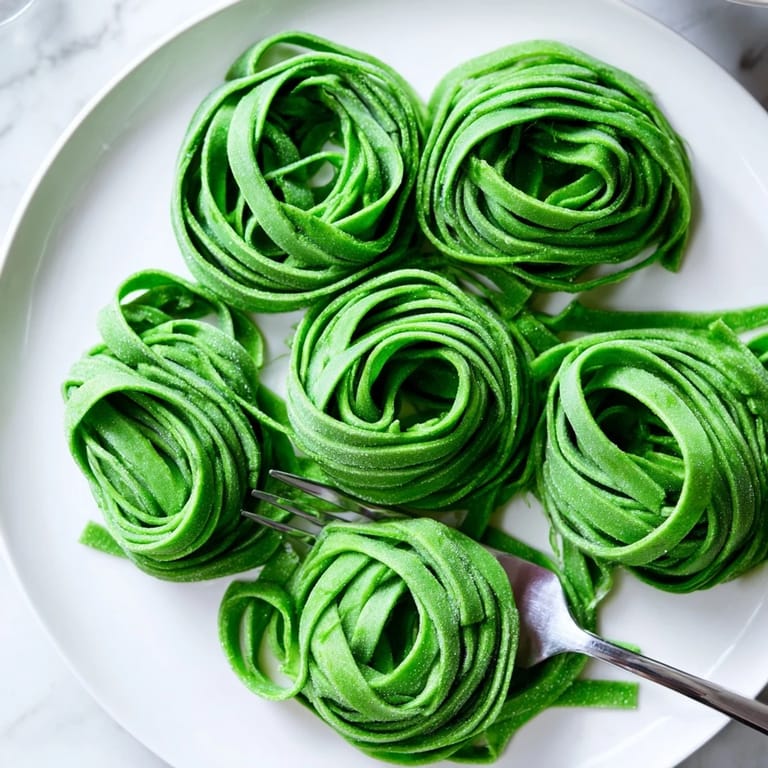
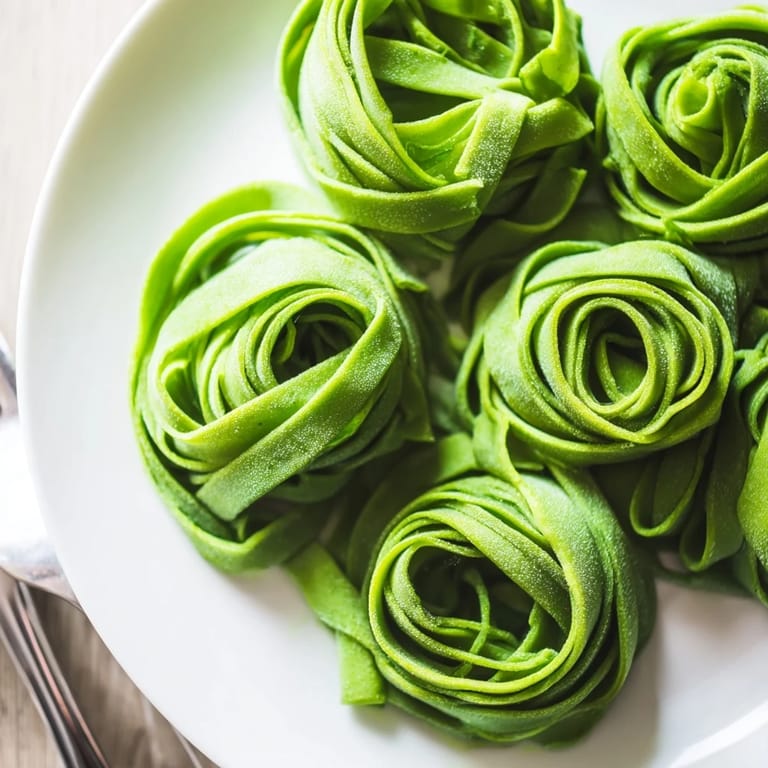
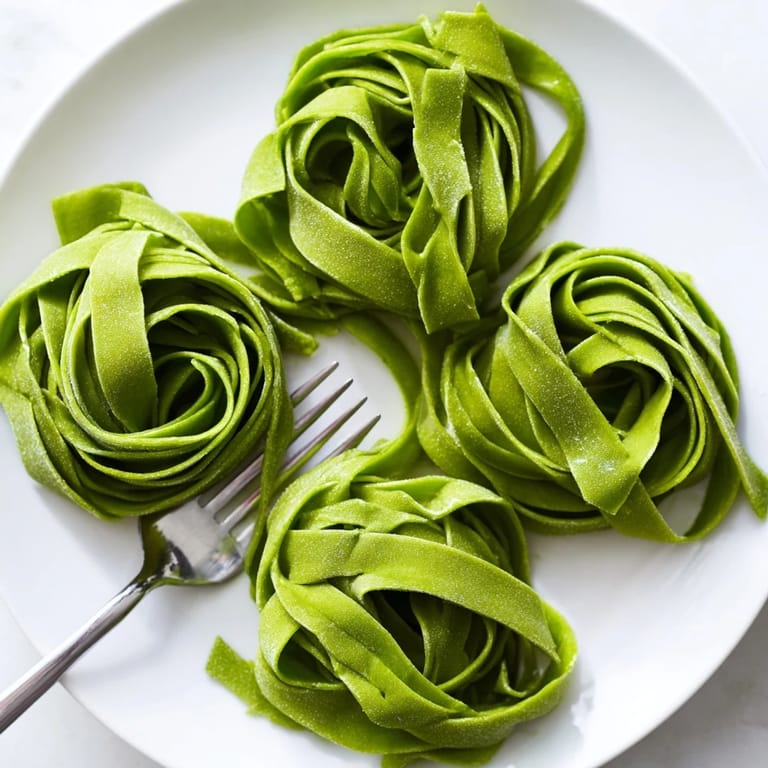
The vibrant green hue comes from properly blanching the spinach and squeezing out excess moisture before pureeing. If your pasta looks more olive than emerald, try blanching the spinach for exactly 30 seconds and shocking it in ice water immediately. The contrast against a simple white sauce or nothing more than brown butter and parmesan makes this pasta visually stunning on any plate.
Storing And Freezing
Fresh pasta dough keeps in the refrigerator for up to 24 hours when wrapped tightly in plastic, though the color may deepen slightly. For longer storage, cut your pasta into shapes and lay them flat on a baking sheet until frozen solid, then transfer to freezer bags for up to 3 months. Frozen pasta goes directly into boiling water and may need an extra minute to cook through.
Serving Suggestions
This spinach pasta pairs beautifully with cream based sauces, brown butter and sage, or simply tossed with olive oil and freshly grated parmesan to let the delicate spinach flavor shine. The green color makes it especially festive for spring meals or holiday dinner tables.
- Try serving with a light Alfredo sauce and fresh peas
- Brown butter, sage, and toasted walnuts complement the earthy spinach flavor
- A simple drizzle of good olive oil and sea salt lets the pasta really speak for itself
 Pin it
 There is something deeply satisfying about eating pasta you made yourself, watching it transform from simple ingredients into something extraordinary. I hope this recipe brings as much joy to your kitchen as it has to mine.
Recipe FAQs
- → Do I need a pasta machine to make spinach pasta dough?
No pasta machine is required. A rolling pin works perfectly for rolling out the dough to your desired thickness. Cut sheets into fettuccine, squares for ravioli, or leave whole for lasagna. A pasta machine simply makes the process faster and ensures consistent thickness throughout.
- → Why is my spinach pasta dough too sticky or too dry?
Sticky dough needs more flour sprinkled gradually while kneading. Dry dough requires a few drops of water, added one at a time. Humidity and flour absorption vary, so adjust accordingly. The perfect dough should feel smooth, elastic, and slightly tacky but not sticky.
- → Can I use frozen spinach instead of fresh?
Frozen spinach works but requires thorough thawing and extra squeezing to remove excess moisture. Excess water throws off the dough hydration. Fresh baby spinach provides better color and flavor. If using frozen, measure after thawing and draining completely.
- → How long can I store fresh spinach pasta dough?
Wrap dough tightly in plastic and refrigerate for up to 24 hours. For longer storage, freeze rolled and cut pasta shapes in single layers, then transfer to freezer bags for up to 3 months. Cook frozen pasta directly in boiling water without thawing.
- → What sauces pair best with spinach pasta?
Spinach pasta complements rich sauces like cream and parmesan, brown butter sage, or classic tomato ragù. The delicate earthy flavor also shines with simple olive oil, garlic, and parmesan. Avoid heavy cream-based sauces that mask the vibrant color and subtle spinach taste.
- → Why does my green pasta lose its vibrant color when cooked?
Overcooking causes color fading. Cook fresh spinach pasta briefly—just 1–2 minutes in boiling salted water. The vibrant green comes from chlorophyll in spinach, which breaks down with prolonged heat. Working quickly and serving immediately preserves the beautiful hue.