 Pin it
 I discovered this dish on an ordinary Tuesday evening when my friend challenged me to cook something that tasted as good as it looked. We were standing in her kitchen, surrounded by farmers market bags, and she held up these jewel-toned beets and said, "Make me something that stops me mid-bite to admire it." That challenge led me here, layering shadows and light on a plate, learning that food could be a conversation between colors as much as flavors.
The first time I plated this for a dinner party, I was nervous about whether guests would take it seriously as a starter. Then my neighbor cut into it and said nothing for a full minute, just kept eating with her eyes closed, and I realized that sometimes the most sophisticated meals are the ones that feel effortless to enjoy.
Ingredients
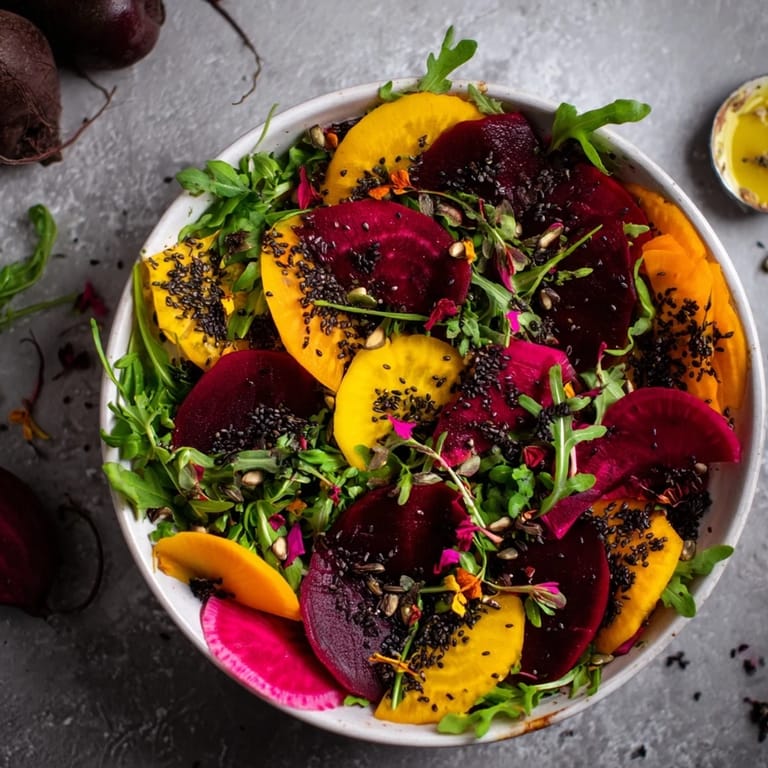
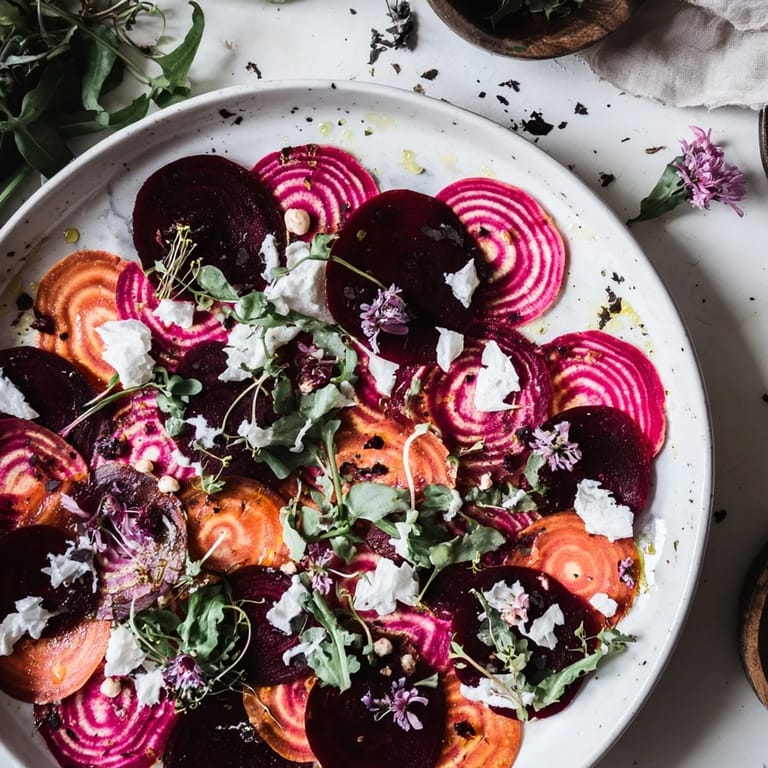
- Golden beets: Their natural sweetness creates warmth against the cooler reds, and slicing them thin enough to almost see through is the secret to making them feel delicate.
- Red beets: The earthier cousin that grounds the plate with deep color and grounding umami notes.
- Baby arugula: Don't use the mature stuff; it's too assertive and will overpower the visual composition you're building.
- Watermelon radish: Those pink and white stripes inside are what people gasp at, so slice it just thick enough to showcase the pattern.
- Blackberries: They read as sophisticated shadows but taste like summer if you find good ones.
- Black olives: The ultimate dark accent that also brings a briny anchor to balance everything sweet.
- Black tahini: If you can't find it, regular tahini with a touch of squid ink transforms it into something that looks like it belongs in an art gallery.
- Extra virgin olive oil: This is not a time to use supermarket oil; find one that tastes peppery and bright.
- Lemon juice: Fresh is non-negotiable; bottled will make the whole thing taste like you didn't care.
- Honey: Just a teaspoon, but it's what makes people say they can't quite identify what's making them smile.
- Microgreens: The final layer of visual drama; purple radish microgreens echo the color story perfectly.
Tired of Takeout? 🥡
Get 10 meals you can make faster than delivery arrives. Seriously.
One email. No spam. Unsubscribe anytime.
Instructions
- Slice your beets paper-thin:
- Use a mandoline if you have one, but a sharp knife works if you go slowly and let the blade do the work. You want them almost translucent so light can travel through them.
- Build your base layer:
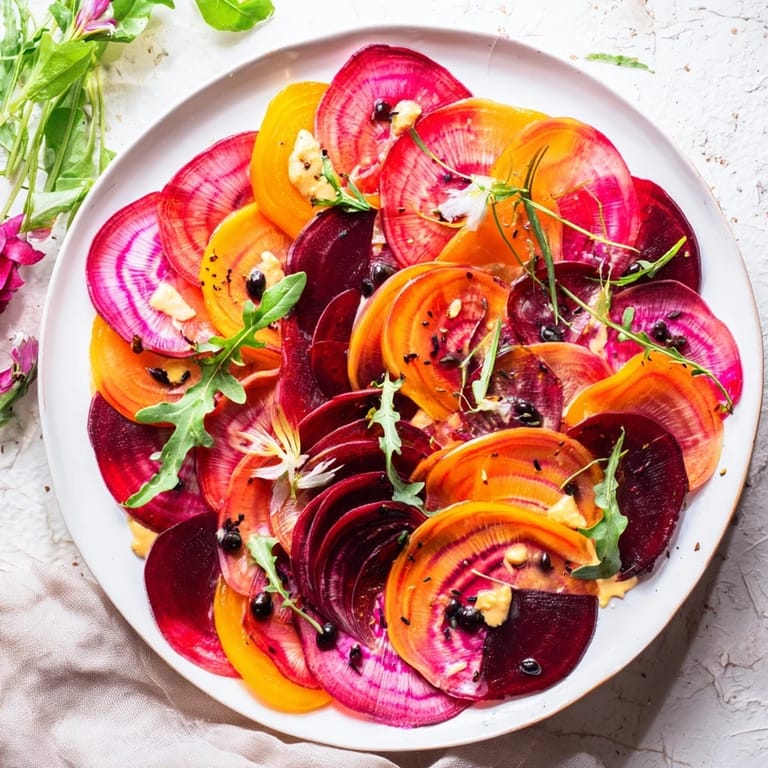
- Arrange the golden and red beet slices in an overlapping pattern on your largest plate, alternating colors like you're creating a visual rhythm. Step back and look at it; this is your foundation.
- Add the bright elements:
- Fan the watermelon radish slices across the beets, letting some overlap and some stand alone. Scatter the arugula loosely so it catches light and creates texture.
- Create shadow depth:
- Now this is where it gets fun: place the blackberries and halved olives in the negative spaces, tucking them where they create visual contrast against the brighter ingredients. Think of it as placing shadows in a painting.
- Make your dressing:
- Whisk the olive oil, lemon juice, and honey together until they emulsify slightly, then season carefully. Taste it before you add salt; sometimes the tahini and olives contribute enough.
- Add the dark contrast:
- Spoon small dollops of black tahini around the plate, then use the back of a spoon to create soft smears. These shouldn't look perfect; they should look intentional.
- Finish with garnish:
- Scatter microgreens and edible flowers if you have them, placing them where they'll catch the eye and add the final layer of sophistication.
 Pin it
 I'll never forget when my six-year-old nephew looked at this dish and asked if it was "art we could eat" instead of just food. That question changed how I think about cooking; it reminded me that nourishment and beauty aren't separate things, they're the same impulse expressed through different senses.
The Mandoline Is Your Best Friend
Once you commit to owning a mandoline, these thin slices become effortless, and the whole dish stops feeling intimidating. The first time I used mine, I was terrified of my fingers, but now I know where to place them and I move with confidence. It's one of those tools that feels like it levels up your entire cooking life.
Choosing Your Vegetables
The season matters more than you'd think with this dish. Winter beets tend to be sweeter and earthier, while summer farmers market finds are sometimes more delicate and fresh. I've made this with whatever looked best at the market, and the dish adapts beautifully; it's flexible enough to forgive seasonal variations.
Plating Like You Mean It
This is where the dish becomes personal, where your hands and your eye take over from the recipe. What feels balanced to you might be different from what feels balanced to me, and that's exactly the point. Spend the two minutes arranging, stepping back, adjusting; that small investment of attention is what transforms ingredients into an experience.
- Remember that negative space on the plate is as important as what you've placed there.
- If something isn't working, rearrange it; there are no mistakes at the plating stage.
- The goal is to make someone want to eat it with their eyes first.
 Pin it
 Every time I plate this, I remember that cooking is about more than following steps; it's about creating a moment worth sharing. Serve this to someone you care about, and watch their face when they realize something this beautiful is actually meant to be eaten.
Recipe FAQs
- → How do I achieve the shadow effect in this dish?
Arrange dark elements like blackberries, olives, and black tahini beneath or behind the bright beet and radish slices to create distinct silhouettes and depth.
- → Can I substitute honey in the dressing?
Yes, agave syrup works well as a vegan alternative to honey, keeping the dressing balanced and natural.
- → What tools are recommended for preparation?
A mandoline slicer or a sharp knife helps achieve thin, even beet slices essential for layering and presentation.
- → Are there any allergen concerns?
This dish contains sesame from tahini, and olives may have pits; check packaged ingredients for possible gluten traces if sensitive.
- → What beverages pair well with this dish?
A crisp Sauvignon Blanc or a light, earthy Pinot Noir complements the fresh, layered flavors and contrasts beautifully.