 Pin it
 I'll never forget the first time I walked into a modern art gallery and saw a Pointillist painting up close—thousands of tiny dots creating this breathtaking whole. Years later, standing in my kitchen on a lazy Sunday, I thought: why not paint with food? That's when The Pointillism Dot Matrix was born, a dish that turned my plating into canvas work. It's become my favorite way to impress friends while having pure fun with color and flavor.
I remember my friend Sarah sitting at my table, fork hovering over her plate, eyes wide with wonder. She took one small bite combining the beet puree with the microgreens and pomegranate, then another mixing the yellow pepper with basil pesto, and I watched her discover something magical—that this dish wasn't about following a single flavor journey, but about writing her own story with each forkful.
Ingredients
- Beetroot, cooked and pureed (80 g): This gives you that jewel-toned deep red that instantly makes the plate pop. I've learned to cook it gently so the color stays vibrant, not dull
- Carrot, cooked and pureed (80 g): The warm golden orange creates visual warmth on the plate. A little olive oil makes it pipe smoothly
- Green pea, cooked and pureed (80 g): Fresh, bright, and slightly sweet—this is your color harmony moment on the plate
- Yellow bell pepper, roasted and pureed (80 g): Roasting it first deepens the flavor and makes the color glow like liquid sunshine
- Greek yogurt (60 g): Creamy, tangy, and the perfect neutral canvas that ties flavors together
- Crème fraîche (40 g): Richer than yogurt, with a sophisticated edge that elevates each bite
- Basil pesto (1 tbsp): Fresh, herbal, and it's the flavor that makes people close their eyes and smile
- Red pepper coulis (1 tbsp): Silky smooth and adds a gentle sweetness that balances the saltiness
- Balsamic reduction (1 tbsp): This is your umami secret, adding depth and a subtle tang
- Pickled red onions, finely diced (20 g): The brightness and crunch make every bite wake up your palate
- Microgreens (20 g): They're not just decoration—they add peppery freshness and texture that matters
- Toasted black sesame seeds (1 tbsp): Nutty, rich, and they add visual contrast and texture
- Pomegranate seeds (1 tbsp): Jewel-like bursts of tart sweetness and juice
- Edible flower petals (optional): These are your finishing signature, the detail that says you cared
- Sea salt flakes and freshly ground black pepper: The seasonings that make everything sing
Tired of Takeout? 🥡
Get 10 meals you can make faster than delivery arrives. Seriously.
One email. No spam. Unsubscribe anytime.
Instructions
- Blend each vegetable into silky purees:
- Take your cooked beetroot and blend it smooth with just a pinch of salt and a few drops of olive oil—you want it to move like paint. Do the same with each vegetable separately, because mixing them now would muddy your colors. Transfer each into its own piping bag and set them aside. This is your palette now.
- Get your sauces and creams ready:
- Put the Greek yogurt and crème fraîche into separate piping bags too. Pour the basil pesto, red pepper coulis, and balsamic reduction into squeeze bottles. Having everything ready before you plate is the secret to staying calm and creative.
- Create your pointillist composition:
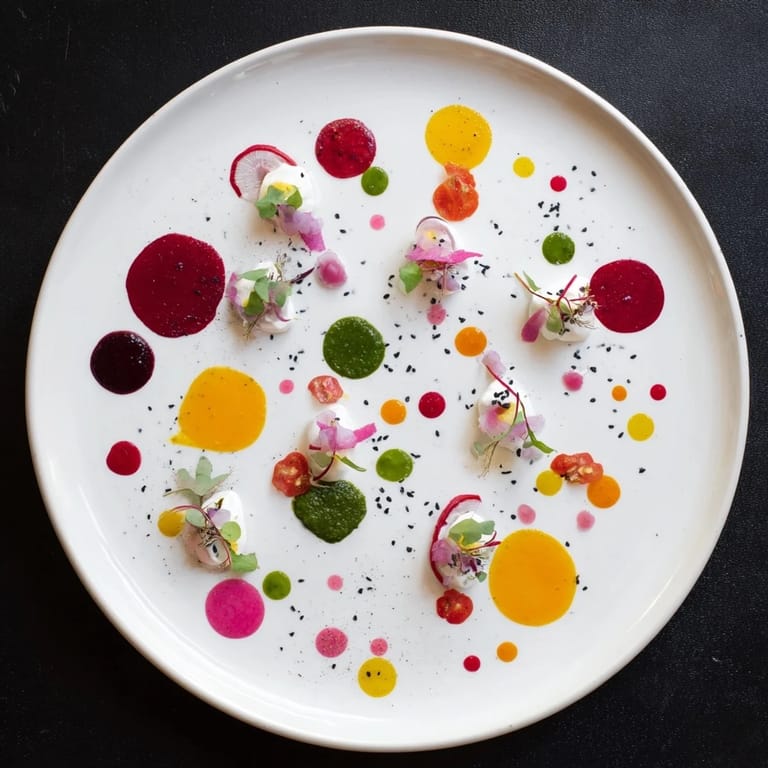
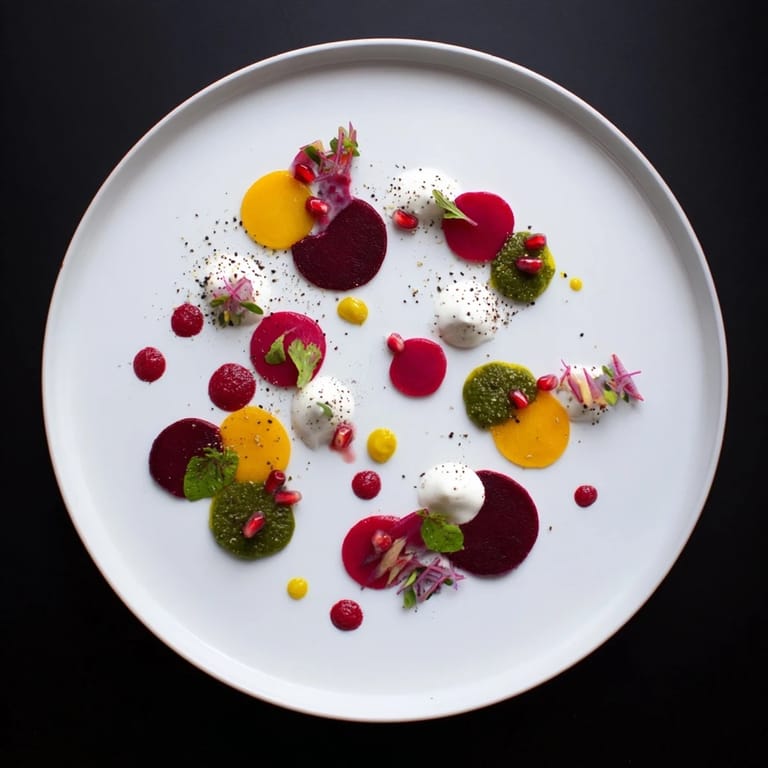
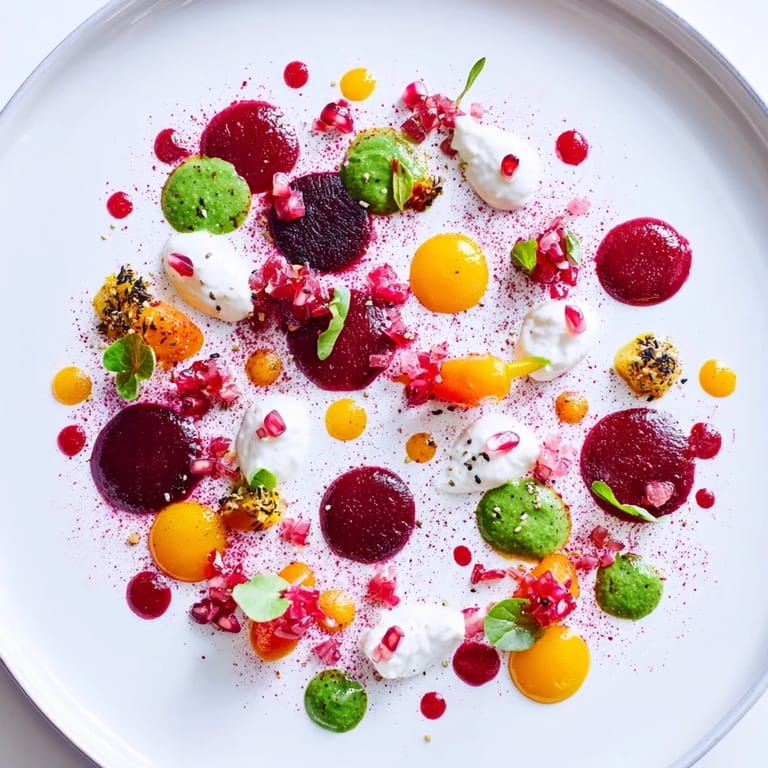
- This is where the magic happens. Look at your empty white plate like it's your canvas. Using the piping bags, dot and place tiny mounds of each puree across the surface in a scattered, non-touching pattern—don't overthink it, let your instincts guide you. Vary the sizes of your dots, some tiny pin-pricks, some larger mounds. Step back and look for balance in color and space.
- Add your accent layers:
- Now gently sprinkle the pickled red onions over and around your dots. Add the microgreens in little clusters, scatter the toasted sesame seeds where you want texture, and place pomegranate seeds like jewels. If using edible flowers, position them with tweezers like you're placing the final brushstrokes.
- Finish and serve with intention:
- A small pinch of sea salt flakes and a crack of black pepper across the whole plate. Take a moment to look at what you've created. Then serve immediately—this is a dish that rewards presentation, and the impact fades once everyone starts mixing.
 Pin it
 There was a moment at a dinner party when I realized this dish had become something more than pretty plating. My grandmother, who'd never been one for fancy food, sat there for five minutes just looking at her plate, and when she finally took a bite, she said it tasted like edible happiness. That's when I knew I'd created something that fed both the eyes and the soul.
The Art of Plating
What I've learned is that plating isn't about showing off—it's about creating a conversation between the diner and the food. When you scatter instead of line things up, when you vary your dot sizes instead of making them uniform, you're inviting people to explore. The imperfection is actually perfect. Think like a painter: you're not trying to make it pristine, you're trying to make it alive.
Vegetable Purees: The Foundation
The purees are truly the heart of this dish, and understanding them changes everything. Each vegetable brings not just color but its own flavor personality. The beetroot is earthy and sweet, the carrot is bright and almost candy-like, the peas are gentle and grassy, and the yellow pepper is sophisticated and mellow. When you cook them first and then puree them, you're concentrating their flavors and making them stable enough to hold on the plate. I've found that roasting the yellow pepper instead of boiling it adds a depth that makes people pause and ask what's in that yellow dot.
Flavor Combinations That Work
The real joy of this dish is that it's a choose-your-own-adventure with flavors. The beetroot loves the balsamic reduction and the microgreens. The yellow pepper sings with the basil pesto. The green peas are peaceful with the crème fraîche. The carrot brightens up everything. But here's the secret: the pickled red onions are the unsung hero that ties everything together with their sharp, vinegary punch. Don't skip them or reduce them. They're what makes someone say, 'Wait, what was that flavor?'
 Pin it
 This dish taught me that cooking doesn't always have to be about feeding hunger—sometimes it's about feeding the human need for beauty and wonder. Every time you make it, you're creating a moment.
Recipe FAQs
- → How are the colorful dots created?
Each vegetable is pureed separately and piped onto the plate in small dots and mounds, using squeeze bottles or piping bags for precise placement.
- → What vegetables are used in the purees?
Beetroot, carrot, green pea, and yellow bell pepper are cooked and blended into vibrant purees contributing bright colors and fresh flavors.
- → How is texture enhanced in the dish?
Accents such as pickled red onions, microgreens, toasted sesame seeds, pomegranate seeds, and edible flower petals add varied textures and bursts of flavor.
- → Can this dish be adapted for vegan diets?
Yes, substituting plant-based yogurt for dairy and omitting crème fraîche allows for a vegan-friendly version without compromising texture or taste.
- → What is the best way to serve to preserve presentation?
Serve immediately after plating to maintain the vibrant colors and distinctive dot pattern, ensuring the visual impact remains intact.