 Pin it
 A friend once handed me a ceramic tagine at a market in Marrakech, insisting I'd understand Morocco through food if I took it home. I was skeptical—I'd never made anything like this before. But that first evening, when the spices hit the hot oil and the kitchen filled with cumin and cinnamon, I realized she was right. Now whenever I make this chicken, it tastes like discovery, like that moment of standing in an unfamiliar kitchen and suddenly feeling at home.
I made this for my in-laws last winter, nervous they'd find it too adventurous. My mother-in-law took a bite, closed her eyes, and asked for the recipe before she'd finished chewing. That's when I realized this dish doesn't need explanation—it speaks for itself, crossing cultures and skepticism in a single bowl.
Ingredients
- Bone-in, skin-on chicken thighs: These pieces stay juicy through long cooking and their skin crisps beautifully when you brown them first, adding depth to the sauce.
- Onion and garlic: The aromatics that build the foundation—don't rush sautéing them, as they sweeten slightly and anchor all those spices.
- Fresh ginger: Grated rather than minced, it dissolves smoothly into the sauce and adds a gentle warmth that mellows over time.
- Cumin, coriander, and cinnamon: This trio is the soul of the dish; toasting them briefly in the oil releases their essential oils and makes them sing.
- Paprika and turmeric: Layer in color and earthiness without overpowering the delicate apricots.
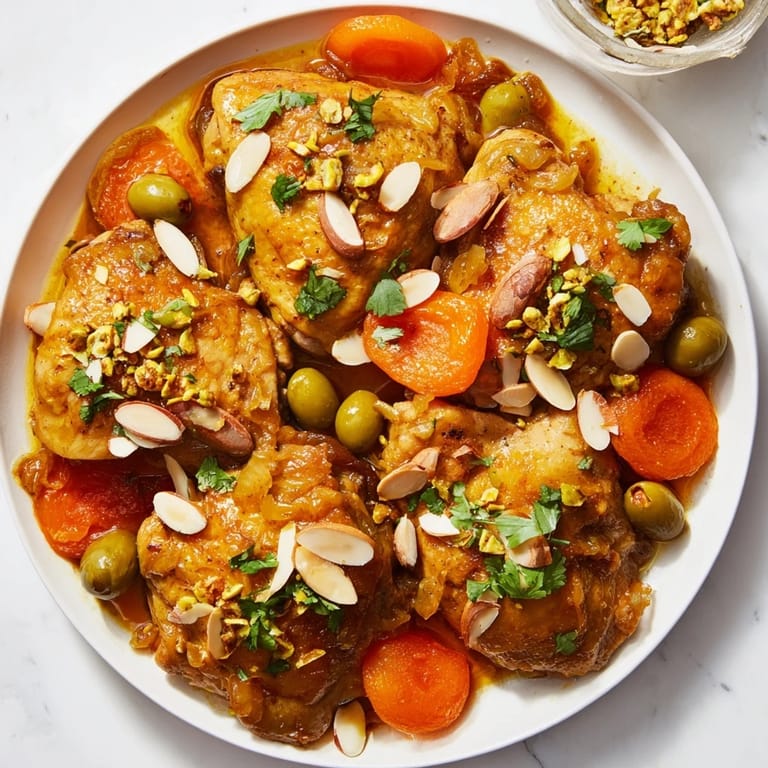
- Dried apricots: Halving them lets them soften faster and distribute their sweetness more evenly throughout the sauce.
- Preserved lemon: Optional but transformative—the rind provides a bright, briny note that balances the fruit and spices beautifully.
- Green olives: Added near the end so they keep their firm texture and salty punch against the soft chicken.
- Toasted almonds: A final garnish that adds crunch and brings the whole dish into focus.
Tired of Takeout? 🥡
Get 10 meals you can make faster than delivery arrives. Seriously.
One email. No spam. Unsubscribe anytime.
Instructions
- Dry and season the chicken:
- Pat your thighs very dry with paper towels—this helps them brown instead of steam. A good coating of salt and pepper now means you won't need much later.
- Brown the chicken:
- Heat oil in your pot until it shimmers, then listen for the satisfying sizzle as the skin hits the pan. Let each side develop a golden-brown crust, about 5-7 minutes total, then set aside.
- Build the base:
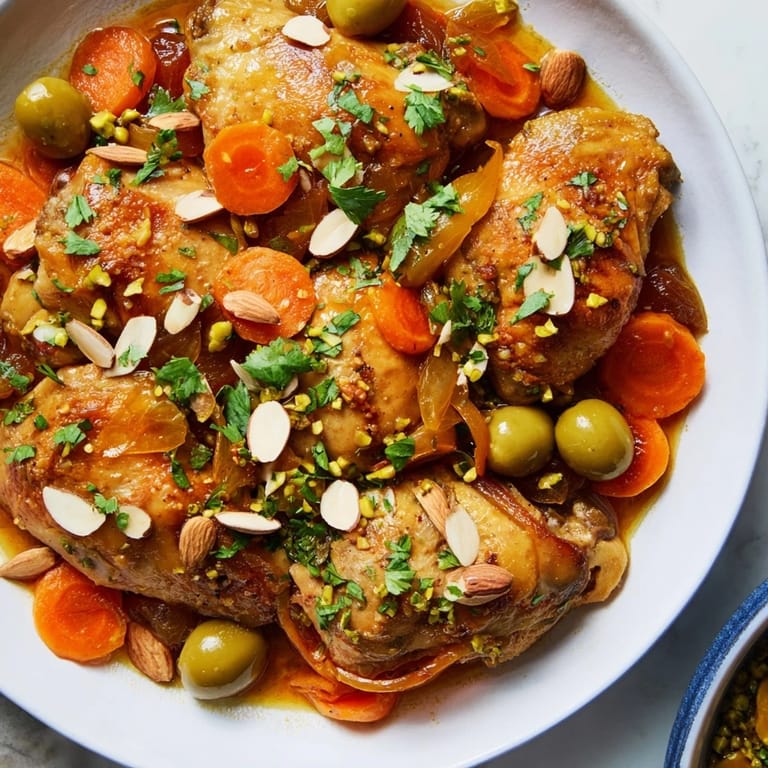
- In the same pot with all those flavorful browned bits, soften your onions and carrots until they're translucent. This is where patience pays off—rushing this step means missing out on that sweet, mellow foundation.
- Bloom the spices:
- Add garlic, ginger, and all your spices, stirring constantly for about a minute. Your kitchen will smell like a spice market, and you'll know you're doing it right when the aroma becomes almost overwhelming.
- Add tomatoes and scrape:
- Pour in the drained tomatoes and use your wooden spoon to scrape up every browned bit stuck to the bottom. Those caramelized bits are flavor gold.
- Braise the chicken:
- Return the chicken to the pot along with apricots, preserved lemon if using, and broth. Bring to a gentle simmer, then cover and let it cook low and slow for 45 minutes, stirring occasionally so everything cooks evenly.
- Finish with olives:
- Uncover, add the olives, and let everything simmer for another 10 minutes. The sauce will thicken slightly, and you'll see the flavors deepen.
 Pin it
 There's a moment about halfway through cooking when the apricots start to break down and perfume the entire sauce—that's when you know something special is happening. My daughter wandered into the kitchen following the smell, and we both just stood there, waiting for dinner to be ready.
Flavor Balance and Why It Works
Moroccan cuisine thrives on contrast, and this tagine is proof. The sweetness of apricots plays against the briny olives, the warmth of cinnamon against the earthiness of cumin. That preserved lemon rind cuts through everything with a bright tang that keeps the dish from feeling heavy. It's a lesson in restraint and balance—each ingredient has a role, and when they work together, you stop thinking about individual flavors and start thinking about the whole experience.
Serving and Pairing Ideas
I've served this over fluffy couscous, over rice, nestled in warm flatbread, and even on its own. Each vessel changes the experience slightly. Couscous is traditional and lets the sauce shine without competition. Rice is neutral and forgiving if you make the sauce a bit saucier than intended. Flatbread turns it into something you can eat with your hands, which somehow makes it taste even better.
Make It Your Own
This recipe is a foundation, not a rulebook. I've made it with dried apricots and fresh ones, with chicken thighs and legs, with harissa stirred in for heat and without. A friend made it vegetarian by swapping the chicken for chickpeas and adding extra carrots and parsnips, and it was just as compelling. The bones and aromatics and spices are what matter—everything else is fair game for your kitchen and your tastes.
- If you can't find preserved lemon, a strip of fresh lemon zest added near the end captures some of that brightness.
- Harissa paste stirred in at the end brings serious heat for those who want it, but add it gradually and taste as you go.
- Leftovers improve after a day or two as the flavors deepen and meld, so don't hesitate to make this ahead.
 Pin it
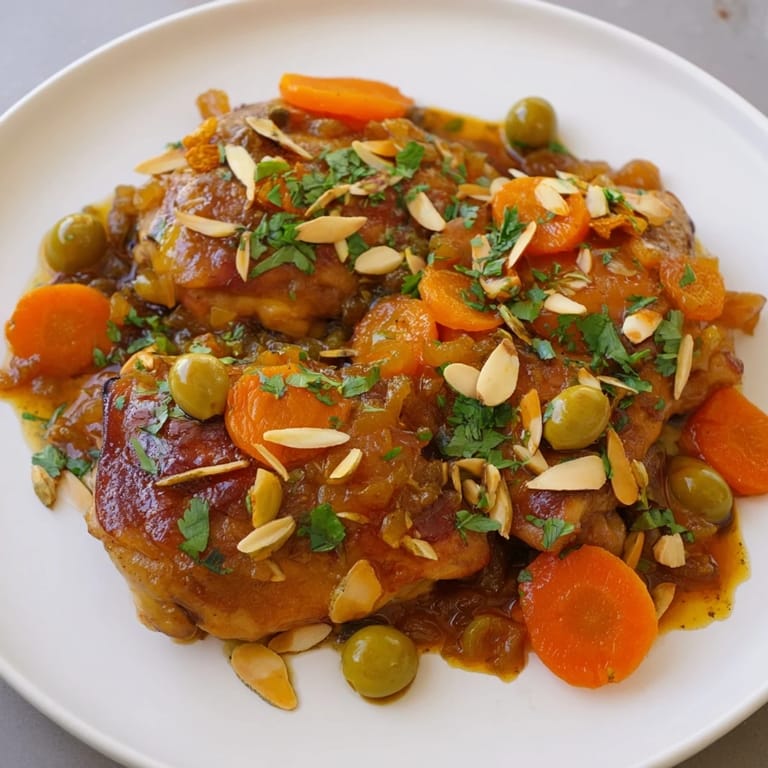
 This dish has a way of making you feel like you've traveled and cooked simultaneously, which is maybe the best magic food can offer. Every time I make it, I think of that friend and her ceramic tagine, and how a simple bowl of chicken and apricots became my way of keeping that moment alive.
Recipe FAQs
- → What cut of chicken works best?
Bone-in, skin-on chicken thighs provide the best flavor and tenderness during slow cooking.
- → Can this dish be cooked without a tagine?
Yes, a large Dutch oven or heavy pot works well for simmering the ingredients evenly.
- → What gives the dish its sweet and savory balance?
Dried apricots add sweetness which complements the savory olives and spice blend beautifully.
- → Is preserved lemon necessary?
Preserved lemon adds an authentic tang but can be omitted if unavailable without major flavor loss.
- → What sides pair well with this dish?
Steamed couscous, rice, or warm flatbread are excellent options to soak up the flavorful sauce.
- → Can I add heat to the dish?
Harissa or a pinch of cayenne pepper can be included to introduce a subtle spicy kick.