 Pin it
 A friend visiting from Marrakech once stopped mid-conversation to watch me chop vegetables, then gently took over my knife work with a knowing smile. That afternoon, over this couscous salad, she told me that the trick isn't in any single ingredient—it's in how the warm spices wake up the vegetables before they ever meet the fluffy grains. Now whenever I make it, I think of her kitchen stories and how something so simple can taste like travel.
The first time I served this at a potluck, someone asked if it was from a restaurant because the colors were so vibrant and everything tasted balanced in a way they didn't expect from something homemade. I realized that moment that good cooking often comes down to giving yourself permission to trust the recipe and the ingredients—no second-guessing, just good ratios and a hot oven.
Ingredients
- Couscous: The foundation here—it's delicate and absorbs flavor like a sponge, so using broth instead of water makes all the difference and keeps it from tasting plain.
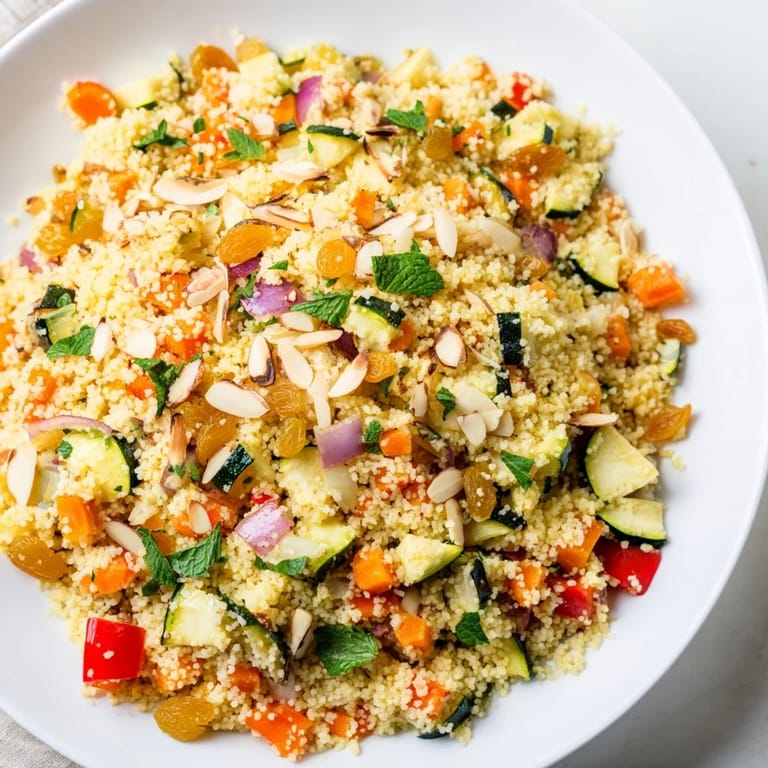
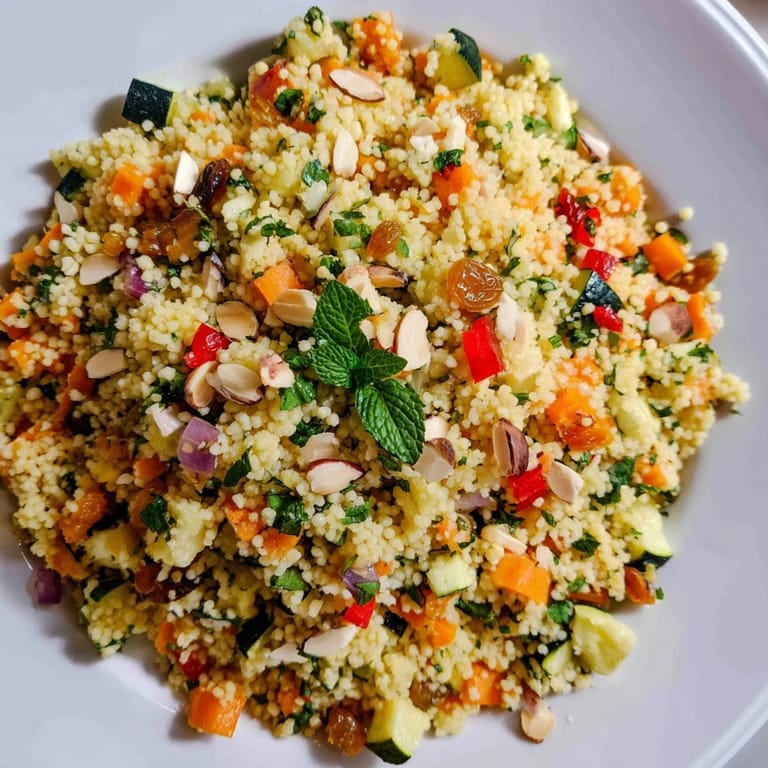
- Roasted vegetables (zucchini, bell pepper, carrot, red onion): Roasting concentrates their sweetness and gives them just enough char to feel intentional; don't skip the step of stirring halfway through.
- Ground cumin and coriander: These warm spices are what make this taste distinctly Moroccan—they should go on the vegetables before roasting so they toast slightly and release their oils.
- Smoked paprika: A small amount adds depth and a subtle smoke that ties everything together.
- Chickpeas: They add protein and a creamy texture that makes this hearty enough to stand alone or pair with grilled meat.
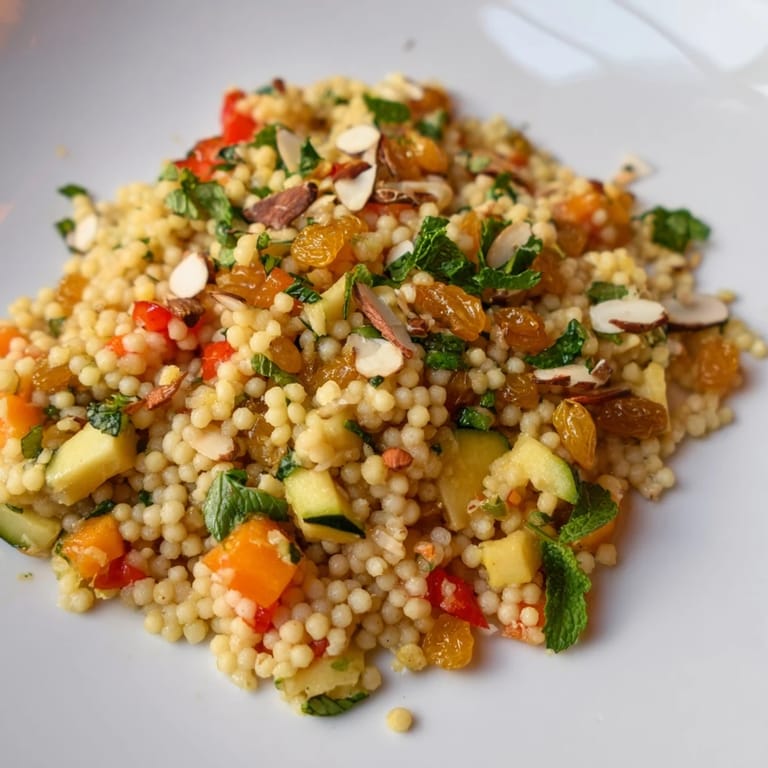
- Raisins or golden sultanas: Sweet pops of flavor that play beautifully against the savory spices and herbs—don't skip them.
- Fresh parsley and mint: These are not just garnish; they're essential for brightness and should be added after dressing so they stay vibrant.
- Toasted slivered almonds: Optional but worth it for a subtle crunch and nuttiness that elevates the whole dish.
- Lemon juice, garlic, and honey in the dressing: The acid, punch, and slight sweetness balance everything—this dressing is what transforms it from ingredients into a cohesive salad.
Tired of Takeout? 🥡
Get 10 meals you can make faster than delivery arrives. Seriously.
One email. No spam. Unsubscribe anytime.
Instructions
- Prep and heat the oven:
- Set your oven to 425°F (220°C) and line a baking sheet with parchment paper so the vegetables won't stick and you can see their edges turn golden.
- Season and roast the vegetables:
- Toss your diced vegetables with olive oil and the spice blend, then spread them in a single layer and roast for 20–25 minutes, stirring halfway. You want them to have a little color and be tender enough to yield to a fork.
- Prepare the couscous:
- While vegetables roast, place dry couscous in a large bowl, add boiling broth and olive oil, then cover with a plate and let it steam for exactly 5 minutes—no peeking. After 5 minutes, fluff it gently with a fork to break up any clumps.
- Make the dressing:
- Whisk together lemon juice, olive oil, minced garlic, honey, salt, and pepper in a small bowl until it tastes bright and slightly sweet; this should taste good on its own.
- Combine everything:
- Once vegetables have cooled slightly, add them to the couscous along with chickpeas, raisins, parsley, mint, and almonds if using. Pour the dressing over and toss gently until everything is evenly coated.
- Serve:
- Eat it at room temperature or chilled, depending on the weather and your mood. It's equally good either way and keeps beautifully for a couple of days in the fridge.
 Pin it
 There's something quietly satisfying about a salad that improves as it sits—the couscous grains continue absorbing the dressing, the warm spices deepen, and by the next day it tastes even more like itself. This is the kind of dish that makes you feel nourished rather than just filled.
Why This Works as a Side and a Main
On its own, this salad is substantial enough for lunch, especially with the chickpeas and almonds adding protein and weight. But it's also the perfect partner for grilled chicken, lamb, or fish—the brightness of the lemon and herbs cuts through richness beautifully. I've also served it as part of a mezze spread where it sits alongside hummus, olives, and fresh bread, and somehow it never feels out of place.
Variations That Feel Natural
The beauty of this salad is that it welcomes changes without losing its identity. Swap raisins for dried apricots if you want something more tart, or use cranberries for a sharper bite. If you want richness, crumbled feta cheese is excellent and barely changes the cooking method—just toss it in at the end. For different seasons, try roasting green beans and tomatoes in summer, or butternut squash and Brussels sprouts in fall.
Storage and Make-Ahead Tips
This salad actually gets better as it rests, making it ideal for meal prep or bringing to a gathering. Keep the dressing separate if you're storing it for more than a day—couscous can absorb quite a bit of liquid and you might want to adjust the seasoning before serving. The roasted vegetables can be made a day ahead, the dressing lasts for three days in a jar, and the couscous stays fluffy for up to two days covered in the fridge.
- Always taste before serving after it's been chilled—cold temperatures mute flavors, so you might need a pinch more salt or a squeeze of fresh lemon.
- If the couscous seems dry when you're ready to serve, toss it with an extra tablespoon of olive oil or a splash of broth rather than more dressing.
- This salad is naturally vegan as written; just use maple syrup instead of honey if that matters to your table.
 Pin it
 This is the kind of recipe that deserves to be made often, not saved for special occasions. Each time you'll notice something different—maybe it's the way the spices bloom, or how the herbs stay brighter than you remembered—and it'll feel a little more like yours.
Recipe FAQs
- → How do I achieve fluffy couscous?
Pour boiling vegetable broth over the couscous, cover it, and let it steam for 5 minutes. Fluff gently with a fork to separate grains.
- → What vegetables work best for roasting?
Zucchini, red bell pepper, carrot, and red onion provide a balanced sweetness and texture when roasted together.
- → Can I make it vegan-friendly?
Yes. Substitute honey in the dressing with maple syrup to keep the dish fully vegan.
- → What nuts can be added for extra crunch?
Toasted slivered almonds add a nice crunch, but they are optional depending on dietary needs.
- → How should the lemon dressing be prepared?
Whisk fresh lemon juice with extra-virgin olive oil, minced garlic, honey or maple syrup, salt, and pepper until well combined.
- → Can I serve this dish warm or cold?
It can be served at room temperature or chilled, making it versatile for different occasions.