 Pin it
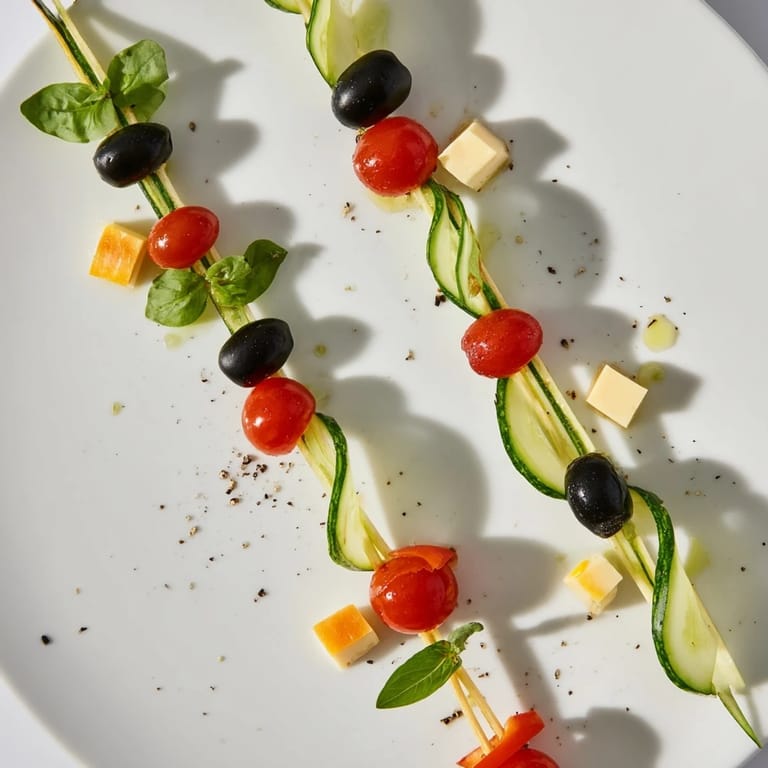
 I'll never forget the moment my nephew's science teacher assigned him a DNA project, and I thought, why not make learning delicious? I spent an afternoon arranging colorful ingredients on a board, creating this stunning Double Helix appetizer that looked like it belonged in both a laboratory and a dinner party. The look on his face when he realized food could be art and biology at the same time? That's when I knew this dish was special. Now it shows up at every celebration where we want to spark curiosity and conversation.
I made this for my daughter's science fair party last spring, and watching twelve kids gather around the platter trying to guess what it represented was pure magic. They were so focused on the visual structure that they barely noticed they were eating their vegetables. By the end of the party, the board was bare, and I had three parents asking for the recipe.
Ingredients
- Black olives, pitted and sliced (100 g): These create one of your parallel lines with their deep color. Buy pitted ones to save yourself the tedious work, and slice them just before assembly so they stay fresh and glossy
- Cherry tomatoes, halved (100 g): The bright red creates stunning contrast against the olives. Choose ones that are just ripe, not too soft, so they hold their shape on the board
- Cucumber, cut into thin half-moons (100 g): The pale green adds a crisp element and keeps things fresh. Slice them thinly and pat dry with paper towels so they don't weep liquid onto your board
- Roasted red peppers, sliced (100 g): Buy them jarred to save time, and pat them dry before arranging. Their sweet complexity balances the briny olives perfectly
- Smoked salmon or marinated tofu strips (100 g, optional): This is your protein line, adding richness and depth. Use tofu for a vegetarian version that's equally impressive
- Mozzarella cheese, cut into strips or small cubes (150 g): This is your primary connector, the rungs of your helix. Fresh mozzarella works beautifully, but low-moisture mozzarella holds its shape better on the board
- Cheddar cheese, cut into strips or small cubes (100 g): The warm orange against white mozzarella creates beautiful visual rhythm. Use a sharp cheddar for more flavor complexity
- Fresh basil leaves (50 g): Tuck these along the lines just before serving for aroma and that final pop of green. They're not just decoration—they add genuine flavor
- Crackers or gluten-free crackers (50 g, optional): Serve alongside for guests who want something to anchor their bites
- Olive oil (1 tbsp): A light drizzle just before serving brings everything together and adds a silky finish
- Freshly ground black pepper, to taste: Don't skip this—it adds sophistication and makes every bite more interesting
Tired of Takeout? 🥡
Get 10 meals you can make faster than delivery arrives. Seriously.
One email. No spam. Unsubscribe anytime.
Instructions
- Create Your Base:
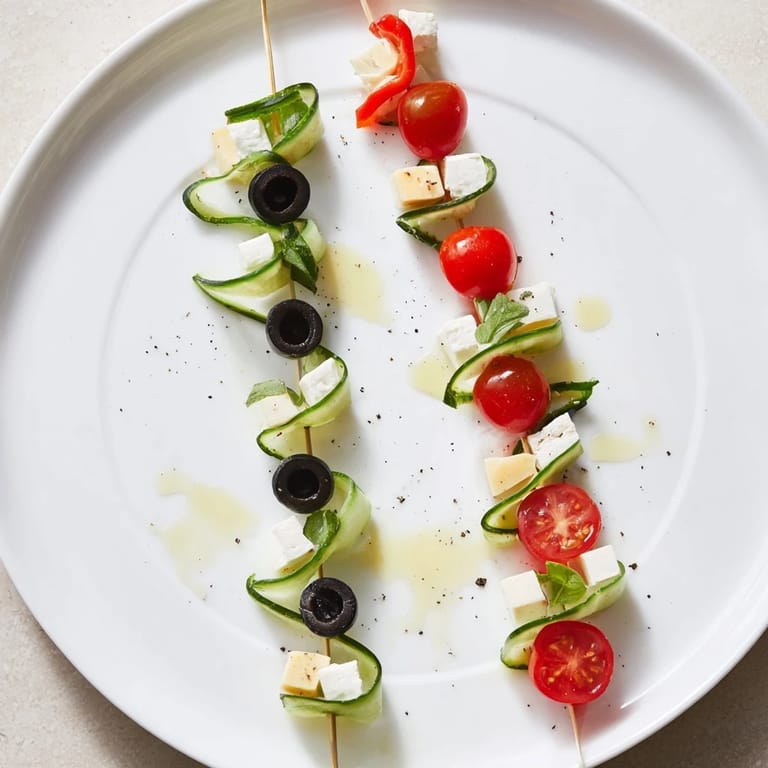
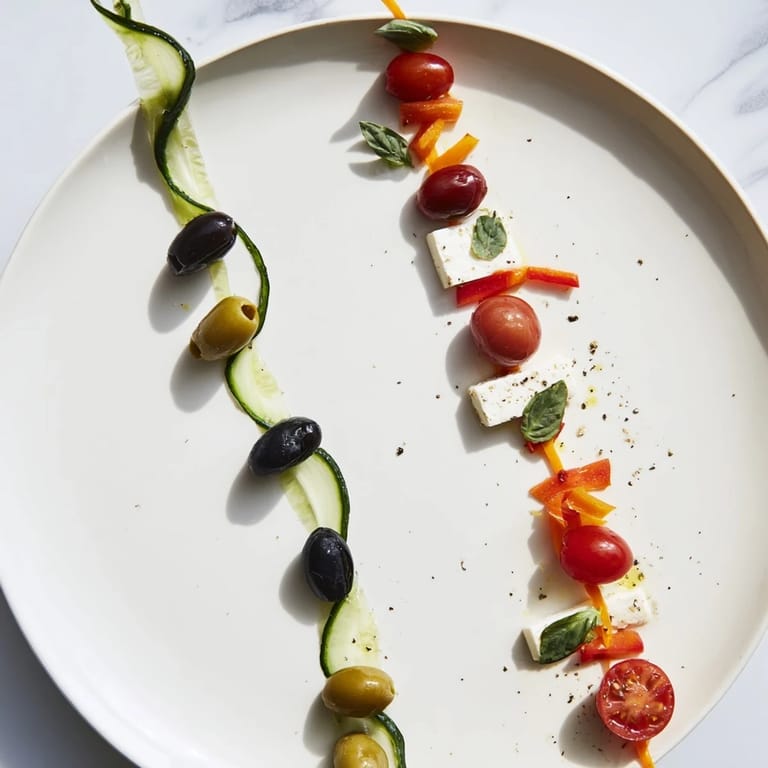
- Start with a large, clean serving board or platter. Picture it as your canvas. Draw two long, parallel lines using your first color—I like starting with the black olives. They should be gently wavy, mimicking the natural twist of a helix, about 4 to 5 inches apart. Don't stress about perfection; nature's helixes aren't perfectly straight anyway.
- Build the Second Strand:
- Using a contrasting ingredient like halved cherry tomatoes, create your second parallel line running alongside the olives. The color contrast is what makes this truly striking. Stand back and admire your work—this is where the magic begins to reveal itself.
- Add Depth and Dimension:
- Now layer in your other vegetables: thin cucumber half-moons and roasted red pepper slices, creating additional color variation and visual interest. These fill out the strands and give the impression of twisted rope. The more thoughtful your color placement, the more three-dimensional it will appear.
- Connect with Cheese Rungs:
- This is where the DNA structure really comes alive. Take your mozzarella and cheddar pieces and arrange them perpendicularly between your two ingredient lines, creating the connecting rungs. Space them roughly 1 to 1.5 inches apart. Alternate the cheese types for visual rhythm—mozzarella, then cheddar, then mozzarella again. These rungs are the base pairs that hold the whole structure together.
- Weave in the Basil:
- Gently tuck fresh basil leaves along both strands, threading them between the vegetables. This adds vibrant green and releases its aroma into the presentation. It's the finishing touch that says you really cared.
- Final Flourish:
- Drizzle lightly with olive oil across the entire arrangement, then finish with freshly ground black pepper. This isn't just seasoning—it's the moment your creation transforms from a visual trick into something genuinely delicious.
- Serve and Share:
- Set it on the table with crackers alongside if you wish. Watch your guests lean in and study it before they taste it. That moment of discovery is part of the magic.
 Pin it
 What strikes me most about this recipe is how it transformed a simple science lesson into a memory. My family still talks about the DNA appetizer and asks me to make it for celebrations. Food has this incredible power to make learning tangible, to make science delicious, to turn a concept into something people can hold and taste and share.
Variations to Make It Your Own
I love adapting this based on what's in my kitchen and who I'm feeding. Use marinated artichoke hearts instead of roasted peppers for a Mediterranean twist, or add thin slices of radish for peppery crunch. For a heartier version, layer in some prosciutto or smoked turkey. The structure stays the same, but your creativity determines the flavor story. Every version tells a different tale about what you had on hand and what you wanted to celebrate.
Making It Work for Every Diet
The beauty of this appetizer is how naturally it accommodates different dietary needs. Vegetarian? Just skip the salmon and use marinated tofu strips instead. Vegan? Swap in plant-based cheese alternatives and you've got something just as striking. Gluten-free? Serve with gluten-free crackers or skip them entirely. I've made this for gatherings with all kinds of dietary preferences, and nobody feels left out because there's something for everyone built right in.
Pairing and Presentation Ideas
Serve this alongside a crisp white wine—a Sauvignon Blanc or Pinot Grigio complements the fresh vegetables beautifully. Sparkling water with fresh lemon is equally perfect if you want something non-alcoholic. Present it on the loveliest board you own; this dish deserves to be the centerpiece. I've brought this to potlucks, dinner parties, and school events, and every time it becomes the first thing people gather around.
- Pair with a light, crisp white wine or sparkling water with lemon for refreshment between bites
- Use your most beautiful serving board or platter—this is meant to be admired before it's eaten
- Arrange small serving tongs or toothpicks nearby so guests can easily grab their bites without disrupting the structure
 Pin it
 This appetizer proves that food can be smart, beautiful, and delicious all at once. Make it for someone who needs a little magic in their day.
Recipe FAQs
- → What ingredients create the double helix lines?
Sliced black olives, halved cherry tomatoes, thin cucumber slices, roasted red peppers, and optional smoked salmon or marinated tofu form the parallel lines.
- → Which cheeses are used to connect the strands?
Mozzarella and cheddar cheeses cut into strips or cubes serve as the connecting rungs between the lines.
- → How can this dish be adapted for vegan diets?
Replace smoked salmon with marinated tofu and swap dairy cheeses for plant-based alternatives to make it vegan-friendly.
- → What garnishes enhance the flavor and aroma?
Fresh basil leaves add a fragrant touch while olive oil and freshly ground black pepper tie the flavors together.
- → What is the best way to serve this appetizer?
Arrange on a large platter with optional gluten-free or regular crackers on the side, ideal for casual or themed gatherings.