 Pin it
 I'll never forget the first time I saw a deconstructed dish presented like modern art on a gallery wall—it was at a small fusion restaurant where the chef had arranged colorful vegetable pieces in geometric patterns that made you pause before eating. That moment changed how I thought about appetizers. Gone were the days of boring platters; suddenly, food became a canvas. I went home determined to recreate that magic in my own kitchen, and The Cubist Deconstruction was born. It's become my signature way of saying, "Let me show you something beautiful before you taste it."
The first time I made this for guests, I watched their faces light up as they stepped into the dining room. The geometric arrangement caught the afternoon light like a stained glass window, and someone actually asked if they could take a photo before we ate. That's when I knew this wasn't just food—it was an experience, a conversation starter, a moment of joy shared around the table.
Ingredients
- 1 small cucumber, peeled: Choose one that's firm and fresh; the watery crispness will contrast beautifully with the creamier elements. Peel it completely to get clean, pale green shapes.
- 1 medium golden beet, cooked and peeled: Roast or boil ahead of time so it's tender and easy to cut. Golden beets are milder than red ones and won't stain your other ingredients.
- 1 medium watermelon radish, peeled: This striped beauty is the visual hero of the plate. The pink and white concentric circles are a revelation when sliced.
- 1 ripe avocado: Pick one that yields slightly to gentle pressure. Cut it just before assembly so it doesn't brown and lose its creamy appeal.
- 100 g feta cheese, block form: Buy it as a solid block, not crumbled. It cuts into clean geometric shapes that hold their form beautifully on the platter.
- 1 ripe mango, peeled: Look for one that smells fragrant at the stem. The golden sweetness brings balance to the savory elements.
- 2 tbsp extra virgin olive oil: Use one you love tasting. This isn't a moment for cooking oil; it's a star ingredient here.
- 1 tbsp lemon juice: Fresh squeezed, if you can manage it. It brightens everything and prevents the avocado from oxidizing.
- Flaky sea salt and fresh cracked black pepper: These aren't afterthoughts. They're what tie all these vibrant pieces into one coherent flavor story.
- Microgreens or fresh herbs: Basil, cilantro, or even dill work beautifully. They add that final pop of color and freshness.
Tired of Takeout? 🥡
Get 10 meals you can make faster than delivery arrives. Seriously.
One email. No spam. Unsubscribe anytime.
Instructions
- Prep your vegetables and fruits:
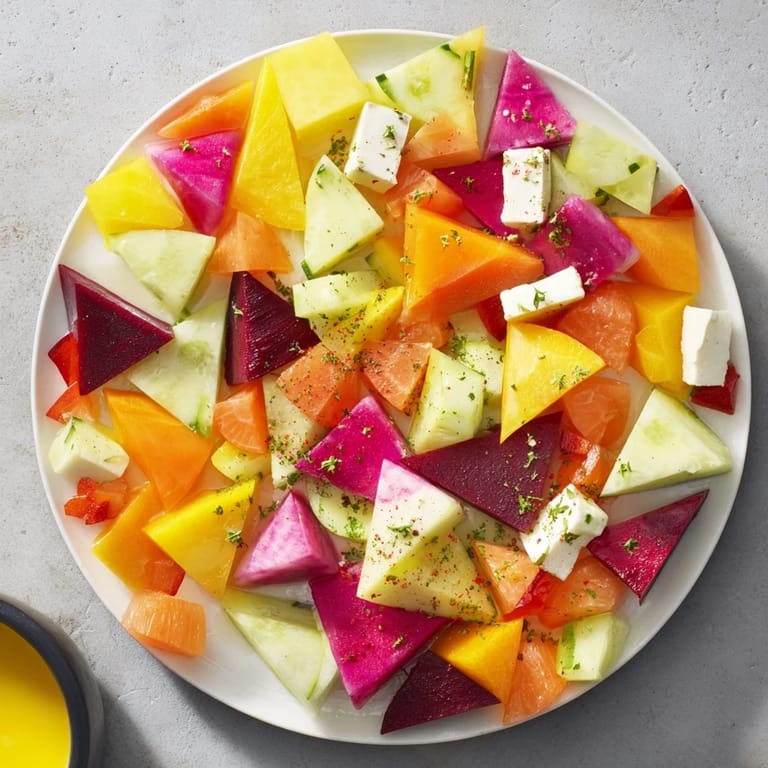
- Lay out all your ingredients on a clean cutting board. Take a moment to really look at what you have—each color, each texture. Using a sharp chef's knife, begin cutting into geometric shapes: triangles, parallelograms, hexagons, irregular polygons. Aim for pieces about 1 centimeter thick so they stand up on the platter. If you have small cookie cutters, use them for extra precision and uniformity. This step is meditative; let yourself get into the rhythm of it.
- Cut the feta:
- Working with a cold block of feta makes this easier. Cut it into geometric cubes or prisms that echo the shapes of your vegetables. The feta should feel like it's part of the same artistic composition.
- Arrange your mosaic:
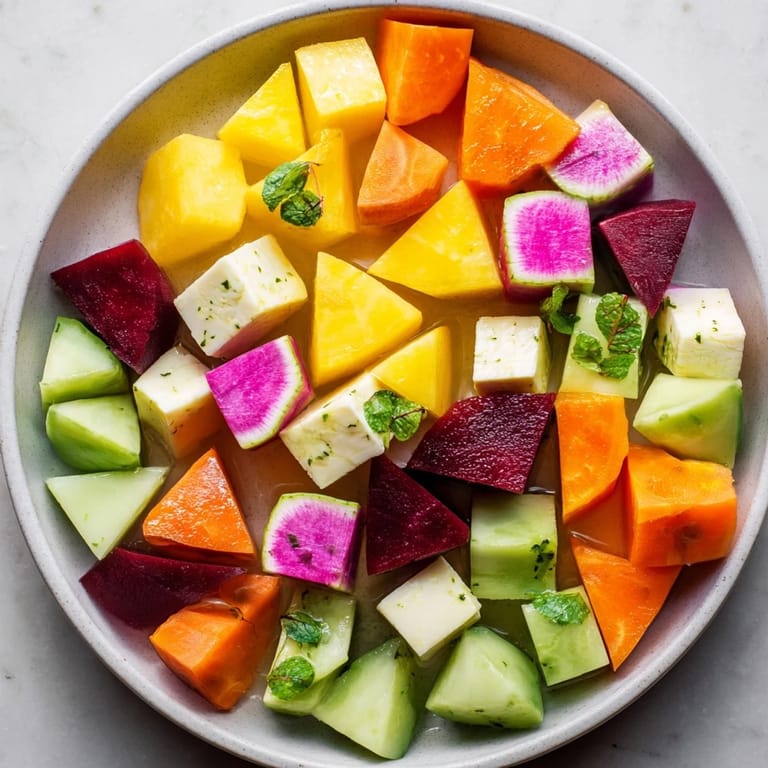
- Find your largest, flattest platter. This is your canvas. Begin placing the pieces close together without overlapping, creating a pattern that feels both intentional and organic. Think like you're laying tile, but with colors and flavors. Step back occasionally and squint at it. Does it feel balanced? Does your eye know where to go first?
- Season and dress:
- With a light hand, drizzle the olive oil across the entire arrangement, letting it pool slightly between the pieces. Squeeze the lemon juice in a similar way. You want even distribution, but you also want people to taste the oil and lemon juice, not drown in it.
- Final touches:
- Sprinkle flaky sea salt across the platter, then grind fresh black pepper over everything. Scatter your microgreens or herbs across the top, tucking them into the geometric spaces like little jewels.
- Serve immediately:
- This is important. The clean lines and vibrant colors are at their peak right now. Bring it to the table while everything is crisp and fresh and beautiful. Let people admire it for a moment before eating.
 Pin it
 I remember serving this at a potluck where someone was going through a rough time, and watching their expression shift from tired to amazed when they saw the platter reminded me that beauty on a plate is its own form of kindness. Food can be nourishment and art at the same time.
Playing with Color and Contrast
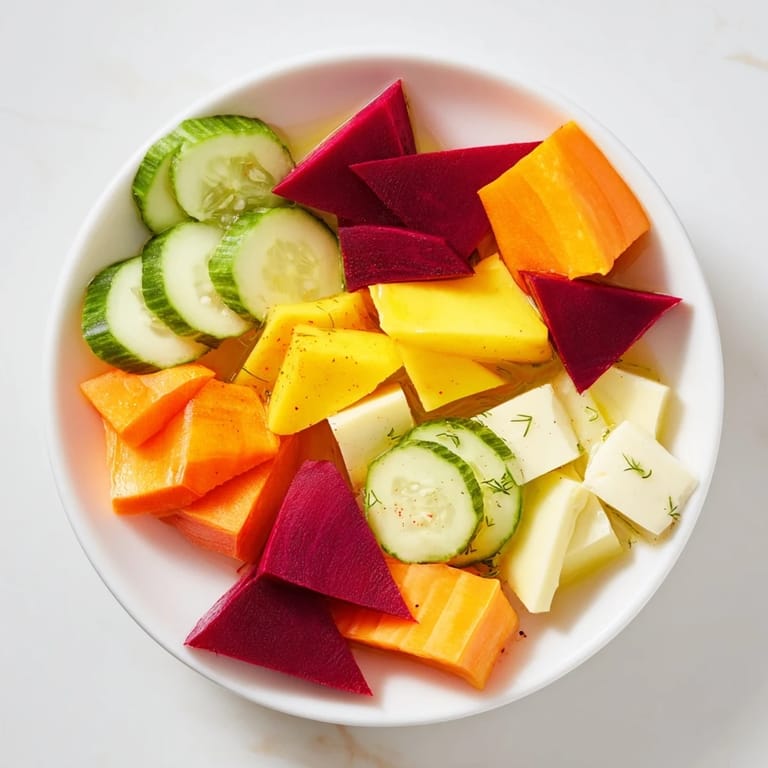
The magic of this dish lives in its visual diversity. The deep purple-red of the watermelon radish, the pale green of the cucumber, the golden warmth of the mango, the earthy rust of the beet, the creamy white of the feta—they're all saying something different, and together they sing. When you're arranging, think about color balance. Don't let all the warm tones cluster in one corner. Let the cool and warm play against each other. This is where the real artistry happens, and it's easier than you think.
Flavor Layering and Why It Matters
Each ingredient brings something essential. The avocado is the creamy anchor, the beet brings earthiness and subtle sweetness, the cucumber is refreshing and light, the mango adds brightness and tropical notes, and the feta? Feta is your salt, your funk, your savory foil to everything else. When you eat this, you should taste all of them, but none of them should dominate. The lemon juice and olive oil bind them into a cohesive whole. This balance is what separates a pretty plate from a memorable one.
Making It Your Own
This recipe is more of a technique than a rigid formula. Once you understand the principle—contrasting colors, contrasting textures, geometric precision—you can swap ingredients freely. Purple carrots, yellow bell peppers, roasted purple potatoes, snap peas, even thinly sliced fennel all work beautifully. For a vegan version, swap the feta for firm tofu cut into the same geometric shapes. The principle stays the same, and the dish remains stunning.
- Pair this with a crisp Sauvignon Blanc or a light sparkling wine to complement the fresh flavors
- Serve with cocktail picks so guests can grab pieces easily and enjoy it as finger food
- Make it ahead by cutting everything and storing separately in airtight containers, then assemble just before serving
 Pin it
 This dish taught me that presentation isn't vanity—it's respect. When you take time to arrange food beautifully, you're saying to the people eating it, "You matter enough for me to make this special." That's the real secret ingredient.
Recipe FAQs
- → How should the vegetables and fruit be cut?
Slice the vegetables and fruit into various geometric shapes like triangles, hexagons, and parallelograms about 1 cm thick, using a sharp knife or cookie cutters for precision.
- → Can I substitute the feta cheese?
Yes, firm tofu can be used as a vegan alternative to feta while maintaining the shape and texture contrast.
- → What garnishes complement this dish?
Fresh herbs or microgreens such as basil or cilantro add color and freshness to the presentation.
- → Is cooking required for this dish?
No cooking is needed; the golden beet should be pre-cooked and peeled before assembling.
- → What dressings enhance the flavors?
A simple drizzle of extra virgin olive oil combined with lemon juice brightens and balances the flavors on the platter.
- → How is the dish best served?
Arrange components closely but without overlapping on a large flat platter and serve immediately to preserve clean lines and freshness.