 Pin it
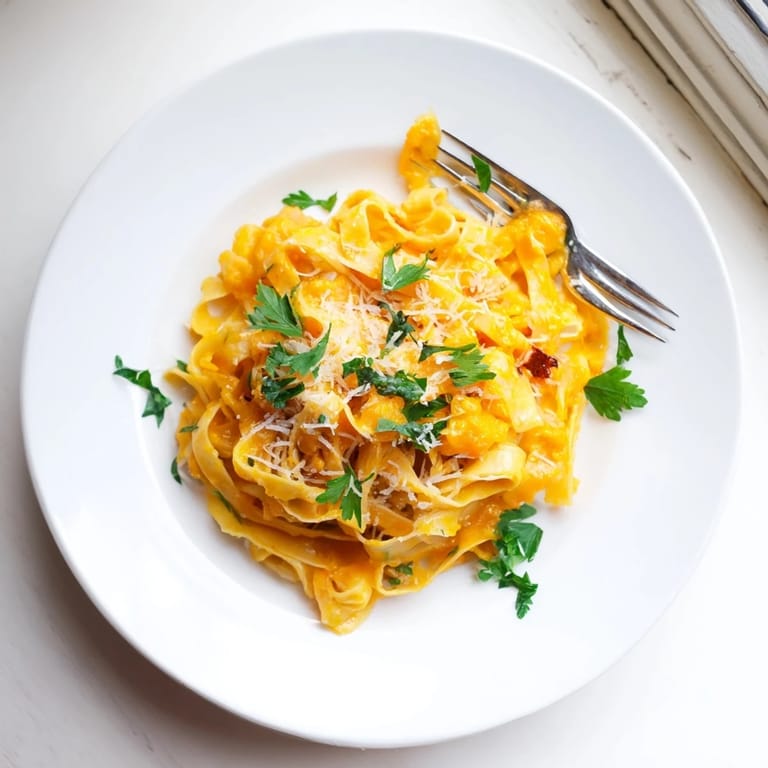
 The first time I made this sauce, I was actually trying to use up some leftover roasted squash from a failed soup experiment. My kitchen smelled like autumn had moved in permanently, and when that velvety orange sauce coated the pasta, I knew I'd stumbled onto something better than my original plan. Now it is the dish my friends request most when the weather turns crisp.
Last November, I served this at a small dinner party where everyone assumed I had spent hours at the stove. Watching my normally skeptical friend go back for thirds was the moment I realized this humble squash pasta could hold its own against any fancy restaurant meal.
Ingredients
- 1 medium butternut squash: Roasting concentrates the natural sugars and creates that deep caramelized flavor that becomes the heart of the sauce
- 2 cloves garlic: Leaving the skins on while roasting prevents burning and gives you sweet mellow garlic without any bitterness
- 1 small yellow onion: The foundation of flavor that bridges the gap between sweet squash and savory herbs
- 1 tablespoon fresh sage: Earthy and aromatic, sage pairs so beautifully with winter squash that it feels like they were made for each other
- 12 oz dried fettuccine or tagliatelle: Wide noodles catch the creamy sauce better than spaghetti would
- 1/2 cup heavy cream: This creates that luxurious restaurant style texture without overwhelming the squash flavor
- 1/3 cup grated Parmesan cheese: Adds umami and saltiness that rounds out the sweetness of the roasted vegetables
- 3/4 cup vegetable broth: Helps achieve the perfect pourable consistency while keeping the sauce vegetable forward
- Pinch of nutmeg: The secret ingredient that makes the sauce taste professionally crafted
Tired of Takeout? 🥡
Get 10 meals you can make faster than delivery arrives. Seriously.
One email. No spam. Unsubscribe anytime.
Instructions
- Roast the vegetables:
- Preheat your oven to 400°F and line a baking sheet with parchment paper. Spread the cubed squash and unpeeled garlic cloves across the sheet, drizzle with 1 tablespoon olive oil, season generously with salt and pepper, then toss everything together with your hands until evenly coated. Roast for 25 to 30 minutes, flipping halfway through, until the squash is fork tender and those gorgeous caramelized edges appear.
- Cook the pasta:
- While the squash roasts, bring a large pot of salted water to a boil and cook the pasta until al dente. Before draining, scoop out 1/2 cup of the starchy cooking water and set it aside, then drain the rest.
- Build the flavor base:
- In a large skillet, warm the remaining tablespoon of olive oil over medium heat. Add the diced onion and chopped sage, cooking for about 4 minutes until the onion softens and turns translucent and your kitchen starts smelling incredible.
- Make the sauce:
- Squeeze the roasted garlic from its skins into a blender or food processor, then add the roasted squash, sautéed onion and sage, vegetable broth, and heavy cream. Blend until completely smooth and silky, stopping to scrape down the sides as needed.
- Finish and combine:
- Pour the sauce back into the skillet over low heat and stir in the Parmesan cheese along with that pinch of nutmeg. Taste and season with salt and pepper, thinning with pasta water if needed, then add the cooked pasta and toss gently for 2 to 3 minutes until everything is coated and warmed through.
 Pin it
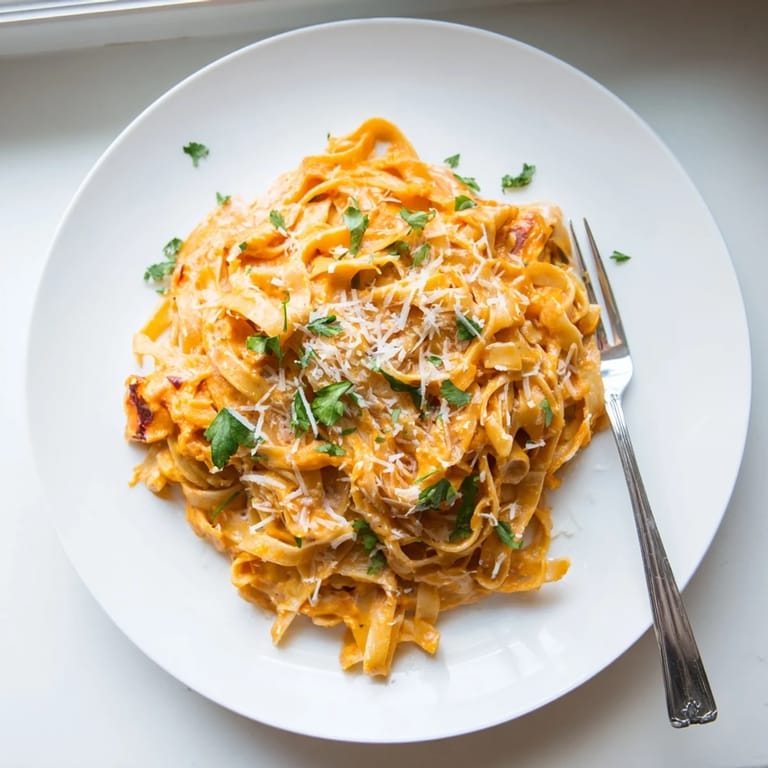
 This recipe has become my go to for cold nights when I want something comforting but not heavy. Something about the way the creamy sauce clings to each forkful makes even a Tuesday dinner feel special.
Making It Your Own
I have found that this sauce is incredibly forgiving and adaptable. Sometimes I will add a handful of baby spinach at the end just to wilt it into the noodles, or top everything with toasted pumpkin seeds for crunch. The sauce base is solid enough that you can take it in whatever direction your cravings demand.
Timing Is Everything
The key to having this come together smoothly is timing your pasta so it finishes cooking right when the squash comes out of the oven. I start boiling the water when I put the squash in to roast, and that 25 minute roasting window is usually perfect for getting everything else prepped. This way the sauce stays hot when it hits the pasta, and you are not scrambling at the end.
Serving Suggestions
A simple green salad with sharp vinaigrette cuts through the richness beautifully. I also love serving crusty bread on the side because nobody can resist mopping up that last bit of sauce from their bowl.
- Keep some extra Parmesan at the table for sprinkling
- A glass of crisp white wine like Pinot Grigio balances the sweetness
- Fresh parsley is not just garnish here, it adds a bright pop against the creamy sauce
 Pin it
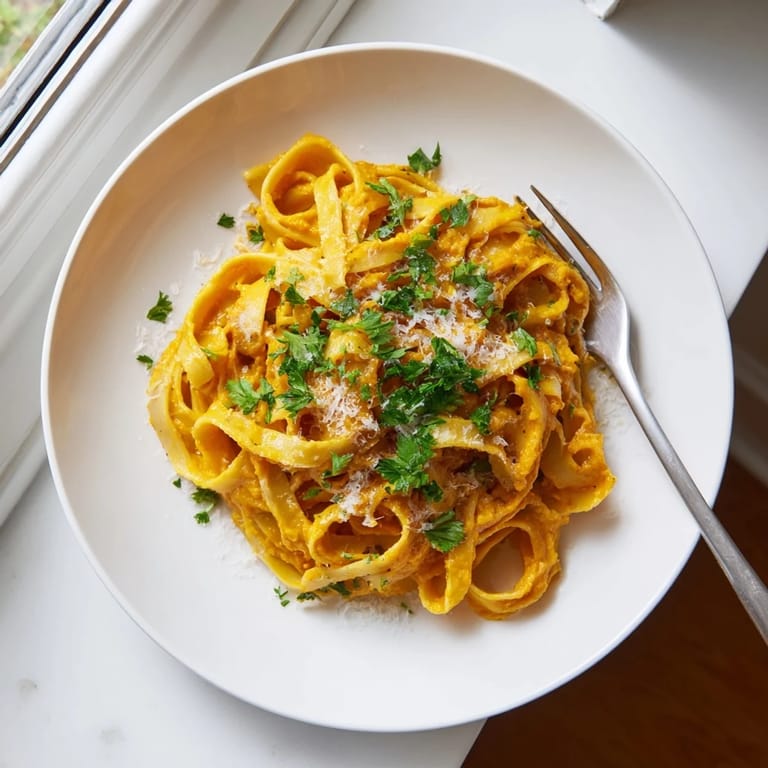
 There is something deeply satisfying about turning a humble squash into something this elegant and comforting. I hope this recipe finds its way into your regular rotation the way it has in mine.
Recipe FAQs
- → Can I make this dish vegan?
Yes, substitute heavy cream with full-fat coconut milk and use vegan Parmesan alternative. The result remains creamy and delicious while being completely plant-based.
- → What pasta shapes work best?
Fettuccine or tagliatelle are ideal as their wide surface holds the thick sauce beautifully. Penne, rigatoni, or fusilli would also work well if you prefer shorter shapes.
- → How long does the sauce keep?
The roasted squash sauce can be stored in an airtight container in the refrigerator for up to 4 days. Reheat gently with a splash of broth or cream to restore consistency before tossing with freshly cooked pasta.
- → Can I freeze the sauce?
Absolutely! Freeze the sauce in portions for up to 3 months. Thaw overnight in the refrigerator, then reheat on the stove. You may need to add a little liquid when reheating.
- → What can I add for extra protein?
White beans, sautéed chickpeas, or toasted walnuts complement the flavors beautifully. For non-vegetarians, grilled chicken or crispy pancetta would work well too.
- → Is there a way to reduce prep time?
You can buy pre-cubed butternut squash from the grocery store. This saves significant time on peeling and cutting, reducing active prep to about 10 minutes.