 Pin it
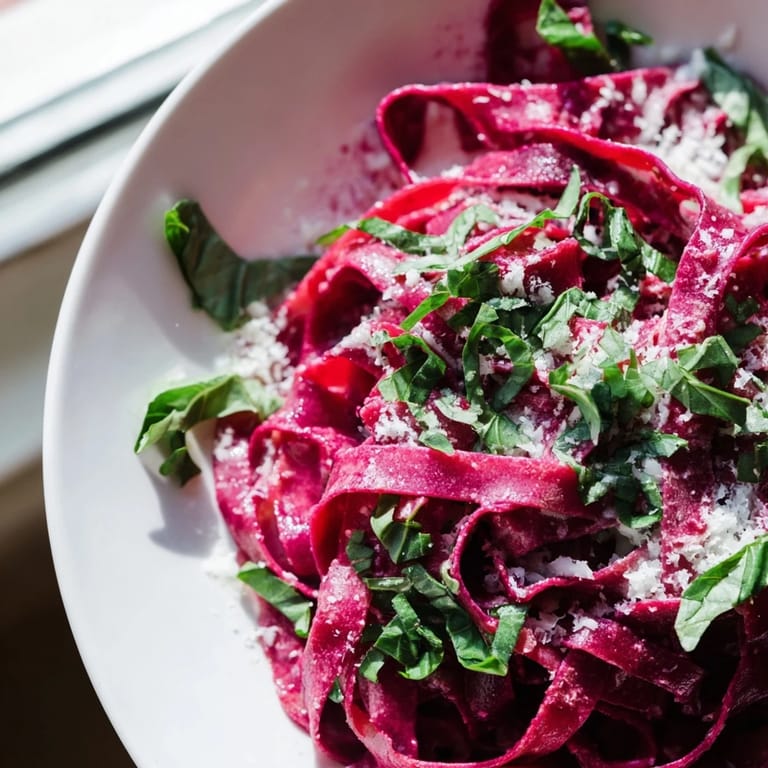
 The first time I made beet pasta, I honestly thought something had gone terribly wrong. My hands were stained a shocking pink, my countertop looked like a crime scene, and I was convinced I'd misunderstood the entire concept of fresh pasta. But then those magenta strands hit the boiling water and something magical happened—the color deepened into this rich, jewel-toned crimson that made my entire kitchen feel warmer and more alive.
Last February, when my sister was visiting during that particularly gloomy stretch of winter, I decided to surprise her with something colorful and cheerful. She watched, skeptical, as I pulled that shocking pink dough from the fridge, but her expression completely changed when she took her first bite. We ended up sitting at the kitchen table for hours, just eating and talking, while the steam from our bowls fogged up the windows. Now she requests it every time she visits, and honestly, I love having an excuse to make something so vibrant.
Ingredients
- 1 medium beet: Roasting concentrates the natural sugars and gives you that smooth, vibrant puree that makes the pasta so special
- 2 cups all-purpose flour: Dont be tempted to use whole wheat here—itll mask that beautiful color and make the dough too heavy
- 2 large eggs: Room temperature eggs incorporate more easily into the flour and create a silkier texture
- 1/2 teaspoon salt: This small amount enhances the beets natural sweetness without making the pasta taste salty
- 1/4 cup roasted beet puree: The exact amount matters for the right dough consistency—too much and it gets sticky, too little and you lose the color
Tired of Takeout? 🥡
Get 10 meals you can make faster than delivery arrives. Seriously.
One email. No spam. Unsubscribe anytime.
Instructions
- Roast the beet to perfection:
- Wrap that scrubbed beet in foil with a drizzle of olive oil and pinch of salt, then let it roast at 400°F until it's completely tender when pierced with a fork
- Make your vibrant puree:
- Peel the cooled beet and buzz it in your food processor until it's absolutely smooth, then measure out exactly 1/4 cup for the dough
- Build the pasta foundation:
- Mound your flour on a clean surface and create a deep well in the center, then crack the eggs into it along with the salt and that gorgeous beet puree
- Bring it together:
- Use a fork to gradually work the flour into the wet ingredients from the edges until a shaggy dough forms, then knead by hand for 8 to 10 minutes until it's smooth and elastic
- Let it rest:
- Wrap the dough in plastic and let it sit at room temperature for 30 minutes—this relaxes the gluten and makes rolling so much easier
- Shape your noodles:
- Divide the dough into four pieces and roll each one to your desired thickness, then cut into whatever noodle shape makes you happy
- Cook to al dente perfection:
- Drop those fresh noodles into salted boiling water for just 2 to 3 minutes—fresh pasta cooks way faster than dried, so watch closely
 Pin it
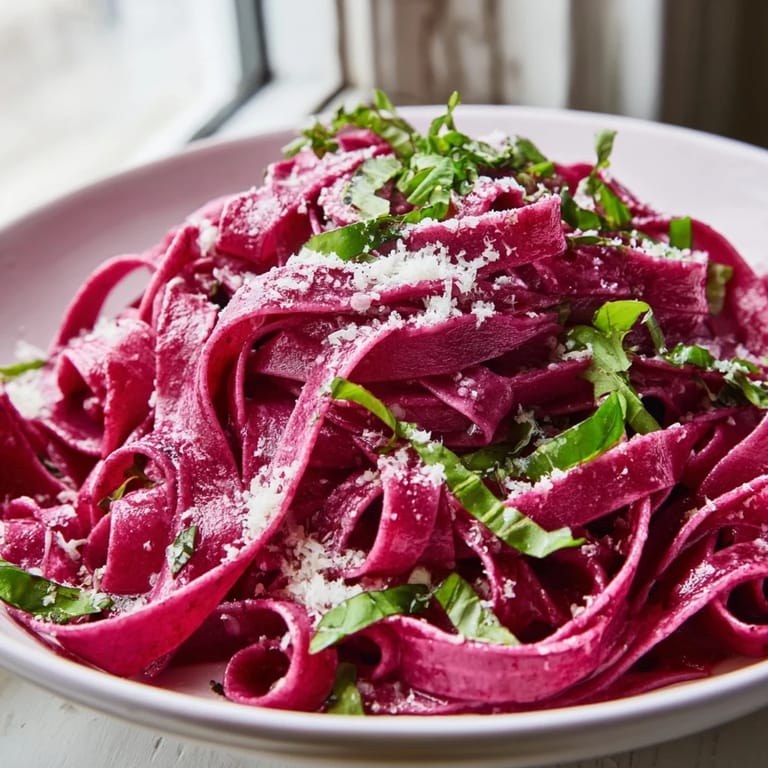
 There's something almost meditative about the process of making this pasta—your hands working through that pink-streaked dough, the rhythm of the rolling pin, the way the strands look like ribbons of candy floss drying on the counter. It turns a regular Tuesday dinner into something that feels intentional and lovely, like you're taking care of yourself and the people you're feeding in a small but meaningful way.
Sauce Pairings That Work
After making this pasta countless times, I've learned that the beet's subtle sweetness plays best with sauces that don't compete too aggressively. Brown butter with crispy sage leaves is probably my favorite—the nutty, warm flavors really let that magenta color shine. A simple lemon cream sauce works beautifully too, or even just really good olive oil with fresh herbs and a shower of Parmesan. Keep it simple and let the pasta be the star.
Storage And Leftovers
Fresh beet pasta doesn't last as long as regular pasta because of the moisture in the beet puree, so I recommend cooking it the same day you make it. However, you can freeze uncooked noodles on a baking sheet, then transfer them to a freezer bag for up to a month. Just cook them straight from frozen—they'll need an extra minute or so in the boiling water. Cooked leftovers store well in the refrigerator for a day or two, though the color might deepen slightly.
Making It Your Own
Once you're comfortable with the basic recipe, there are so many ways to experiment. I've added fresh herbs directly into the dough—chopped sage or thyme work wonderfully and create these beautiful green flecks throughout the pink noodles. A splash of white wine in the puree adds brightness, and a tiny bit of garlic powder enhances the savory notes without overpowering the delicate beet flavor.
- Try rolling the dough slightly thinner than you think you need it—the color is more translucent and delicate that way
- If you're serving this to beet skeptics, pair it with something familiar like brown butter and Parmesan
- Wear gloves while handling the beet if you're going somewhere important later—stained hands are part of the experience but not always welcome
 Pin it
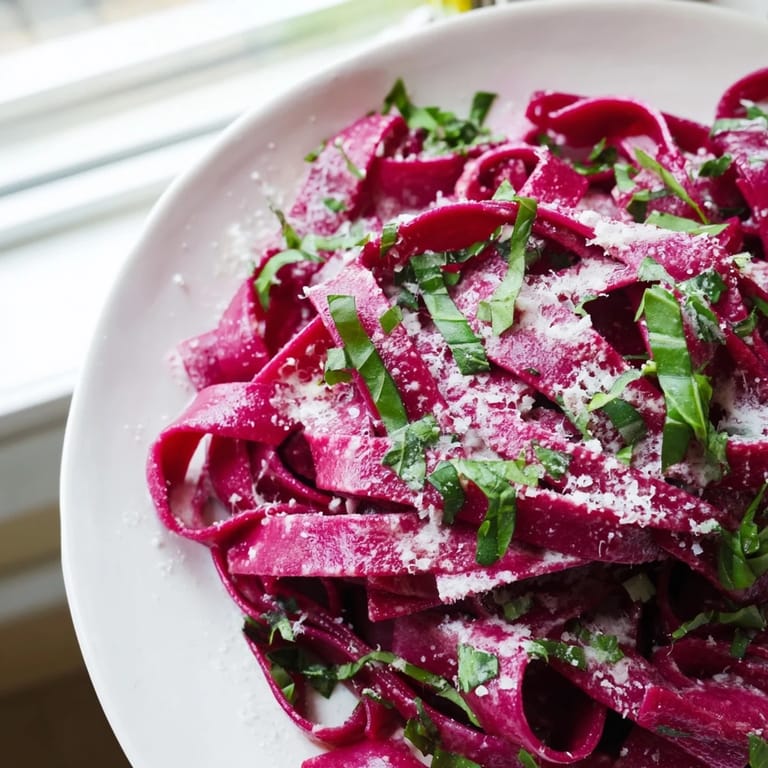
 There's genuine joy in pulling those vivid pink noodles from the water and watching steam curl off them in the colander. It's a reminder that cooking doesn't always have to be practical or efficient—sometimes it's just about making something beautiful.
Recipe FAQs
- → What gives the pasta its pink color?
The vibrant magenta color comes entirely from roasted beet puree blended into the pasta dough. No artificial food coloring is needed—the natural pigments in beets create the beautiful pink hue.
- → Can I taste the beets in the pasta?
The beet flavor is quite subtle, adding just a hint of earthy sweetness that complements the pasta. The primary purpose is visual appeal, though it does contribute a lovely depth to the overall flavor profile.
- → How long does the dough need to rest?
Wrap the dough in plastic and let it rest at room temperature for 30 minutes. This resting period allows the gluten to relax, making the dough easier to roll out and shape without springing back.
- → What sauces work best with beet pasta?
Simple sauces pair beautifully—try brown butter and sage, light lemon cream, or just olive oil with fresh herbs and Parmesan. Avoid heavy red sauces that might compete with the vibrant color.
- → Can I make this vegan?
Yes, substitute the two large eggs with 1/4 cup water and 1 tablespoon olive oil. The texture will be slightly different but still workable for rolling and cutting into noodles.
- → How thin should I roll the pasta?
Aim for about 1–2 mm thickness, roughly setting 6 or 7 on most pasta machines. The dough should be thin enough to be slightly translucent while still substantial enough to hold its shape when cooked.