 Pin it
 The first time I made arrabbiata, I got impatient with the garlic and let it brown just slightly—it turned bitter, and I almost ditched the whole sauce. But then I added the tomatoes anyway, and something magical happened: that toasted edge mingled with the heat of the pepper flakes, and suddenly the sauce tasted alive and urgent. Years later, when I wanted to feed a table of people who loved bold flavors but had varying spice tolerances, I realized I could build this dish in layers—bake it with cheese, let the cream soften the fire just enough—and everyone would find their perfect bite.
I made this for my neighbor one Tuesday evening when she mentioned missing real Italian food, and she arrived with a bottle of wine and stayed until we'd eaten most of the pan straight from the dish. That's when I knew the recipe worked—not because the technique was flawless, but because people kept coming back for more, and the kitchen smelled like a Roman trattoria for the rest of the night.
Ingredients
- Penne pasta (350 g): Buy good quality bronze-cut if you can—the rough texture grabs the sauce better than smooth pasta.
- Olive oil (2 tbsp): Use one you actually enjoy tasting, since it's the foundation of everything that follows.
- Garlic (4 cloves, finely chopped): Mince it small so it distributes evenly and cooks quickly without burning—this is where patience pays off.
- Crushed red pepper flakes (1–2 tsp): Start with less and taste as you go; you can always add more fire, but you can't take it back.
- Canned crushed tomatoes (800 g): San Marzano if your budget allows, but any quality crushed tomato will work—avoid jarred pasta sauce, which muddles the fresh pepper flavor.
- Sugar (1 tsp): This small amount balances acidity and rounds out the spice without making anything sweet.
- Dried oregano (1 tsp): Dried is actually better here than fresh, which would lose potency in the oven.
- Salt and black pepper (½ tsp and ¼ tsp): Taste before the final bake; you may want more depending on your tomatoes.
- Fresh basil (1 small bunch, chopped): Reserve some uncooked for garnish—it brightens the final dish and looks beautiful.
- Grated Parmesan (80 g): Grate it yourself if possible; pre-grated has anti-caking agents that prevent it from melting as smoothly.
- Shredded mozzarella (150 g): A mild mozzarella lets the pepper shine; avoid low-moisture varieties, which don't bubble as prettily.
Tired of Takeout? 🥡
Get 10 meals you can make faster than delivery arrives. Seriously.
One email. No spam. Unsubscribe anytime.
Instructions
- Heat your oven and set the stage:
- Preheat to 200°C (400°F) and grease your baking dish while the oven warms. This takes two minutes and saves you from a panicked scramble later.
- Cook the pasta just shy of done:
- Boil the penne in salted water until it's al dente but still slightly firm—about two minutes before the package time suggests. It will finish cooking in the oven, so this matters more than you might think.
- Toast the garlic and pepper together:
- Heat olive oil in a skillet over medium heat, then add garlic and red pepper flakes. Let them sizzle for one to two minutes until you can smell them clearly—that fragrance is your signal to move forward. Watch closely so nothing browns.
- Build the sauce:
- Pour in the crushed tomatoes along with sugar, oregano, salt, and pepper. Stir gently and let it simmer for ten to twelve minutes, stirring now and then, until the sauce thickens slightly and the raw tomato taste mellows into something rounder.
- Finish with fresh basil:
- Pull the skillet off the heat and stir in most of your chopped basil, saving a small handful for the end. The heat wilts it just enough without destroying its brightness.
- Combine pasta and sauce:
- Pour the drained penne into the tomato sauce and toss everything together gently but thoroughly, making sure every strand gets coated.
- Layer for texture:
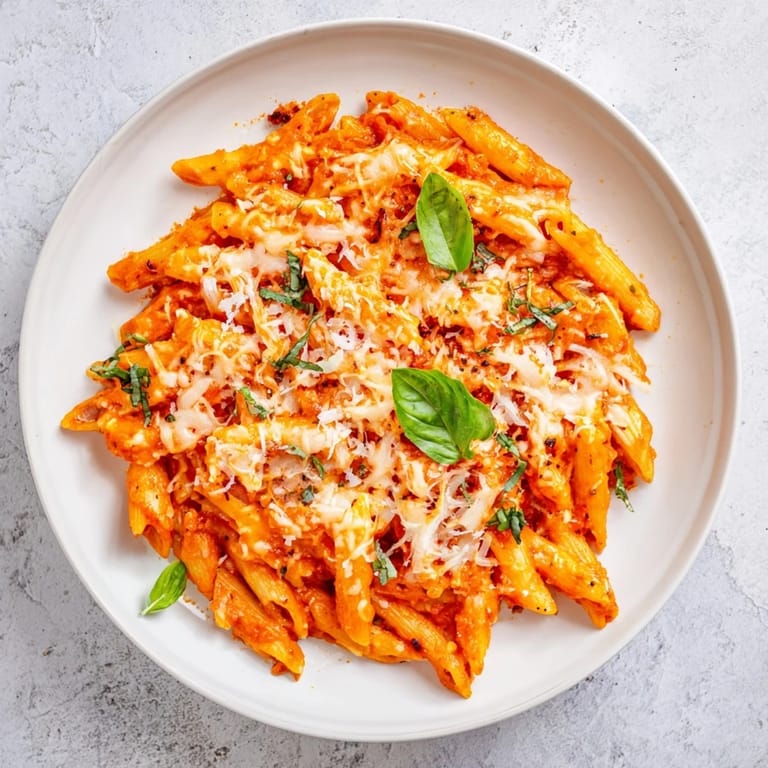
- Spread half the pasta mixture into your prepared baking dish, scatter half the Parmesan and mozzarella over it, then add the remaining pasta on top and finish with the last of the cheeses. This creates pockets of melted goodness throughout.
- Bake until bubbling and golden:
- Pop it into the oven for eighteen to twenty minutes. You're watching for golden spots on the cheese and sauce bubbling at the edges—that's your cue it's ready.
- Rest and garnish:
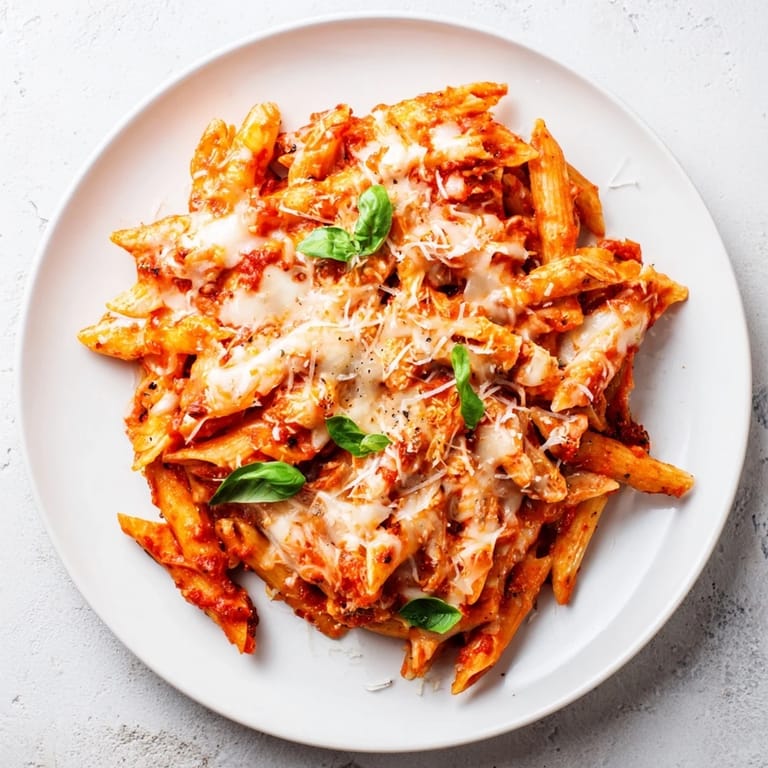
- Let it sit for five minutes out of the oven so the cheese sets just slightly and the whole dish becomes easier to serve. Scatter your reserved fresh basil on top and bring it to the table.
 Pin it
 My friend's teenage son, who usually pushes food around his plate, asked for seconds and then thirds, and when I told him the secret was the red pepper flakes, he nodded like he'd just learned something essential about the world. That's when I realized arrabbiata—angry, fiery sauce—had somehow become a bridge between people at my table.
The Heat Is the Heart
Red pepper flakes are not decoration in this dish—they're the whole point. The heat doesn't shout or overwhelm if you're careful; instead, it wakes up your mouth and makes you taste everything more sharply. Some people expect arrabbiata to be painful, but it shouldn't be. It should be exciting and a little daring, like you're dancing with something spicy rather than fighting it. The baking mellows the harshness slightly, and the cheese creates little pockets of cool comfort, so nothing ever feels aggressive.
Why Baked, Not Stovetop
You could toss this sauce with pasta and serve it straight, and it would be good. But baking it changes everything—the cheese fuses into the pasta, the sauce deepens and concentrates, and you get this texture that is somehow both creamy and light. There's also something about scooping it out of a warm dish that feels more generous and gathered than passing a bowl. It slows people down and makes them stay at the table longer.
Variations and Seasons
Summer calls for extra fresh basil and maybe even a handful of torn torn cherry tomatoes stirred in at the end. Winter is when I add sautéed mushrooms or roasted red peppers to bulk it up and make it feel earthier. You could swap the mozzarella for provolone or fontina if you want a sharper, more complex cheese flavor, though I'd stick with what you have if simplicity feels right.
- To turn up the heat, add another half teaspoon of red pepper flakes or a pinch of chili powder for a different kind of spice.
- Make it a day ahead and reheat gently in the oven—the flavors actually improve when they've had time to settle.
- If you're feeding vegetarians, just verify your cheeses don't use animal rennet, and you're all set.
 Pin it
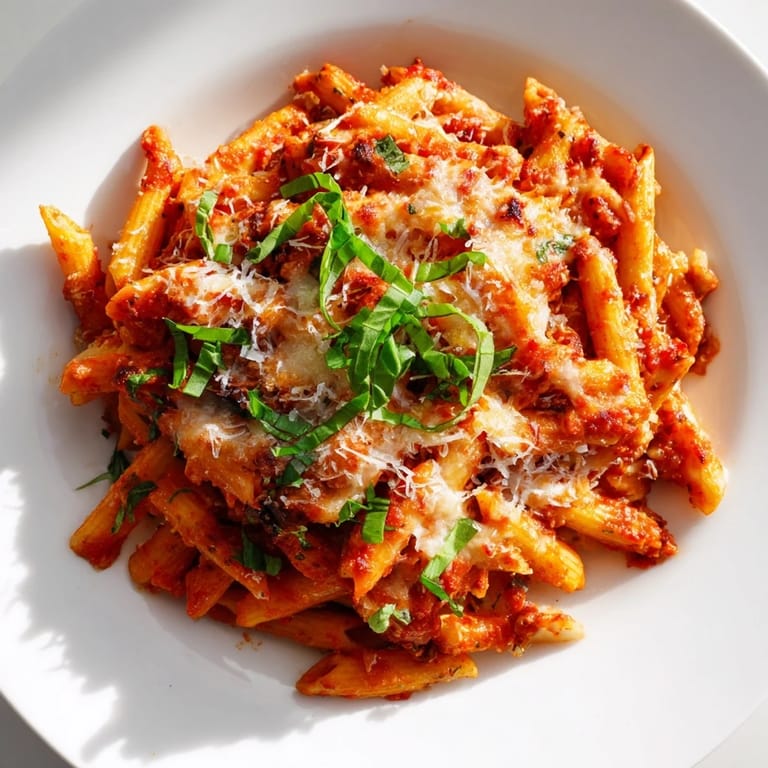
 This is the kind of dish that makes people feel cared for without requiring you to fuss for hours. Serve it with a crisp green salad and a glass of something red, and watch how a simple baked pasta becomes an occasion.
Recipe FAQs
- → What makes the sauce spicy in this dish?
The heat comes from crushed red pepper flakes sautéed with garlic, which infuse the tomato sauce with a fiery kick.
- → Can I substitute the cheeses used in this bake?
Yes, mozzarella can be replaced with provolone or fontina for different flavors, while Parmesan brings a nutty depth.
- → How do I ensure the pasta doesn’t overcook when baking?
Cook the pasta slightly less than al dente before combining with sauce and cheeses to avoid mushiness after baking.
- → What herbs complement the flavors here?
Fresh basil is stirred into the sauce and used as garnish, adding a sweet, aromatic note that balances the spice.
- → Is there a way to add vegetables without altering the dish’s character?
Sautéed bell peppers or mushrooms can be mixed into the sauce to add texture and color without overpowering the main flavors.