 Pin it
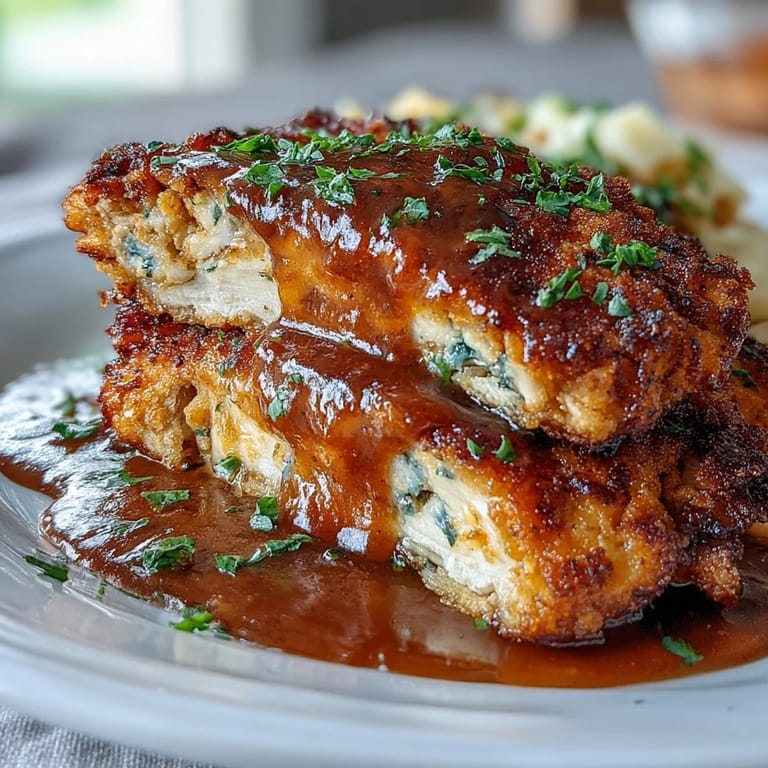
 My grandmother used to say that smothered chicken was less about technique and more about patience—letting those onions turn golden while the kitchen filled with the kind of smell that made everyone drift toward the stove. The first time I actually paid attention to what she was doing, I realized it wasn't fancy or complicated, just deliberate. Crispy skin, tender meat, and a gravy so rich it practically coats your spoon. This is the dish that taught me how soul food works: simple ingredients treated with respect create something that tastes like comfort wrapped in flavor.
I cooked this for my best friend's family the first time they came to my place, and watching their faces when they tasted it—that quiet moment where everyone stops talking to focus on eating—that's when I knew I'd nailed something real. Her mom asked for the recipe before dessert even hit the table, which in our world is basically the highest compliment you can get.
Ingredients
- Bone-in, skin-on chicken thighs and drumsticks (8 pieces total): Dark meat stays juicier than breasts and the skin crisps up beautifully when you don't rush the pan-frying step.
- Salt, black pepper, paprika, garlic powder, onion powder: This seasoning blend goes on the raw chicken first, so it actually penetrates the meat instead of just sitting on the surface.
- All-purpose flour (1 cup for breading plus 3 tablespoons reserved): The breading creates that golden crust, and the reserved flour thickens your gravy without any lumps if you whisk it in slowly.
- Vegetable oil (1/3 cup): Medium heat is your friend here—too hot and the skin burns before the meat cooks, too cool and you get soggy coating instead of crunch.
- Large yellow onions (2, thinly sliced): Yellow onions caramelize better than white ones, getting naturally sweet and deep in flavor without any sugar needed.
- Low-sodium chicken broth (2 cups): The low-sodium part matters because you're adding salt separately and can actually taste what you're making.
- Dried thyme, paprika, butter: Thyme adds an earthy note that makes the gravy taste like someone's been tending a kitchen garden, and butter just makes everything taste like home.
Tired of Takeout? 🥡
Get 10 meals you can make faster than delivery arrives. Seriously.
One email. No spam. Unsubscribe anytime.
Instructions
- Prep and season your chicken:
- Pat those chicken pieces completely dry with paper towels—any moisture will steam instead of fry. Season all sides generously with your spice blend and let it sit for a few minutes while you set up everything else.
- Bread the chicken:
- Mix flour with salt and pepper in a shallow bowl, then coat each piece thoroughly, shaking off what doesn't stick. Set the coated chicken on a plate and don't stack it or the coating gets soggy.
- Get the pan ready and fry:
- Heat oil over medium heat until it shimmers slightly—you'll hear a gentle sizzle when the chicken hits the pan. Skin-side down first, 6 to 8 minutes per side until the coating turns deep golden brown and the skin renders out its fat.
- Build your gravy base:
- Pour off all but 2 tablespoons of oil, then add those sliced onions right to the same pan. Stir them around for 8 to 10 minutes, letting them soften and turn golden at the edges—this is where the real flavor happens.
- Make the roux:
- Sprinkle your reserved flour over the soft onions and stir constantly for 1 to 2 minutes until the flour loses its raw smell and turns light brown. This keeps you from having lumpy gravy later.
- Add the liquid:
- Whisk in your chicken broth slowly while scraping the bottom of the pan to get all those caramelized bits into the gravy. Add thyme, paprika, salt, pepper, and butter, then let it simmer until it thickens slightly, about 2 to 3 minutes.
- Braise the chicken:
- Nestle that browned chicken back into the gravy, spoon some over the top, then cover and reduce heat to low. Simmer gently for 25 to 30 minutes until the meat is so tender it nearly falls off the bone and the internal temperature hits 165°F.
- Serve with purpose:
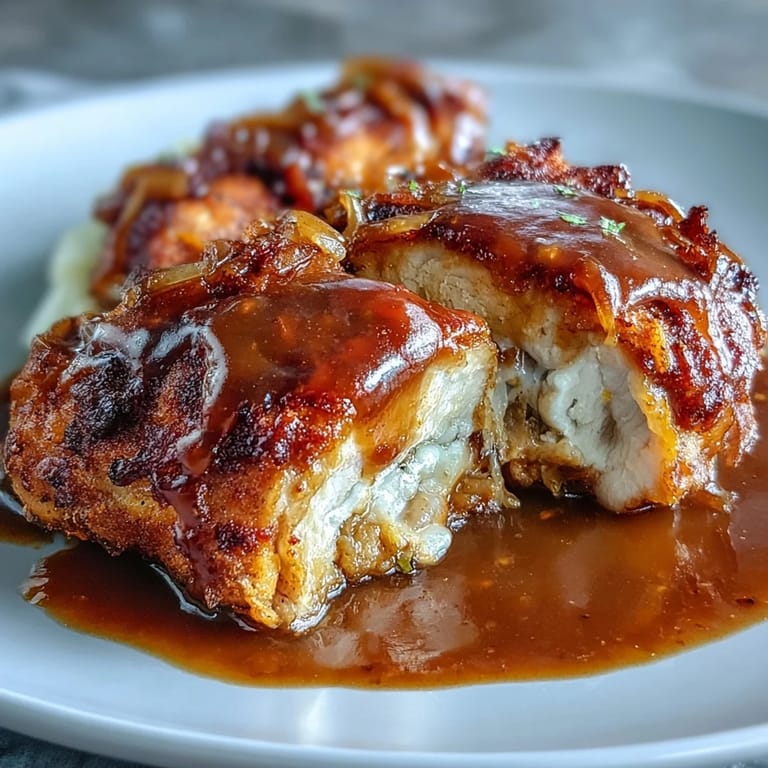
- Transfer to a platter or serve straight from the skillet, spooning that silky onion gravy over every piece. The longer it sits, the more the flavors marry together, so don't be shy about making this ahead.
 Pin it
 There was a moment last winter when my neighbor knocked on the door because the smell was drifting into her apartment, and instead of complaining, she asked if she could come eat dinner with us. That's when I understood this dish does something bigger than just satisfy hunger—it creates a reason for people to sit together.
The Secret Behind Perfect Crispy Skin
The crispy skin isn't luck or magic; it's about respecting the render. When you place chicken skin-side down in hot oil, you're basically rendering out the fat under that skin so it becomes golden and crisp. If your heat is too high, the outside burns before the fat renders. If it's too low, you get soggy coating. Medium heat, patience, and honestly just listening to the sound the chicken makes in the pan—when it stops aggressively sizzling and settles into a steady fry, you know you've got it right.
Why Onion Gravy Changes Everything
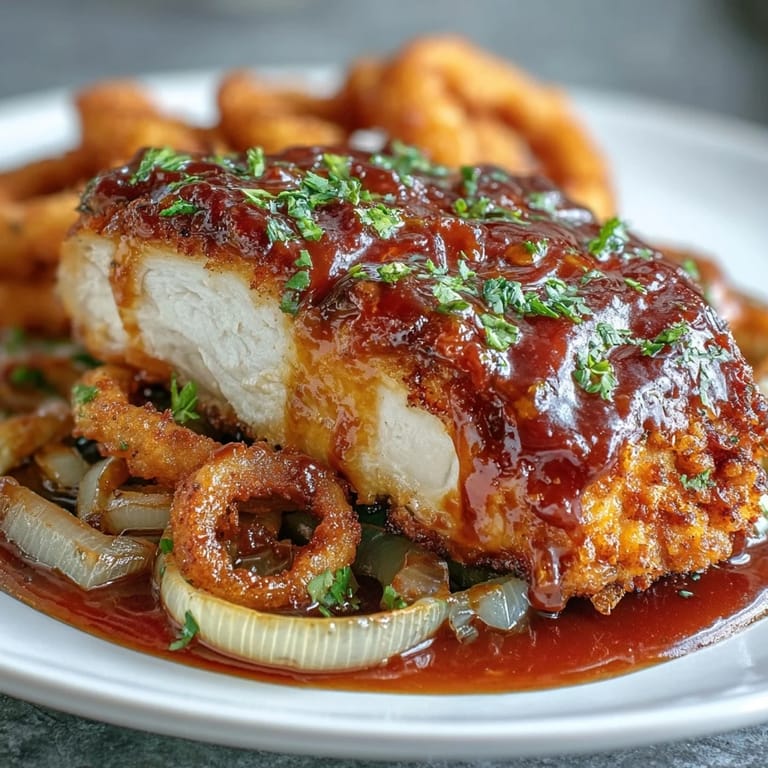
A lot of people think gravy is just something you pour over chicken, but in Southern cooking, it's the whole point. The onions caramelize in the same pan where the chicken fried, picking up every bit of browned flavor left behind. You're not making gravy from scratch; you're coaxing the whole story of what just happened into a sauce. That's why homemade stock actually matters here—it tastes like something real instead of like salt and water.
Variations and Flexibility
This recipe is forgiving in ways that let you cook what you actually have. Use boneless chicken if that's what's in your fridge, just know you'll lose some of that deep flavor from the bones and you can shorten the final simmer time. Add cayenne pepper if your family likes heat, or fresh thyme instead of dried if you have it growing somewhere. The bones and skin matter, but your comfort and what tastes good to your people matters more.
- Serve over mashed potatoes, rice, or egg noodles to soak up every drop of gravy.
- Leftover smothered chicken reheats beautifully covered in the oven—it actually tastes better the next day.
- Make this the night before if you're feeding people; it gives the flavors time to get to know each other.
 Pin it
 This is the kind of food that makes you understand why people have recipes passed down through generations. It's not complicated, but it's completely honest—and that combination is rare and worth holding onto.
Recipe FAQs
- → What type of chicken is best for this dish?
Bone-in, skin-on chicken thighs and drumsticks provide the most flavor and stay moist during cooking.
- → How do you achieve the rich onion gravy?
Caramelizing sliced onions until golden, then simmering with broth, spices, and flour creates a thick, savory gravy.
- → Can I use boneless chicken instead?
Yes, but reduce simmering time by about 10 minutes to prevent overcooking the meat.
- → What sides complement this dish well?
Mashed potatoes, rice, or collard greens are traditional and balance the rich flavors nicely.
- → Is the dish spicy?
It’s mildly seasoned, but you can add a pinch of cayenne powder for subtle heat if preferred.
- → Can I prepare the gravy ahead of time?
Yes, the gravy can be made in advance and gently reheated with the chicken to meld flavors.