 Pin it
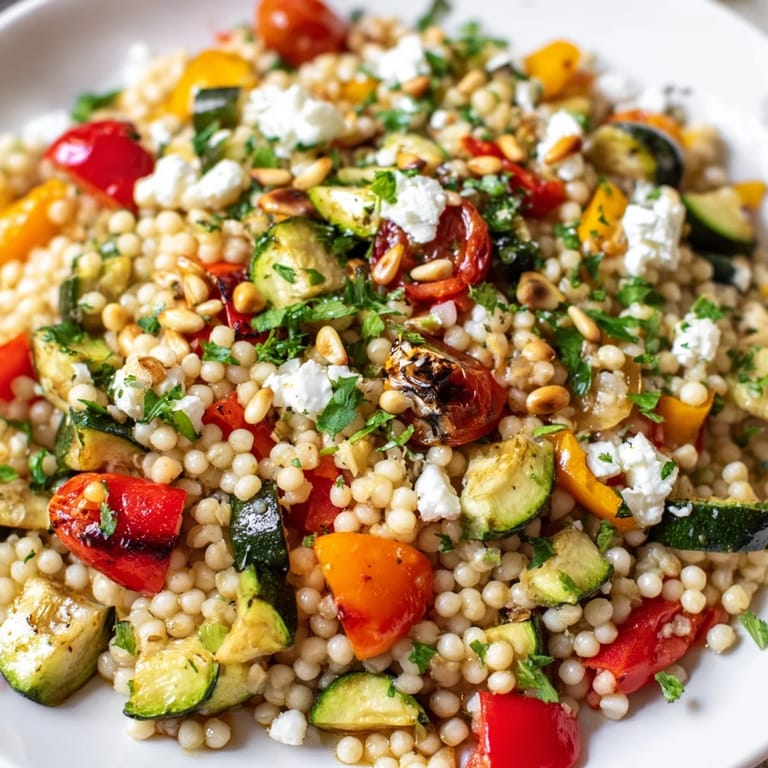
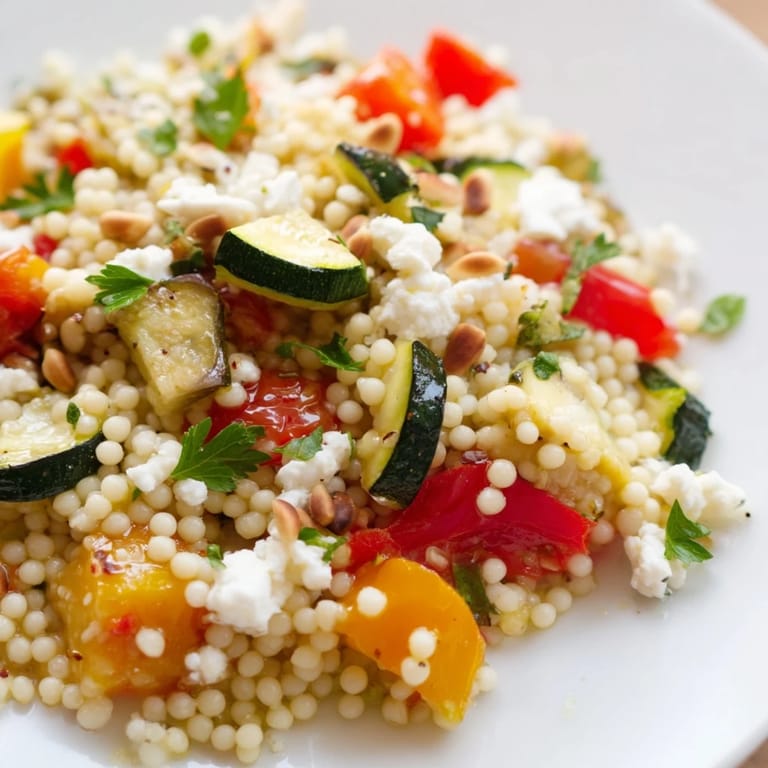
 My neighbor showed up at my door one evening with a glass container still warm from her oven, filled with what she called her "weekend rescue salad." The roasted vegetables glowed like jewels against the tiny couscous pearls, and the lemon scent hit me before I even lifted the lid. I ate it standing at the counter, straight from the container, and texted her twenty minutes later asking for the recipe. She laughed and said she'd been making it for years whenever her fridge was too full and her energy too low.
I made this for a potluck once, doubling the batch and feeling a little nervous because it seemed almost too simple. By the end of the night, three people had taken photos of the empty bowl and asked me to send them the recipe. One friend admitted she'd gone back for thirds, and another told me she never realized couscous could taste this good. It became my go to whenever I needed to feed a crowd without spending the whole day in the kitchen.
Ingredients
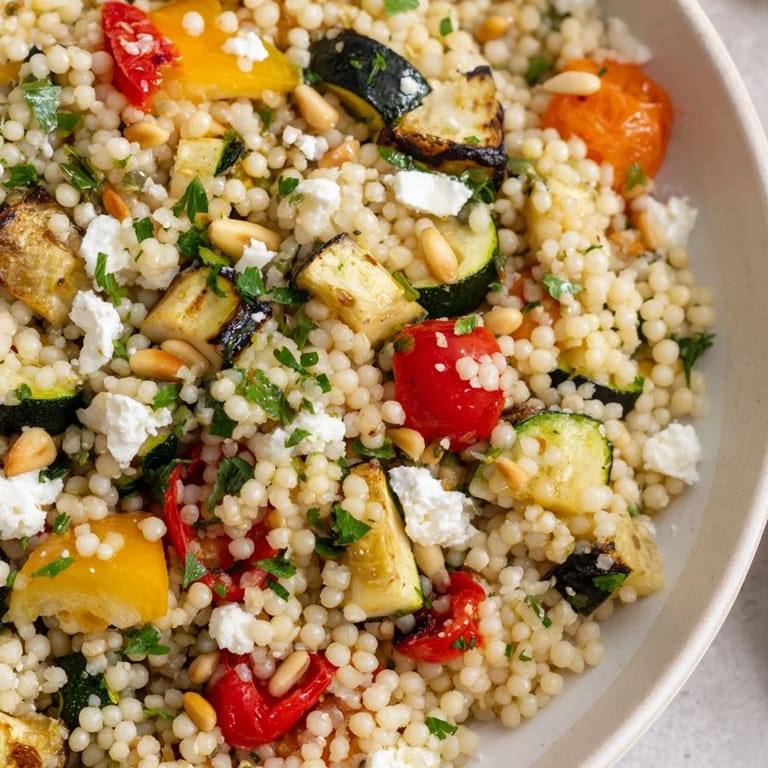
- Zucchini: Diced into even pieces so they roast at the same rate, zucchini adds a tender, slightly sweet bite that soaks up olive oil beautifully.
- Red and yellow bell peppers: The mix of colors makes the dish look alive, and roasting them brings out a smoky sweetness you can't get raw.
- Red onion: Cut into wedges instead of diced so they hold their shape and caramelize at the edges without disappearing into mush.
- Cherry tomatoes: Halved and roasted until they burst, they create little pockets of tangy juice that mix into the couscous.
- Olive oil for roasting: Use enough to coat the vegetables lightly, this is what helps them brown and crisp instead of steam.
- Couscous: Tiny, quick cooking, and incredibly forgiving, it fluffs up in five minutes and acts like a soft bed for all the bold flavors.
- Vegetable broth: Adds a layer of savory depth that plain water just can't match, even a simple boxed broth makes a difference.
- Lemon juice and zest: The juice gives brightness, the zest gives perfume, together they wake up every other ingredient.
- Dijon mustard: Just a teaspoon emulsifies the dressing and adds a subtle sharpness that balances the honey.
- Garlic: Minced finely and whisked raw into the dressing, it gives a gentle bite without overpowering.
- Honey or maple syrup: A touch of sweetness rounds out the acidity and makes the dressing cling to the couscous.
- Fresh parsley: Chopped at the last minute, it adds color and a grassy freshness that feels like summer.
- Fresh mint: Optional but worth it, mint brings a cooling contrast that makes the whole dish feel lighter.
- Feta cheese: Crumbled on top, it adds creamy, salty bursts that melt slightly into the warm couscous.
- Toasted pine nuts or almonds: A crunchy finishing touch that makes every bite feel a little more special.
Tired of Takeout? 🥡
Get 10 meals you can make faster than delivery arrives. Seriously.
One email. No spam. Unsubscribe anytime.
Instructions
- Preheat and prep your pan:
- Set your oven to 425°F and line a baking sheet with parchment paper so nothing sticks and cleanup stays easy. This high heat is what gives the vegetables those golden, caramelized edges.
- Toss and roast the vegetables:
- In a large bowl, toss the zucchini, bell peppers, red onion, and cherry tomatoes with olive oil, salt, and pepper until everything glistens. Spread them in a single layer on the baking sheet, making sure they have space to roast instead of steam, and slide them into the oven for 20 to 25 minutes, stirring halfway through so they brown evenly.
- Cook the couscous:
- While the vegetables roast, bring the vegetable broth to a rolling boil in a medium saucepan, then stir in the couscous, olive oil, and salt. Remove the pan from the heat immediately, cover it with a lid, and let it sit undisturbed for five minutes until the couscous absorbs every drop and turns fluffy.
- Make the lemon dressing:
- In a small bowl, whisk together the lemon juice, zest, olive oil, Dijon mustard, minced garlic, honey, salt, and pepper until the dressing emulsifies into a smooth, golden liquid. Taste it and adjust the salt or lemon if needed.
- Combine everything:
- Fluff the couscous with a fork to separate the grains, then transfer it to a large mixing bowl along with the roasted vegetables, parsley, and mint. Pour the dressing over everything and toss gently with a spoon until every grain and vegetable is coated.
- Finish and serve:
- Scatter the crumbled feta and toasted nuts over the top just before serving so they stay creamy and crunchy. Serve the salad warm, at room temperature, or chilled, depending on your mood.
 Pin it
 One afternoon I packed this salad into a mason jar and took it to the park, layering the couscous on the bottom and the vegetables on top. When I shook it up and ate it sitting on a bench under a tree, I realized it tasted even better outside, like the lemon and mint were meant to be eaten in the fresh air. It became my favorite thing to bring anywhere, because it travels well and always makes me feel like I'm taking care of myself.
Making It Your Own
This salad is a template, not a rulebook, and I've made it a dozen different ways depending on what's in the fridge. Sometimes I roast eggplant or sweet potato instead of zucchini, or I toss in a handful of chickpeas for protein when I want it to feel more like a meal. I've swapped the feta for goat cheese, left out the nuts when someone had an allergy, and once I used lime and cilantro instead of lemon and parsley because that's what I had. Every version worked, and every version felt like mine.
Serving and Storing
I love this salad because it doesn't mind waiting, you can make it a few hours ahead and it actually benefits from sitting so the flavors marry. If you're serving it at a gathering, leave the feta and nuts on the side so people can add their own, and if you're keeping leftovers, store them in an airtight container in the fridge for up to two days. The couscous will soak up more dressing as it sits, so I sometimes drizzle a little extra lemon juice and olive oil over the leftovers before eating them cold straight from the container.
What to Pair It With
This salad plays well with almost anything, and I've served it alongside grilled chicken, lamb skewers, and pan seared fish without it ever feeling out of place. It's hearty enough to stand alone as a light lunch, especially if you add some grilled halloumi or a fried egg on top. On nights when I just want something easy, I'll eat a big bowl of this with a piece of crusty bread and call it dinner.
- Serve it warm as a side dish with roasted chicken or salmon.
- Pack it cold for lunch and top it with a hard boiled egg or some hummus.
- Double the batch and bring it to a picnic, potluck, or backyard barbecue where it won't wilt in the sun.
 Pin it
 This salad has become one of those recipes I make without thinking, the kind that feels like muscle memory and tastes like comfort every single time. I hope it finds a place in your kitchen the way it found one in mine.
Recipe FAQs
- → Can I prepare this salad ahead of time?
Yes! You can roast the vegetables and cook the couscous a few hours ahead. Store them separately and combine with the dressing just before serving to keep the couscous from becoming too soft. Leftovers keep refrigerated for up to 2 days.
- → What vegetables can I substitute?
Feel free to swap in your favorites—eggplant, asparagus, broccoli, or mushrooms all roast beautifully at 425°F. Adjust cooking time slightly depending on thickness. The key is cutting vegetables into similar-sized pieces for even roasting.
- → How do I make this dish vegan?
Simply omit the feta cheese or use a plant-based alternative. You can also add roasted chickpeas or hemp seeds for extra protein and substance. The dish remains flavorful and satisfying without dairy.
- → Can I add protein to this salad?
Absolutely. Grilled chicken, pan-seared fish, roasted chickpeas, or grilled halloumi all pair wonderfully. Add cooked protein either mixed throughout or served on top for a more substantial main course.
- → What's the best way to achieve caramelized vegetables?
Ensure vegetables are cut into uniform pieces and spread in a single layer without crowding the pan. Don't skip tossing them halfway through roasting. High heat (425°F) and proper spacing allow moisture to evaporate, creating that golden, caramelized exterior.
- → Can I make the dressing in advance?
Yes, the lemon dressing keeps well in an airtight container for up to 5 days. Whisk it again just before using, as the ingredients may separate slightly during storage. This is a great time-saver for meal prep.