 Pin it
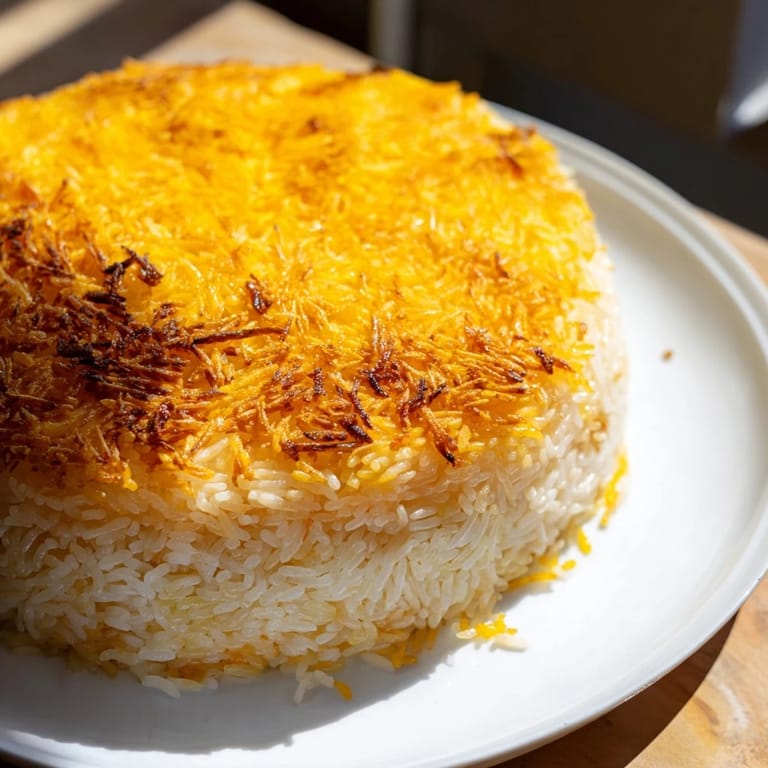
 The first time I made tahdig, I nearly convinced myself the bottom of the pot had burned. That golden, crackling sound echoing from beneath the rice lid made my heart skip, but when I flipped the pot onto a serving platter and saw that mahogany-brown, glass-like crust gleaming back at me, I understood why Persians have been perfecting this technique for centuries. What looks like a cooking mistake is actually the entire point—a crispy, caramelized crown that transforms simple basmati rice into something theatrical and deeply comforting.
I made this for my partner on a quiet Tuesday night when we were both tired of takeout, and watching his face when that golden tahdig emerged—crispy on the outside, steaming and fragrant within—made me realize some of the best meals aren't the complicated ones, but the ones where technique and patience create something magical out of humble ingredients.
Ingredients
- Basmati rice (2 cups): The long, slender grains stay separate and fluffy; rinsing removes starch so you won't end up with gluey rice.
- Salt (1 tablespoon for soaking): This seasons the rice throughout and helps it cook evenly; don't skip this step.
- Saffron threads (1/4 teaspoon): Even this tiny amount infuses the rice with floral sweetness and that signature golden hue; grinding them before steeping unlocks more color.
- Hot water (2 tablespoons): The medium for coaxing flavor from saffron and keeping the rice moist as it steams.
- Plain Greek yogurt (4 tablespoons): This is the secret weapon—it creates a creamy base for the tahdig crust and adds tanginess that balances the richness.
- Vegetable oil (2 tablespoons plus extra): Choose a neutral oil that won't smoke; it conducts heat evenly for that perfect golden crust.
- Unsalted butter, melted (2 tablespoons): The butter plus oil combination gives the tahdig its shatteringly crisp texture.
- Ground turmeric (1/2 teaspoon, optional): A whisper of earthy warmth that deepens the golden color if you use it.
- Ground black pepper (1/2 teaspoon): A small pulse of brightness that rounds out the aromatics.
Tired of Takeout? 🥡
Get 10 meals you can make faster than delivery arrives. Seriously.
One email. No spam. Unsubscribe anytime.
Instructions
- Rinse and soak the rice:
- Run cold water over the rice in a fine sieve until the water runs completely clear—this removes excess starch. Soak it in a bowl with salt and water for at least 30 minutes; this helps each grain cook evenly and stay separate.
- Parboil the rice:
- Bring a large pot of water to a rolling boil, add the drained rice, and let it cook for just 5 to 6 minutes until it's tender on the outside but still has a slight firmness inside. You're not cooking it all the way yet; the real cooking happens in the steaming stage.
- Infuse the saffron:
- Grind the saffron threads between your fingers as you add them to hot water, then let them steep for 10 minutes until the water turns deep golden. This concentrated saffron water is liquid gold for both flavor and color.
- Build the tahdig base:
- Combine the yogurt, 1 tablespoon of that saffron water, turmeric if you're using it, and about 1 cup of the parboiled rice in a bowl. Stir until it's a creamy, flecked mixture—this is what will form your crispy crust.
- Heat the pan:
- Pour the oil and melted butter into your heavy-bottomed pot and set it over medium heat until you see the first whispers of shimmer. You want it hot enough to create that crust, but not so hot that the bottom burns before the rice cooks.
- Layer the tahdig:
- Spread the yogurt-rice mixture evenly across the bottom of the hot pan, creating a smooth, even base. This layer will become your golden crown.
- Layer the remaining rice:
- Gently mound the rest of the parboiled rice over the yogurt layer, creating a small dome in the center. Drizzle the remaining saffron water over the top, and poke a few small holes with a wooden spoon handle so steam can escape during cooking.
- Steam with a towel trick:
- Wrap your pot lid in a clean kitchen towel before placing it on the pot—the towel absorbs steam and creates a seal that keeps the rice moist and tender. Cook over medium heat for 10 minutes, then lower the heat to low and let it go for 35 to 40 minutes, listening for that gentle sizzle that tells you the tahdig is forming.
- Rest and reveal:
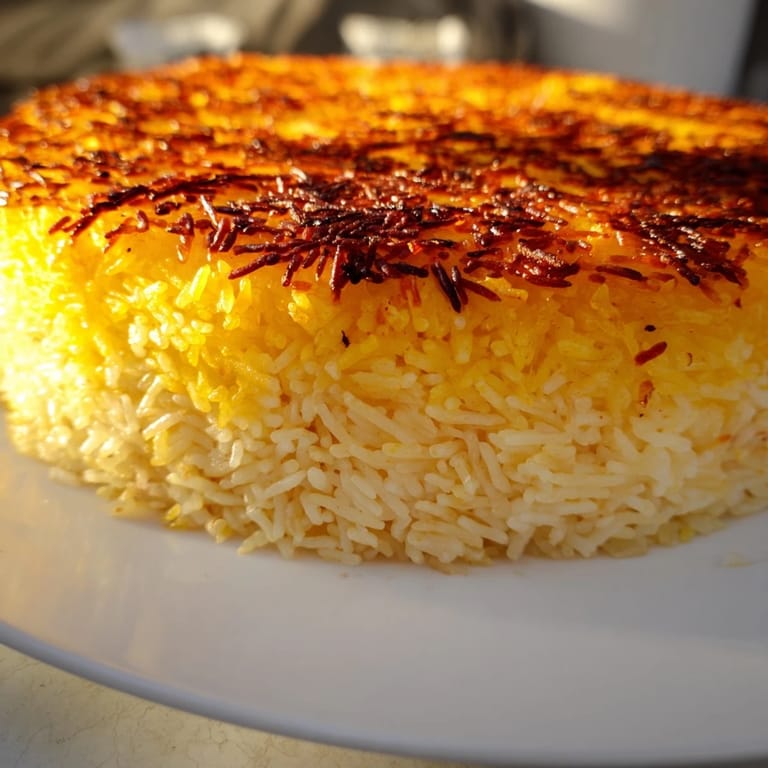
- Remove the pot from heat and let it sit undisturbed for 5 minutes; this allows any steam to redistribute and makes inverting easier. Then carefully, with confidence, invert the entire pot onto a serving platter so the crispy tahdig is now on top, shimmering like edible gold.
 Pin it
 The moment that golden tahdig slid onto the platter intact, I felt like I'd unlocked a small culinary superpower. My grandmother once told me that tahdig separates the home cooks from the ones just reheating food, and standing there with that glittering crust catching the light, I finally understood what she meant.
The Saffron Ritual
Saffron is expensive, so when I first made this, I nearly skipped it or skimped on the steeping time. What I learned is that even 1/4 teaspoon of saffron, when ground and steeped properly, has the power to transform plain rice into something that feels like a celebration. The steeping step isn't extra; it's where the magic concentrates. When you grind the threads between your fingers, you're unlocking compounds that water alone can't reach. Respect the saffron, and it will reward you with color and aroma that feels almost luxurious.
Why the Towel Under the Lid Matters
The first time I skipped this step, my rice turned out gummy, and I couldn't figure out why. The towel wrapped around the underside of the lid acts as a steam regulator—it absorbs excess moisture that would otherwise drip back onto the rice and make it mushy. It's such a small gesture, but it's the difference between fluffy rice and rice that tastes like it was boiled instead of steamed. Once I started doing this, every batch came out perfect.
Making Tahdig Your Own
While the yogurt-rice tahdig is a classic foundation, there's room to play. Some cooks use thinly sliced potatoes for a starchy crunch, others layer thin lavash bread for a crispy base, and some swear by adding a cinnamon stick or a few cardamom pods to the boiling water for extra aromatic depth. You can also garnish the finished rice with barberries for brightness or fresh herbs like parsley and dill if you want color and freshness. The tahdig technique is a blank canvas; once you master the method, you can improvise with what speaks to you and your table.
- A pinch of freshly ground cardamom in the saffron water adds warmth without overpowering.
- Barberries or pomegranate seeds scattered on top add tartness and visual joy.
- Make this ahead through step 7, then cover and refrigerate; steam it fresh when ready to serve.
 Pin it
 Tahdig is proof that the most memorable dishes often come from simple ingredients treated with intention and patience. Serve it warm, break that golden crust at the table, and watch people's faces light up when they taste it for the first time.
Recipe FAQs
- → What is tahdig and how is it formed?
Tahdig is the golden, crispy crust of rice formed at the bottom of the pot by layering yogurt mixed with saffron and rice, then cooking slowly over low heat.
- → How do you achieve fluffy rice above the tahdig?
Parboiling the rice until slightly firm and then steaming it gently allows the top layer to remain tender and airy while the crust forms below.
- → Can I use other ingredients instead of yogurt for the base layer?
Yes, thinly sliced potatoes or flatbread can be used to form the tahdig layer, offering different textures and flavors.
- → What role does saffron play in this dish?
Saffron steeped in hot water infuses the rice with a warm, aromatic flavor and gives the crust a vibrant golden hue.
- → How do you prevent the tahdig from sticking or burning?
Using a heavy-bottomed, nonstick pot with oil and butter, and cooking over controlled low heat ensures even cooking without burning.
- → Are there any suggested garnishes for this dish?
Barberries, chopped fresh herbs, or a sprinkle of cinnamon or cardamom in the boiling water add fragrant and colorful accents.