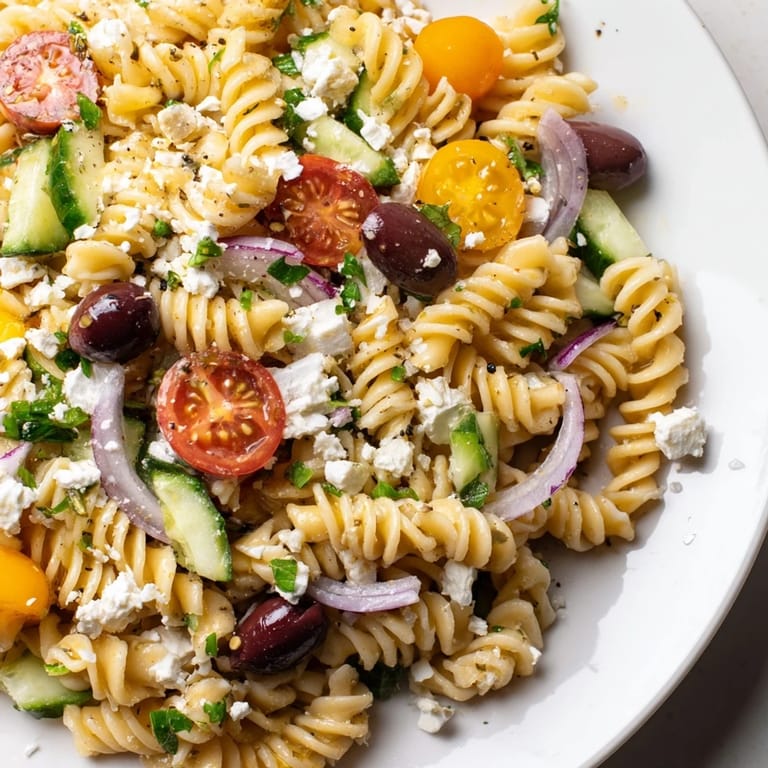
 Pin it
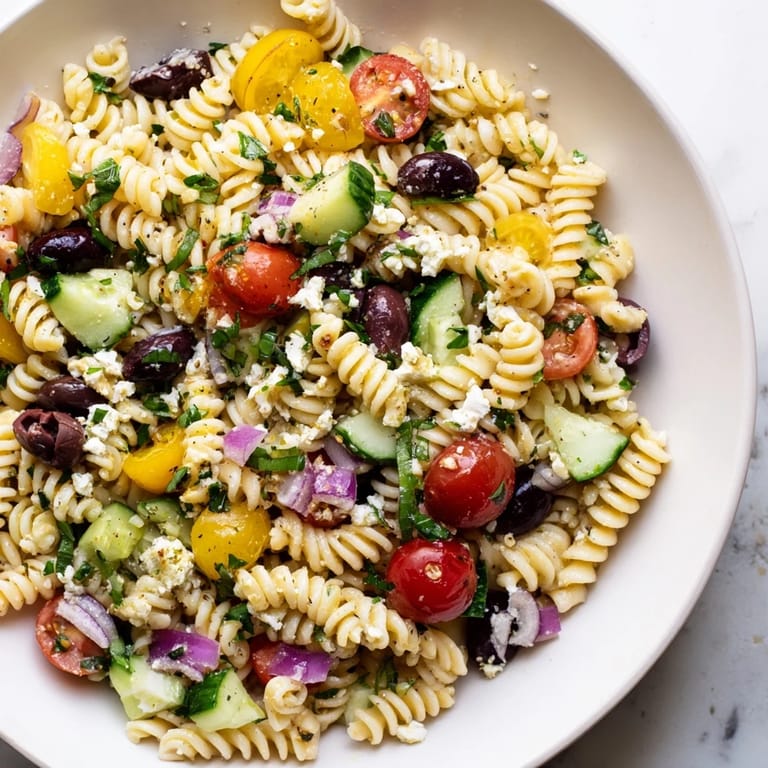
 I discovered this lemon pasta salad on a sweltering afternoon when my neighbor knocked on the kitchen door with a bag of just-picked lemons from her tree. She challenged me to use them all before they went soft, and I had exactly thirty minutes before guests arrived. That first bowl I threw together—cold pasta still warm from the pot, crisp vegetables, briny feta—became something I couldn't stop eating. Now it's the salad I make whenever I need something that feels both effortless and special.
The first time I served this at a crowded potluck, I watched people go back for thirds without checking what was in it, and someone asked if I'd catered it. That was the moment I realized this wasn't just a way to use up ingredients—it was genuinely good enough to serve when you actually care what people think.
Ingredients
- 250 g short pasta (fusilli, penne, or farfalle): Shapes with ridges or twists catch the dressing better than smooth noodles, so the flavor doesn't just coat the outside.
- 1 tsp salt for pasta water: Don't skip this—salted pasta water is where the actual seasoning begins, not something to add later.
- 1 cup cherry tomatoes, halved: Halving them lets the dressing soak into the exposed flesh instead of sliding off the surface.
- 1 cup cucumber, diced: Peel it first or leave some skin on for color—just don't use watery greenhouse cucumber if you can find something fresher.
- 1/4 cup red onion, finely chopped: This is sharp and honest; it keeps the salad from tasting like a bland vegetable delivery service.
- 1/2 cup yellow bell pepper, diced: Yellow feels more cheerful than green here, and it won't overpower the delicate lemon notes.
- 1/4 cup kalamata olives, sliced (optional): They're optional only if you don't like remembering that olives exist—I never skip them.
- 1/2 cup feta cheese, crumbled: Buy a block and crumble it yourself if you can; pre-crumbled cheese is drier and less likely to collapse into creamy bites.
- 1/4 cup fresh parsley, chopped: This is your green lightness—add it right before serving so it stays bright and doesn't turn into flavor memory.
- 2 tbsp fresh basil, chopped: Tear it by hand instead of cutting it with a knife if you want to keep that fresh anise-like smell intact.
- 1/4 cup extra-virgin olive oil: This is going straight into the dressing, so choose something you'd actually taste and not a cooking oil hiding behind a fancy label.
- Zest of 1 lemon: Use a microplane and zest directly over the dressing bowl so you catch the oils that would otherwise end up on your grater.
- 3 tbsp freshly squeezed lemon juice: About one lemon, though sizes vary—taste as you go and adjust because bottled juice tastes like chemicals next to this.
- 1 tsp Dijon mustard: This acts like an emulsifier, helping the oil and lemon juice actually become friends instead of just floating near each other.
- 1 clove garlic, minced: Mince it fine so it distributes evenly, or you'll occasionally bite into a sharp, overwhelming piece.
- 1/2 tsp honey or maple syrup: Just enough sweetness to catch the acid so your mouth doesn't feel like it's been attacked by citrus.
- 1/2 tsp sea salt and 1/4 tsp black pepper: Taste the dressing before adding pasta; it's your last chance to fix something without disturbing everything else.
Tired of Takeout? 🥡
Get 10 meals you can make faster than delivery arrives. Seriously.
One email. No spam. Unsubscribe anytime.
Instructions
- Boil the pasta until it's just barely tender:
- Fill a large pot with water, add salt until it tastes like seawater, and bring it to a rolling boil before adding pasta. Cook according to package directions, then drain and rinse under cold running water, stirring occasionally so the pieces don't stick together into a single mass.
- Prepare your vegetables while the pasta cools:
- Halve the tomatoes, dice the cucumber and bell pepper, chop the red onion fine, slice the olives, crumble the feta, and chop the fresh herbs. Keeping everything ready means you won't have wet hands trying to find basil when you should be assembling.
- Combine pasta and vegetables in a large bowl:
- Once the pasta is cool enough to touch, add all the vegetables, cheese, and herbs to a bowl, mixing gently so the feta doesn't become paste and everything stays distinct and visible.
- Whisk the dressing in a separate bowl until it comes together:
- In a small bowl or jar, whisk together the olive oil, lemon zest, lemon juice, Dijon mustard, minced garlic, honey, salt, and pepper until the mixture looks creamy and unified instead of separated and oily. Taste it and adjust—this is where seasoning lives.
- Dress the salad gently and thoroughly:
- Pour the dressing over the pasta and vegetables, then toss everything together with your hands or two spoons, turning it from the bottom up so every piece gets coated instead of just the top layer swimming in liquid.
- Chill for at least thirty minutes before serving:
- The flavors need time to find each other and settle, and the cold temperature makes everything taste brighter and more pronounced than it would straight from the kitchen.
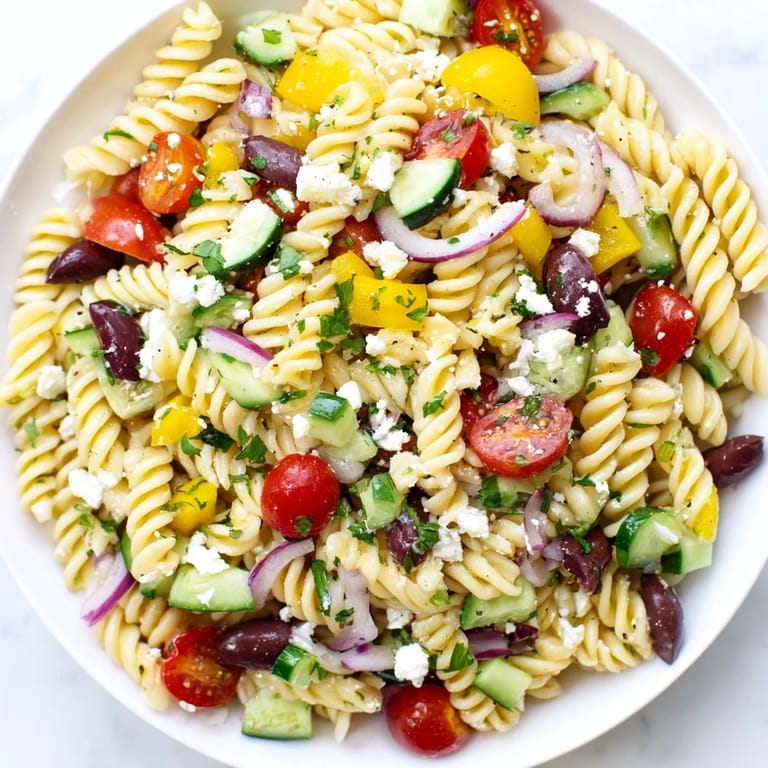 Pin it
 My friend who usually brings store-bought salads to gatherings once tasted this and admitted she'd been intimidated by the word 'homemade' her entire life. Watching her realize that fresh ingredients and five minutes of actual attention create something better than any name brand was the moment I understood why I keep making this.
When to Make This
This salad is perfect when you have guests coming and want something that tastes impressive without spending your evening in the kitchen. It also works beautifully as a next-day lunch because the flavors deepen in the refrigerator, and you can pack it in a container without worrying about wilting greens. Summer gatherings, picnics, potlucks, or even just a Tuesday when you don't want to cook—it's always the right moment for something this bright and uncomplicated.
How to Customize It
This salad is more of a framework than a rule. If you have grilled chicken or shrimp sitting around, add it. If feta isn't your thing, crumble goat cheese instead or leave it out entirely for a vegan version. Chickpeas work beautifully if you want protein, and different vegetables swap in easily—just keep the ratio of dressing to salad roughly the same so nothing becomes dry or oversaturated.
Pairing Ideas
Crisp white wines like Sauvignon Blanc or a light Pinot Grigio taste like they were designed for this salad, which makes sense because both the wine and the salad are essentially bottled sunshine. It also pairs beautifully with grilled fish or chicken if you want to build a meal around it, and it's hearty enough to stand alone as lunch on a warm day.
- Serve it as a side to grilled vegetables or fish for a complete Mediterranean moment.
- Add crumbled feta and olives just before serving if they've been sitting around because they stay fresher and crispier when not marinating the whole time.
- Keep a small jar of the dressing in your refrigerator because you'll find yourself putting it on salads, vegetables, and things you didn't plan on.
 Pin it
 This is the kind of recipe that makes people ask for the secret, and the only secret is caring enough to use fresh ingredients and enough time to let flavors settle. That's all it takes to turn something ordinary into something people will actually remember eating.
Recipe FAQs
- → What pasta types work best for this salad?
Short pastas like fusilli, penne, or farfalle hold the dressing well and provide a pleasing texture mix.
- → Can this dish be prepared ahead of time?
Yes, chilling for at least 30 minutes allows flavors to meld and enhances the overall taste.
- → Are there suitable protein additions?
Grilled chicken, shrimp, or chickpeas can be added to create a more filling dish.
- → How can I make this dish vegan friendly?
Simply omit the feta or substitute it with a plant-based cheese alternative.
- → What dressing components bring out the lemon flavor?
The blend of lemon zest, fresh lemon juice, Dijon mustard, garlic, honey, and olive oil creates a bright, balanced dressing.
- → Is this salad good for gluten-free diets?
Yes, using gluten-free pasta ensures it fits gluten-sensitive needs without compromising taste.