 Pin it
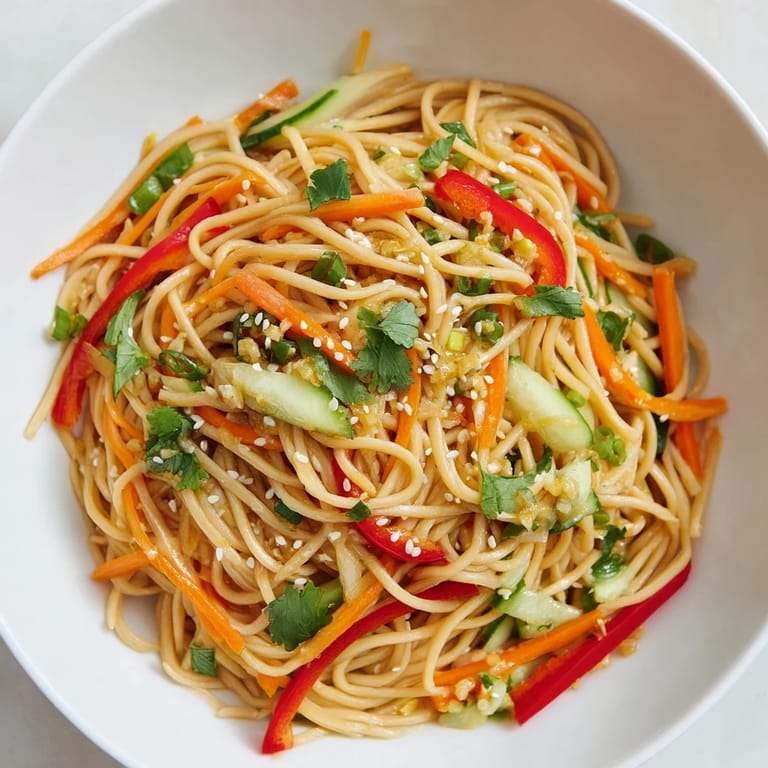
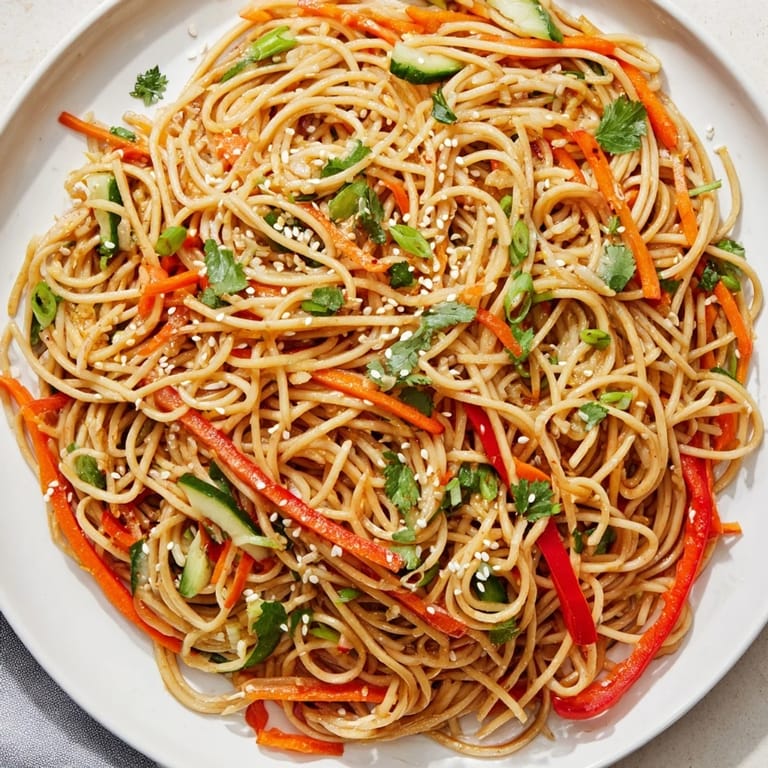
 There's something almost meditative about assembling this garlic noodle salad on a warm afternoon when the kitchen feels too hot for cooking proper meals. I discovered this dish years ago while hunting for something cold and satisfying that wouldn't require standing over a stove, and I've made it countless times since—each version slightly different depending on what's in my vegetable drawer. The magic happens when you infuse the oil with garlic just right, filling your kitchen with that unmistakable aromatic hum, then toss it all together while everything's still warm enough to absorb every bit of flavor.
I remember making this for my neighbor one summer when her garden had exploded with bell peppers and cucumbers, and she showed up at my door with a bag overflowing with vegetables she couldn't possibly eat alone. We chopped and tossed together in my tiny kitchen, and she kept sneaking bites straight from the serving bowl, laughing about how she'd just found her new go-to recipe. That afternoon taught me that the best dishes are the ones you can easily customize and share, no fuss required.
Ingredients
- Dried wheat noodles (250 g): Lo mein, spaghetti, or soba all work beautifully—I tend to reach for whatever's in my pantry, though soba adds a slightly earthier note that pairs wonderfully with the garlic.
- Neutral oil (3 tbsp): Grapeseed or vegetable oil works best because they won't overpower the garlic; avoid olive oil here as its flavor will compete.
- Garlic cloves (5 large): Mince them finely so they distribute evenly throughout the oil and noodles—chunky garlic won't give you that fragrant, golden-brown infusion you're after.
- Toasted sesame oil (1 tsp): A little goes a long way, so don't be tempted to add more; it's the finishing touch that gives everything depth.
- Carrots (1 cup julienned): The sweetness of carrots balances the savory soy and sharp garlic beautifully.
- Red bell pepper (1 cup): Slice thinly so it stays tender and allows the dressing to coat every piece.
- Cucumber (1 cup deseeded): Removing the seeds prevents the salad from becoming watery as it sits.
- Spring onions (2): Use both white and green parts for a layered onion flavor that's bright but not overwhelming.
- Fresh cilantro (1/2 cup): This is optional but genuinely transforms the dish—if you're not a cilantro person, fresh basil or mint work nicely instead.
- Soy sauce (3 tbsp): Low-sodium versions let you taste the other flavors without the dish becoming unintentionally salty.
- Rice vinegar (1 tbsp): This adds a gentle tang without the harsh bite you'd get from regular white vinegar.
- Honey or maple syrup (1 tsp): A touch of sweetness rounds out the dressing and prevents it from feeling one-dimensional.
- Chili flakes (1/2 tsp): Optional but recommended—they add a slow-building heat that keeps you coming back for another bite.
- Toasted sesame seeds (2 tbsp): Toast them yourself if you have time; the difference between fresh-toasted and store-bought is remarkable.
- Lime wedges: A squeeze at the table brightens everything and lets people adjust the acidity to their taste.
Tired of Takeout? 🥡
Get 10 meals you can make faster than delivery arrives. Seriously.
One email. No spam. Unsubscribe anytime.
Instructions
- Cook the noodles until just tender:
- Bring a large pot of water to a rolling boil and cook the noodles according to package directions, but check them a minute early—you want them tender but still with a tiny bit of resistance. Drain in a colander and rinse under cold running water, stirring gently with your hands to prevent sticking, then transfer to a large mixing bowl.
- Infuse the oil with golden garlic:
- Pour the neutral oil into a small saucepan and set it over medium-low heat until it shimmers slightly, then add your minced garlic and listen for that gentle sizzle. Cook for 2 to 3 minutes, watching as the garlic transforms from white and raw to pale golden and impossibly fragrant—the moment it turns golden, remove it from the heat and stir in the sesame oil, letting it cool for a minute before pouring over the noodles.
- Build the dressing:
- Whisk together soy sauce, rice vinegar, honey, chili flakes if using, and a generous grinding of black pepper in a small bowl, tasting as you go to make sure the balance feels right to you.
- Toss everything together:
- Pour the warm garlic oil and the dressing over the cooled noodles, then toss with two forks or your hands until every strand is coated and glistening. The warmth from the garlic oil will help the noodles absorb all the flavor.
- Fold in the vegetables:
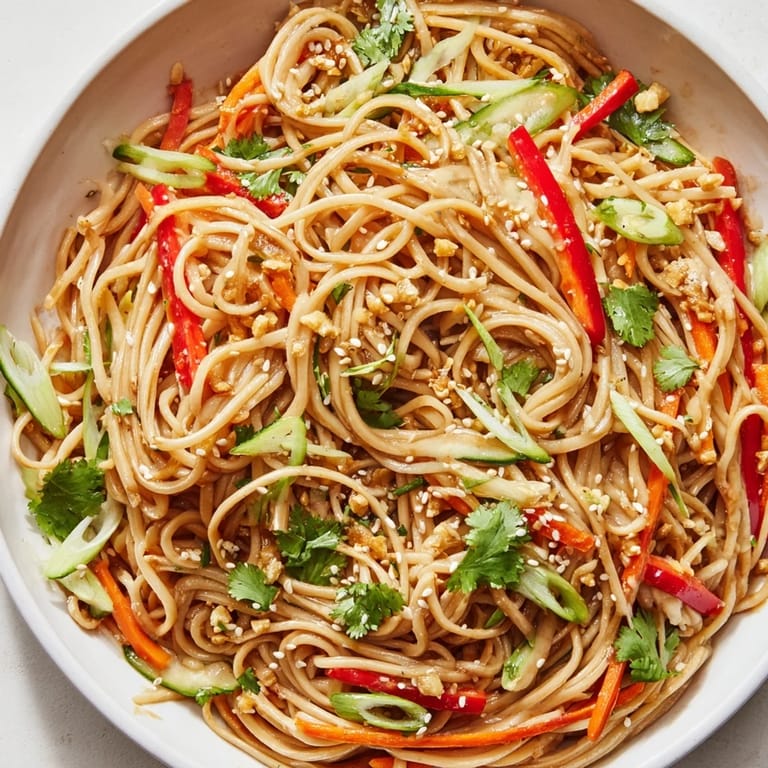
- Add the julienned carrots, sliced bell pepper, deseeded cucumber, spring onions, and cilantro, then toss gently and carefully—you're looking to combine everything without breaking the vegetables into smaller pieces.
- Serve and garnish:
- Transfer the salad to a serving platter or individual bowls, scatter the toasted sesame seeds over the top, and set out lime wedges for people to squeeze over as they eat.
 Pin it
 This dish became my secret weapon for potlucks and casual dinners because it's something people always ask for the recipe to, and it somehow tastes better when shared with others. There's a moment when everyone around the table realizes they're all reaching back into the bowl for another bite, and that's when you know you've made something genuinely good.
The Story Behind Garlic Oil
I learned the importance of infusing oil properly after making garlic oil soup for a dinner party where I burned the garlic and the entire pot tasted bitter and charred. Now I understand that medium-low heat is your friend here—garlic wants to go golden and fragrant, not brown and crispy, and those thirty seconds between perfectly toasted and ruined happen faster than you'd think. Watching the garlic transform is half the pleasure of making this dish, and it's a good reminder that cooking isn't always about rushing.
Why Cold Noodle Salads Are Underrated
There's this assumption that salads are rabbit food and noodles are meant to be hot, but this dish proves that cold noodles with proper seasoning and texture can be deeply satisfying and completely craveable. I've found that the cold noodles actually hold up better to the dressing than hot ones do—they absorb all that garlic-forward flavor without becoming waterlogged or falling apart. This is why leftovers are often better than the first serving; everything melds together overnight in the fridge and tastes even more flavorful the next day.
Making It Your Own
The beauty of this recipe is that it's genuinely flexible depending on what you have on hand and what you're in the mood for—I've made it with shredded purple cabbage instead of cucumber, added snap peas for crunch, and once threw in some thinly shaved radish when I was feeling adventurous. Protein-wise, shredded rotisserie chicken, crispy tofu cubes, or edamame all become part of the same delicious bowl without needing any adjustment to the dressing. Even the cilantro is optional for anyone who has that genetic quirk where it tastes like soap.
- Keep the components separate until just before serving if you're preparing this ahead—the noodles won't absorb excess moisture and the vegetables stay crisp.
- Toast your own sesame seeds in a dry pan for two minutes if you have time; the difference in flavor is genuinely worth those two minutes.
- Leftovers keep beautifully for up to two days in an airtight container in the fridge, making this an excellent choice for meal prep.
 Pin it
 This garlic noodle salad has become one of those recipes I return to again and again because it asks so little of me while delivering so much flavor and satisfaction. It's the kind of dish that feels like a gift you're giving yourself on days when cooking feels overwhelming but you still want something genuinely delicious.
Recipe FAQs
- → What type of noodles work best?
Dried wheat noodles like lo mein, spaghetti, or soba provide a pleasant bite, but gluten-free alternatives can be substituted.
- → How is the garlic oil prepared?
Neutral oil is gently heated with minced garlic until golden and fragrant, then combined with toasted sesame oil for depth.
- → Can this dish be served warm?
It's traditionally served cold or at room temperature to highlight the fresh vegetables and flavors.
- → What vegetables are included?
Julienned carrots, red bell pepper, cucumber, spring onions, and fresh cilantro offer crispness and color.
- → Are there ways to add protein?
Shredded cooked chicken, tofu, or edamame can be added for extra protein without altering the core flavors.
- → How to make it gluten-free?
Use gluten-free noodles and tamari in place of soy sauce to accommodate gluten sensitivities.