 Pin it
 The first time I tasted Koshari, it was from a street vendor in Cairo, served in a paper cone with the layers still visible through the translucent wrapper. I watched him build it with the kind of practiced rhythm that only comes from making something a thousand times, and I realized right then that this wasn't just comfort food—it was an art form. When I finally made it at home, I understood why: every component demands attention, but they come together into something so much greater than their parts.
I made this for a dinner party once, and I remember my friend circling back for thirds while talking about something completely unrelated, as if his spoon was moving on its own. That's when I knew Koshari had that quiet power—it doesn't demand attention, but it keeps you coming back.
Ingredients
- Medium-grain rice: Rinsing it twice keeps the grains separate and fluffy instead of starchy and clumpy.
- Brown or green lentils: They hold their shape better than red lentils, which means your layers stay defined instead of turning into mush.
- Elbow macaroni or ditalini pasta: Small shapes work best because they nestle into every bite without overwhelming the other components.
- Crushed tomatoes and tomato paste: The paste adds concentrated umami depth that canned tomatoes alone can't quite reach.
- Ground cumin and coriander: These warm spices are what make Koshari taste like Egypt, not just like pasta and lentils.
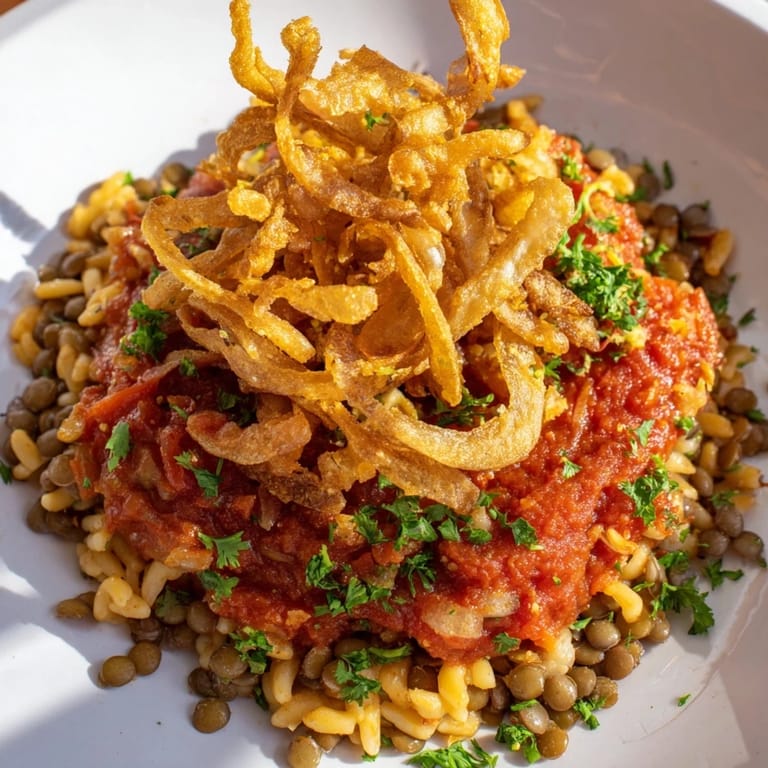
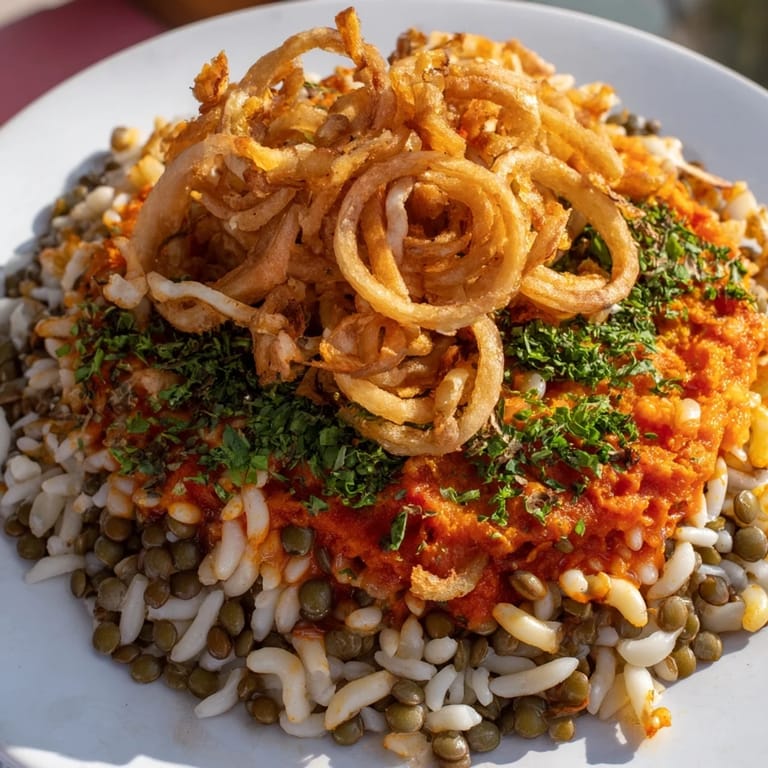
- Crispy fried onions: They're the soul of the dish—the textural contrast that makes everything else sing.
- Garlic vinegar: The acid cutting through the richness is what transforms it from heavy to balanced.
Tired of Takeout? 🥡
Get 10 meals you can make faster than delivery arrives. Seriously.
One email. No spam. Unsubscribe anytime.
Instructions
- Simmer the lentils until just tender:
- Cover them with three cups of water, bring to a boil, then lower the heat and let them bubble gently for about 20–25 minutes. You want them soft enough to eat but still holding their shape—overcooked lentils will break down and blur your carefully built layers.
- Cook the rice until fluffy:
- Rinse it first, combine with two cups of water and a pinch of salt, bring to a boil, then cover and simmer for 15–18 minutes. The rice should be tender and separate, not sticky or gummy.
- Boil the pasta until al dente:
- Salt the water generously and cook until it has a slight bite to it. You're not making risotto here—you want the pasta to keep its texture.
- Build your tomato sauce slowly:
- Start by softening onions in olive oil for about five minutes, add your garlic for just one minute, then fold in tomatoes and paste along with the cumin, coriander, and chili flakes. Let it simmer uncovered for 15–20 minutes, stirring occasionally, until it thickens and the flavors deepen.
- Fry the onions until they're golden and crispy:
- Toss sliced onions with flour and salt first—this helps them crisp up instead of turning soggy. Work in batches so they have room to breathe in the oil, and fry for about five to seven minutes per batch until they're deeply golden and smell irresistible.
- Combine vinegar, garlic, and chili flakes:
- Let this sit for ten minutes so the flavors marry together, then use it as a finishing drizzle.
- Layer it all together:
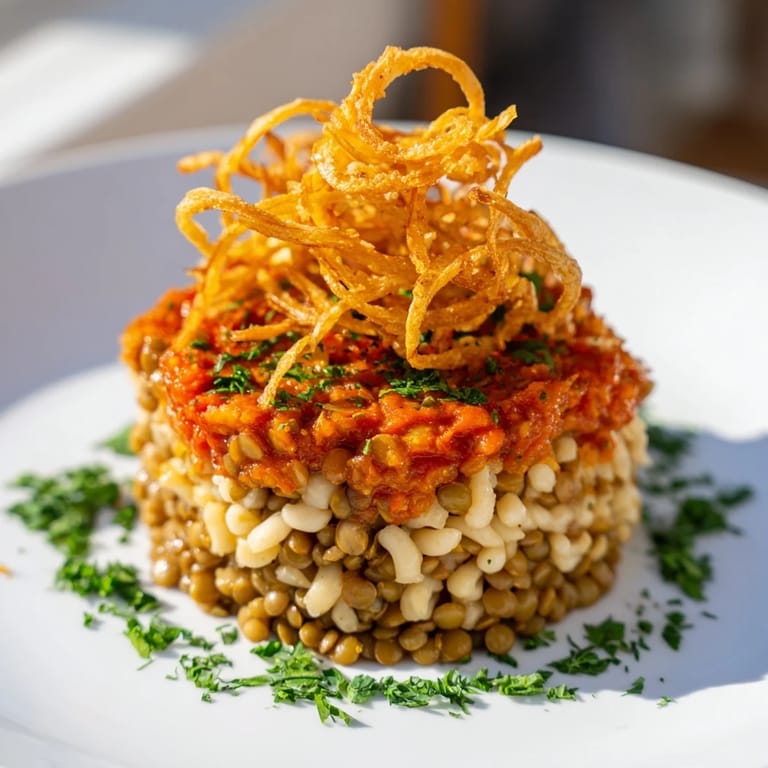
- Start with rice as your base, add lentils, then pasta. Spoon the warm tomato sauce generously over top, scatter the crispy onions across, and finish with a drizzle of that garlicky vinegar.
 Pin it
 I learned the importance of that vinegar the hard way—my second attempt without it tasted heavy and one-note, and I couldn't figure out why until I added the vinegar at the end and suddenly understood. It's a small thing that makes all the difference.
Building the Perfect Bowl
The magic of Koshari is in the layering. Each component brings something different—the rice is soft and mild, the lentils are earthy and slightly nutty, the pasta adds chew. When you build it thoughtfully, you get all three textures and flavors in every spoonful instead of finishing your rice and then eating plain lentils. The proportions matter, but they're forgiving—adjust based on what you love most.
The Sauce That Carries Everything
The tomato sauce is where patience matters. Those 15–20 minutes of gentle simmering aren't wasted time—they're when the spices soften and mingle, when the tomato paste loses its sharp edge and the sauce becomes something warm and welcoming. I've made it in half the time before, rushing to get dinner on the table, and I could taste the difference immediately. The slow way is better.
Making It Your Own
Koshari is sturdy enough to welcome changes. Use whatever small pasta shape you have, swap in vegetable broth for extra richness, or dial up the spices if you like heat. Some people add a fried egg on top; others make a more aggressive garlic sauce. The structure stays the same, but it adapts to what you love.
- Vegetable broth instead of water makes everything taste deeper and more rounded.
- Double the crispy onions because you'll eat half of them before they even make it into the bowl.
- Make the sauce a day ahead so the flavors settle and intensify.
 Pin it
 Koshari taught me that the best comfort food is built from simple things done thoughtfully. Every time I make it, it tastes like that Cairo street corner and every happy table it's been served at since.
Recipe FAQs
- → How long should lentils be cooked for Koshari?
Lentils should be simmered for 20–25 minutes until just tender, then drained and set aside.
- → What type of pasta is best for this dish?
Small elbow macaroni or ditalini pasta are commonly used, cooked al dente to maintain slight firmness.
- → How do you achieve crispy fried onions?
Onion slices are coated in flour and salt, then fried in hot oil until golden and crispy, about 5–7 minutes per batch.
- → Can the tomato sauce be adjusted for spice?
Yes, chili flakes can be added or omitted according to your preferred heat level in the sauce.
- → Is there an alternative to water when cooking grains and lentils?
Vegetable broth can substitute water for a richer flavor when cooking rice and lentils.