 Pin it
 The first time I truly understood fish and chips wasn't reading about it in a cookbook—it was watching my neighbor's hands move with practiced ease as she lowered a basket of golden fish into oil that hissed and sang. She'd lived in London for decades and moved the piece with complete confidence, never flinching at the sound or heat. When I finally tasted what emerged, still crackling and steaming, I understood why this dish has remained untouched by trends for generations. It's not fancy, but it's honest, and when done right, absolutely unforgettable.
I made this for a dinner party on a rainy March evening, and my guests arrived damp and skeptical about eating fried food indoors. Fifteen minutes later, they were standing in my kitchen with paper towels, pulling chips from the rack and arguing about whether vinegar or no vinegar was the correct choice. That's when I realized this dish does something remarkable: it makes people happy in a way that feels almost innocent, like childhood permission translated into a plate.
Ingredients
- White fish fillets (cod or haddock): Use the freshest you can find—the fish is the star, not a supporting player, and it deserves respect. Skinless and boneless makes everything easier, and 150g per fillet is the perfect portion.
- All-purpose flour and cornstarch: The cornstarch is the secret component many home cooks skip; it's what gives professional-quality crispness, creating a lighter, more delicate crust than flour alone could achieve.
- Baking powder: This creates tiny bubbles in the batter that fry into crispy air pockets—essential for that ethereal texture.
- Cold sparkling water or beer: Cold liquid is crucial; warmth kills the lift you're working for, and the carbonation adds extra lift to the batter, keeping it light rather than dense and heavy.
- Russet or Maris Piper potatoes: Waxy potatoes won't work here; these varieties have the right starch content for fries that stay fluffy inside, and Maris Piper is genuinely the British choice if you can find them.
- Sea salt and malt vinegar: Both are non-negotiable—table salt tastes bitter when fried, and malt vinegar has a rounded sweetness that complements the richness in a way regular vinegar never will.
Tired of Takeout? 🥡
Get 10 meals you can make faster than delivery arrives. Seriously.
One email. No spam. Unsubscribe anytime.
Instructions
- Soak the potatoes in cold water:
- Cut your potatoes into thick batons—not thin fries, proper chips—and soak them for at least fifteen minutes. This removes excess starch and prevents them from sticking together and browning too quickly during the first fry.
- First fry the chips at lower temperature:
- At 150°C, you're parcooking them into tender submission without any color, like giving them a gentle warm bath. They'll look pale and unfinished; that's exactly right.
- Mix the batter with confidence:
- Whisk your dry ingredients first, then add the cold liquid slowly, stirring just until combined. Lumps are fine; overworking develops gluten and makes the batter tough rather than light and crispy.
- Second fry the chips until golden:
- Raise the temperature to 190°C and fry again for just two to three minutes—this is when they transform, the outside shattering into crispness while the inside stays creamy. Work in batches or they'll steam each other.
- Dry the fish and dust with flour:
- Pat your fillets completely dry with paper towels and dust lightly with flour; this helps the batter grip the fish and cook evenly. Skip this step and you'll get a slippery coating that slides away from the heat.
- Dip and fry with a steady hand:
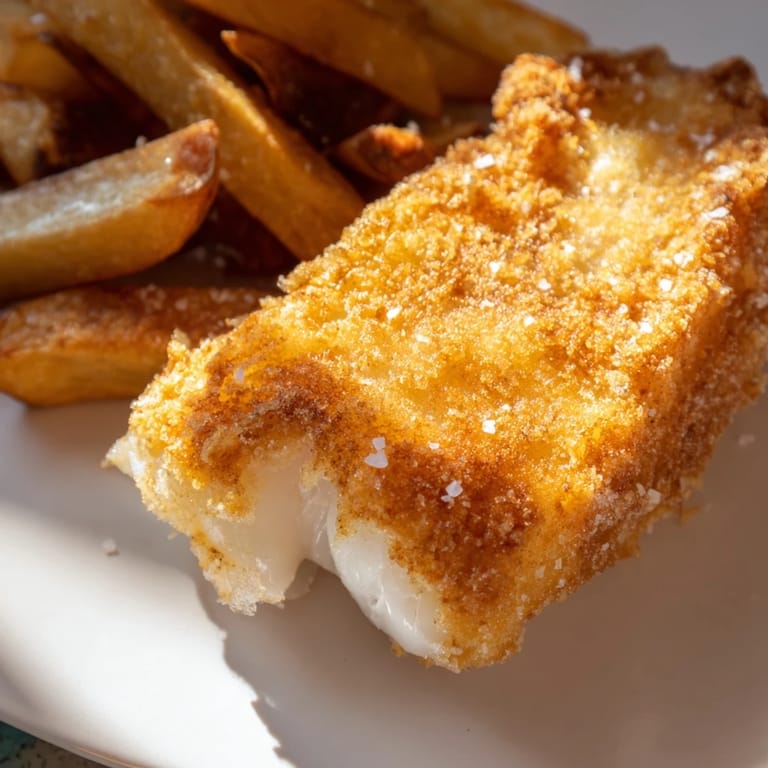
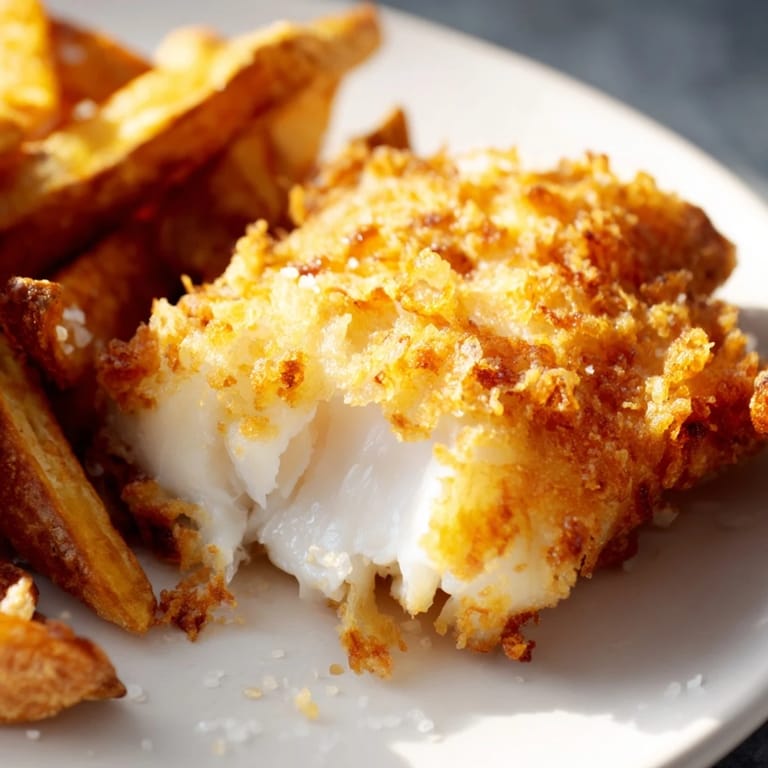
- Coat each fillet completely in batter, let the excess drip away for just a moment, then lower it gently into the oil. Five to seven minutes, turning once, until the batter is deep golden and the fish flakes easily at the thickest point.
 Pin it
 There's a moment in cooking when you stop thinking and just move, when your hands remember what they've learned and trust takes over. That's what happens when you pull these from the oil at exactly the right moment—the batter crackles, the steam rises, and you know without checking that everything worked. I still feel that small surge of quiet pride every time.
Getting the Batter Right
The batter is the canvas for everything else, and it deserves attention. A common mistake is making it too thin, thinking it should coat like paint; instead, it should cling like a second skin, thick enough that when you tap the spoon, it sits there for a moment before sliding off. Cold is non-negotiable—some cooks even add a handful of ice cubes to keep the temperature down. Beer works beautifully, but sparkling water is just fine if that's what you have; the bubbles do the real work, not the alcohol.
The Two-Fry Chip Technique
The magic lives in the two temperatures. The low first fry (around 150°C) cooks the potato through so that by the time you fry them a second time, you're not racing against the clock to finish cooking the inside while avoiding a burnt outside. The second fry at 190°C happens quickly—just a few minutes—and transforms them into something almost impossible: a crispy shell that shatters and releases a fluffy, steaming interior. It's labor, but entirely worth it, and the technique works for any thick-cut fries you'll ever make.
Serving and Pairing
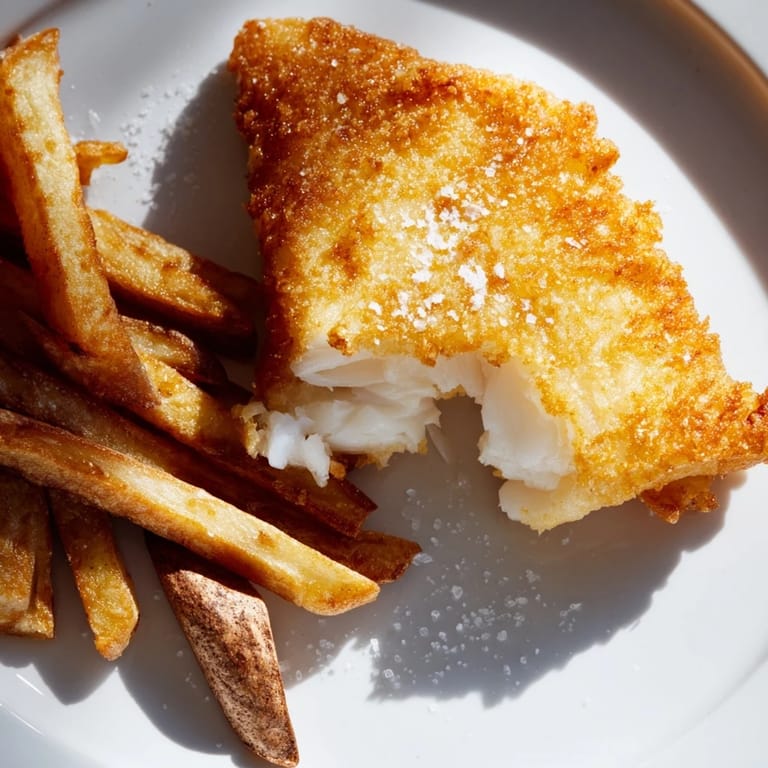
This is food that doesn't hide or complicate itself; it wants malt vinegar, sea salt, and maybe a cold beer. Some people add tartar sauce or mushy peas, and both are lovely, but they're additions, not requirements. The real magic is in the simplicity—crispy, hot, salty, finished.
- Malt vinegar is the traditional choice, and for good reason; its sweetness rounds out the richness in ways regular vinegar never will.
- Serve on parchment paper or newspaper if you're feeling nostalgic and want the full experience of eating with your hands.
- Have extra sea salt nearby; people will want more than you think, and that's not a problem.
 Pin it
 This is the kind of dish that brings people together, that makes eating feel easy and joyful. Make it once, and you'll understand why it hasn't changed in a hundred years.
Recipe FAQs
- → What type of fish is best for frying?
White fish like cod or haddock are ideal for frying due to their mild flavor and flaky texture.
- → How does double-frying the chips improve texture?
Double-frying ensures the fries have a fluffy inside while achieving a crispy, golden exterior.
- → Can beer be used in the batter?
Yes, using beer instead of sparkling water creates an extra-crispy and flavorful batter.
- → What oil is recommended for frying?
Sunflower or vegetable oil is preferred for deep frying due to their high smoke points.
- → How should the fish be prepared before frying?
Pat fish fillets dry and lightly dust with flour before dipping into the batter to help it adhere better.
- → What are suggested accompaniments to serve?
Malt vinegar, lemon wedges, tartar sauce, or mushy peas complement the dish beautifully.